




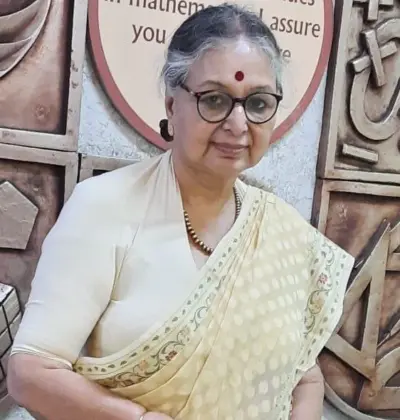

Written By Shubhra Chatterjee, Director, Vikramshila Educational Society and Sunil Kushwaha, Lead Numeracy, Language and Learning Foundation
Insights from the Teaching Learning Practices Survey 2025 : India’s classrooms have changed in appearance; the challenge now is to transform the culture of learning within them. This shift is a vital milestone, mirroring the mandate of the National Education Policy (NEP) 2020. We have successfully prioritised Foundational Literacy and Numeracy (FLN), signalling that the system is ready to move from rote memorisation to deep conceptual understanding.
The NIPUN Bharat Mission has accelerated this momentum, driving large-scale action in teacher training and material distribution. The recent PARAKH assessment 2024 reflects this effort, showing visible shifts in the learning outcomes in Grade 3. However, success has largely been measured by learning outcome, which tells us what children know, but not how they are learning. To sustain this progress, we must now look beyond the assessment and understand the classroom teaching practices that create them.
To explore this "black box" of teaching and learning practices, Language and Learning Foundation (LLF), with support from Tata Trusts, in partnership with the Centre for microFinance, Educational Initiatives, Madhi Foundation, QUEST, and Vikramshila Education Resource Society, anchored the Teaching Learning Practices Survey (TLPS) 2025. The survey covered 1,050 classroom observations in Grades 1 and 2 for language and mathematics, of which 520 focused on mathematics across nine states. It systematically observed specific effective teaching practices, including the use of Teaching Learning Materials (TLMs), the use of real-life context, the asking of critical ‘why’ and ‘how’ questions, and the quality of independent practice.
The TLPS data confirms a genuine cause for optimism: the era of pure ‘chalk and talk’ is retreating. With 62% of teachers using TLMs like beads and sticks, the classroom landscape has shifted. However, only 28% of teachers used these materials effectively to build conceptual understanding. TLMs are not self-teaching; research tells us that without explicit modelling by the teacher in early grades, they often remain mere objects. We have provided the materials; the next step is ensuring they are used to demonstrate mathematical concepts and processes clearly.
Crucially, active engagement by children is the missing link. In 53% of classrooms, children did not use the TLMs themselves at all, and in only 10% classrooms did most children get to use them. This creates a "look but don’t touch" environment. When a child merely watches a demonstration, the opportunity to construct their own understanding suffers. To ensure deep learning, we must move beyond mere display: teachers must model the concepts explicitly using TLMs, and students must actively manipulate the materials themselves.
Beyond physical tools, we must look at how mathematics connects to a child's daily life. The National Curriculum Framework for Foundational Stage (NCF-FS 2022) defines the curricular goal for mathematics as enabling children to develop mathematical understanding and to make sense of the world. The survey shows that teachers are trying to honour this vision, with 42% attempting to use real-life examples. However, effective usage was found in only 13% of classrooms. This gap matters because, without connecting mathematics to a child’s real life, mathematics transforms from a useful life skill into a source of confusion and fear.
The ‘Silence of Reasoning’ suggests that the most profound gap lies in the quality of mathematics teaching. The survey reveals that 81% of teachers did not engage children with higher-order 'why' or 'how' questions. Moreover, around 40% of teachers did not wait for a reasonable time for the children’s response. By neglecting reasoning questions and rushing responses, we are inadvertently training children to memorise procedures rather than to think critically.
Then, there is the puzzle of independent practice. While 56% of teachers provide time for children to work on their own, only 16% support them with observation or feedback during this period. Such unmonitored practice is counterproductive. Without guidance, children often reinforce their own misconceptions, practising their mistakes rather than mastering the concept.
The TLPS 2025 further highlights critical structural realities: the need for differentiated instruction to meet children at their actual learning levels, lack of multigrade classrooms teaching wherever it is, and the mother tongue in bridging understanding. These additional insights from the report underscore that true equity in learning depends on addressing the complex environmental challenges teachers face daily.
So, where do we go from here? The TLPS 2025 challenges us to bridge the gap between policy intent and classroom reality. To do so, we need three systemic shifts.
First, make effective teaching practices a new normal. Instructional design must explicitly integrate these teaching practices effectively in a coherent manner, like using TLMs, real-life context, reasoning, and guided and independent practice, into textbooks and lesson plans, guiding teachers towards effective teaching.
Second, Training must pivot from theoretical lectures to the demonstration and practice of high-impact teaching practices, integrating differentiated instruction, mother-tongue pedagogy, and multigrade management wherever applicable. Simultaneously, the middle layer (CRCs/BRCs) must accelerate the transition from inspection to mentorship and on-site coaching must be strengthened.
Finally, track teaching practices, not just learning assessment scores. We have successfully brought the teaching and learning materials into the classroom; now, we must bring mathematics into the child's mind.
The Teaching Learning Practices Survey (TLPS) 2025 confirms that the classroom culture is changing; however, to sustain this momentum, there is a stronger need to strengthen the pedagogy of classroom teaching with a focus on effective teaching practices for mathematics.