




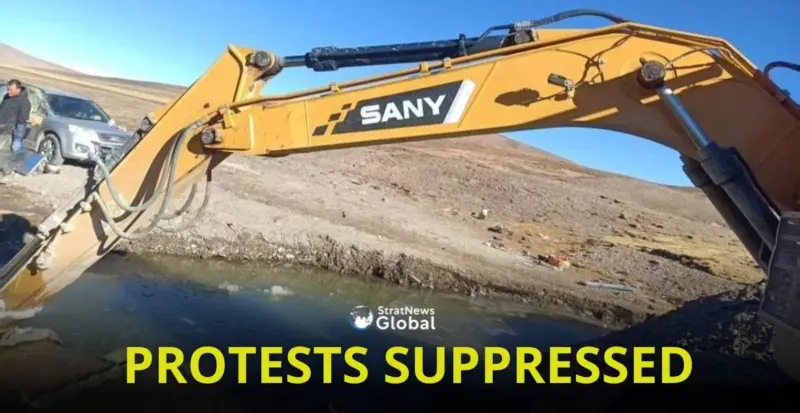

Reports of mass arrests and a communications blackout following protests against a gold-mining project in a Tibetan village have intensified scrutiny of the environmental and political costs of China's resource extraction on the Tibetan Plateau—an area increasingly central to global supply chains for renewable energy.
According to The Wall Street Journal, Chinese authorities arrested dozens of Tibetans in early November after residents of Kashi village in the western Chinese province of Sichuan, protested the start of a gold mine in pastureland traditionally used by nomads to graze sheep and yaks.
The protests began after villagers learned that mining had commenced at a site known locally as Serkog, or 'Gold Valley.' The Journal cited accounts collected from residents by Tibetans in exile and corroborated by the Tibetan government-in-exile in Dharamshala, though it said it could not independently verify the claims.
Tempa Gyaltsen Zamlha, Deputy Director of Tibet Policy Institute in Delhi, who is familiar with developments in the area said the situation on the ground has been 'very serious,' particularly in Zachukha in eastern Tibet. 'The Chinese government sent gold miners there, and the local Tibetans resisted this, which led to a confrontation,' he said, adding that around 80 Tibetans were detained. 'Many were later released due to illness—some with broken ribs, some with damaged kidneys.'