





China sent contradictory signals on Mothers Day: a university in Henan Province instructed students not to promote or celebrate 'Western festivals' such as Mothers Day.
It's not clear if this decision was an official fiat because Global Times used the same occasion for political messaging.
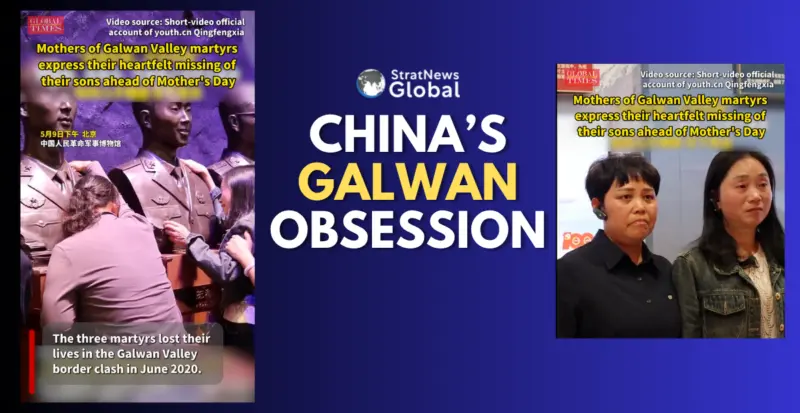
A video headlined Mothers of Galwan Valley Martyrs Express Their Heartfelt Missing Of Their Sons Ahead Of Mothers Day, documented the visit of three mothers to a military museum. The museum had statues of their sons killed in the Galwan Valley and the video showed how despite seven years, the sorrow remains.
But don't miss the irony here: while much of the world marked the day with celebrations of motherhood and family, Chinese state media used grief, sacrifice and military symbolism to reinforce nationalist sentiment and patriotic narratives tied to the border conflict.
The incident underscored the selective nature of China's propaganda system, where foreign festivals are criticised as Western influence when celebrated socially, but embraced when they can be used to advance state narratives and patriotic mobilisation.
The messaging comes at a time when China is already witnessing intense online debate following reports that former defence ministers Wei Fenghe and Li Shangfu were handed suspended death sentences over corruption-related charges on 7 May 2026.
The hashtag '#Wei Fenghe And LiShangfu Death Sentences With Reprieve#' quickly began trending on Weibo on Thursday, generating widespread discussion across Chinese social media.
Several posts praised the punishments as a 'precise removal of deep-rooted problems within the armed forces', while others argued the case exposed long-standing issues of nepotism, opaque weapons procurement systems and abuse of power at the highest levels of the military establishment.
Some users questioned why official reports did not disclose the exact amount of money involved in the bribery cases; was it 'billions of yuan', asked some. Others wondered who exactly had paid or received the bribes, while some remarked that the nearly two-year investigation reflected the seriousness of the case.
The military's official newspaper, PLA Daily, published a strongly worded commentary on 8 May stating that 'within the ranks, there must absolutely be no one with a divided heart toward the Party, nor any hiding place for corrupt elements'.
It accused the two former ministers of causing 'enormous damage' to the party, national defence and the military's image, while warning that there is no 'ironclad pardon' or immunity for senior officials. It triggered speculation online that Beijing is attempting to restore discipline and morale within the military.
The unsaid point was the lack of details about how deep the graft went, who paid whom, for what favours and why the problem persists despite 14 years since Xi Jinping launched his war on corruption.
It reflected the unsaid discomfort within the political and military establishment: how long before the public start demanding answers more so when their own children die in places like Galwan with little explanation forthcoming from the authorities.
Read more stories here: