
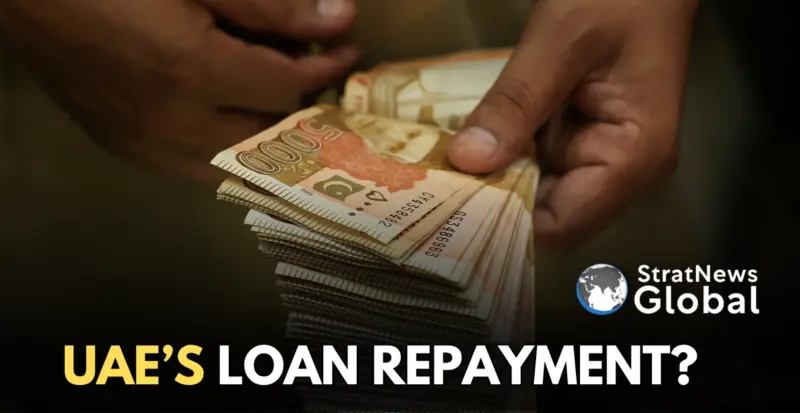

Pakistan will return a $3.5 billion loan to the United Arab Emirates (UAE) this month, two government officials said on Tuesday, raising pressure on reserves and risking breaches of IMF program targets with an additional $1.3 billion Eurobond repayment due by June.
The repayment comes as Pakistan targets foreign exchange reserves above $18 billion by June under a $7 billion International Monetary Fund programme, which requires bilateral deposits to be rolled over.
Amid the repayment of the loans, a Pakistani Senator named Mushahid Hussain was seen mocking the UAE in a television appearance. He suggested that the UAE was in need and described it as 'majboor' (helpless) and 'bechara' (poor) nation, while claiming that Pakistan had played a key role in building the Gulf country. Hussain also warned the UAE that its large Indian expatriate population could make it 'part of Akhand Bharat (United India).'
A FirstPost article suggests that Hussain's comments appear disconnected from the economic realities that Islamabad faces currently. Pakistan has been dealing with high inflation, low foreign reserves, and dependence on international lenders, including Gulf partners like the UAE and Saudi Arabia.
The loan had been rolled over since 2018, including a $3 billion facility at around 6% annual interest, but was shifted from annual to monthly extensions earlier this year before Islamabad decided to repay it in full, with clearance expected by April 23, one of the officials said.
Another $450 million UAE loan to Pakistan has remained overdue for years, the official added. This amount is part of the total $3.5 billion being repaid, he said.
Pakistan's foreign ministry said on Saturday, without giving details, that the central bank would begin repayments and rejected speculation that the move was driven by geopolitical differences over the Middle East crisis.
Pakistan is a staunch ally of Saudi Arabia, while Abu Dhabi and Riyadh's relationship has deteriorated in recent months due to the conflict in Yemen and lost oil revenue from the closure of the Strait of Hormuz.
A $1.3 billion Eurobond maturing before the end of this fiscal year in June adds to pressure on the country's external position, with total obligations nearing $4.8 billion.
The IMF, Pakistan's finance ministry and central bank did not respond to requests for comment.
The UAE loan is part of support from friendly countries, including China and Saudi Arabia, which Pakistan had assured the IMF would be rolled over during the programme, though it is unclear if Islamabad will replace the funds.
If not replenished, the central bank reserves will fall below the level agreed with IMF, which will be a breach of the program.
The repayments represent a significant near-term drain on reserves and could weigh on the rupee, said Waqas Ghani, head of research at JS Global Capital, adding that timely support from friendly countries would be key to stabilising reserves and restoring market confidence.
(with inputs from Reuters)