
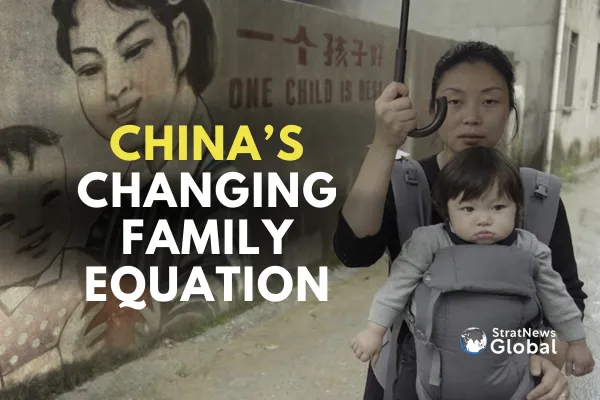

Remove the father and keep the child (去父留子): this is not a line from some film script. It reflects a growing debate among young women in China, some of whom are choosing to have children without marriage or a long-term partner.
Rather than waiting for marriage, some financially secure, highly educated women are turning to IVF or overseas sperm banks. Others choose to raise a child without paternal involvement. The shift signals a broader change: having a child, for some, no longer depends on having a husband.
Several social forces are driving this trend. In major cities, more women have stable careers and financial independence, reducing reliance on marriage for security. At the same time, traditional expectations around marriage are loosening, with personal fulfilment and autonomy increasingly prioritised.
But New York-based journalist Yaling Jiang points out that while Beijing bans workplace discrimination against women, during job interviews, women are asked about their marriage plans and whether they intend to have children. Employers often see maternity leave as a cost or burden.
Women when they reach the age of 30 are expected to 'settle down', meaning give up their jobs to focus on children and the family. It underscores another point: when a woman reaches the age of 35, job opportunities tend to shrink in China.
Jiang says that female-focused social media apps such as Xiaohongshu (Rednote), have young women airing their views about the physical and emotional challenges of childbirth.
An article on Baidu (China's Google) in early 2025, titled 'The 'Remove the Father, Keep the Child' Trend Is Quietly Spreading; Experts Warn Men to Be Cautious,' discussed the rise of single motherhood by choice in China. Experts in this article warned that if men only see their role as earning money, they may be pushed aside in changing family structures.