
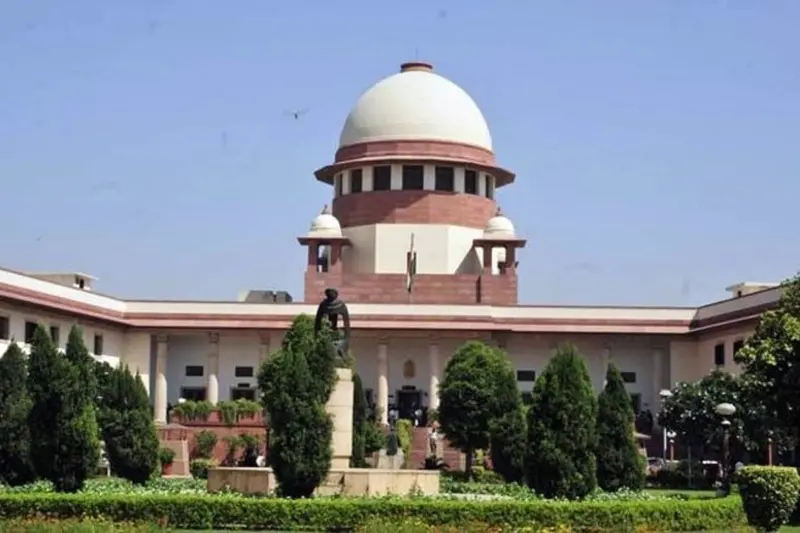

A group of scholars drawn from IITs, IIMs, and other institutions has appealed to the President of India to intervene in a Supreme Court order that banned a Class 8 NCERT textbook and directed government bodies to disassociate from three members of its development team.
Fifty-one academics, scholars, and concerned citizens addressed a letter to President Droupadi Murmu on 7 April 2026, requesting urgent intervention in what they describe as a matter with "far-reaching consequences for Indian education."
The letter, sent by email and speed post, concerns a suo motu Supreme Court order dated 26 February 2026 that banned an NCERT Social Science textbook for Class 8, and a subsequent order dated 11 March 2026 that directed all central and state government bodies, Union Territories, and publicly funded universities to immediately disassociate from three members of the textbook's development team.
The signatories include faculty from IIT Madras, IIT Kanpur, IIT Bombay, IIT Kharagpur, IIT Gandhinagar, IIT Roorkee, IIT Indore, IIT Bhubaneswar, IIM Ahmedabad, IIM Bangalore, IIM Kozhikode, IISc Bangalore, the Indian Statistical Institute Kolkata, and Jawaharlal Nehru University, among others.
The letter
The academics raise five distinct objections to the Supreme Court's orders, spanning legal, constitutional, and pedagogical grounds.
--On legal grounds, they argue that in India, a book may be banned only by law, and that the Supreme Court's order banning the textbook by judicial fiat constitutes an overreach of its constitutional powers. They note that multiple legal commentators and articles published across media platforms have reached the same conclusion.
--On due process grounds, they argue that the three individuals named in the NCERT Director's affidavit - Michel Danino, Alok Prasanna Kumar, and Suparna Diwakar - were subjected to a "harsh blanket punishment" without being given any opportunity to be heard, in violation of the principles of natural justice. The letter further argues that the order directing all government-funded institutions to disassociate from these individuals amounts to a violation of their fundamental rights to employment and livelihood guaranteed by the Constitution.
--On proportionality grounds, they contend that banning the entire textbook on account of a supposedly objectionable subsection of a single chapter caused unnecessary hardship to Class 8 students across the country. They suggest that a more measured response would have been to allow the remaining chapters to be published online while the contested section was reviewed.
--On pedagogical grounds, the letter argues that the Supreme Court's expression of concern about students at an "impressionable age" intrudes into a domain that properly belongs to educationists familiar with the National Education Policy 2020 and the National Curriculum Framework for School Education 2023. The letter notes that the new textbooks were developed under an explicit mandate to engage students in critical thinking and equip them to become responsible citizens aware of their rights and responsibilities.
On the broader implications for academic freedom, the letter warns that the Supreme Court's intervention - threatening criminal contempt and imposing professional sanctions on educators without a hearing - has created "an atmosphere of intimidation" that may deter present and future educationists from constructive criticism of institutions, which the signatories describe as "indispensable in a healthy democracy."
What the letter requests
The signatories make four specific requests to the President.
1. They ask her to request the Supreme Court to withdraw the ban on the textbook and allow its online publication without the judiciary chapter.
2. They ask her to request the Supreme Court to waive the professional disqualification imposed on the three educators.
3. They ask that the expert committee constituted to review the contested chapter - which the Ministry of Education communicated to the Supreme Court would comprise distinguished jurists - be expanded to include experienced educationists, to ensure that any revisions remain consistent with the NEP 2020 mandate.
4. Finally, they ask the Ministry of Education to ensure that the curriculum development committees formed under NEP 2020, particularly the National Syllabus and Teaching Learning Committee, are made fully functional.
The original controversy
The controversy arose from a new NCERT textbook titled Exploring Society: India and Beyond, published on 24 February 2026 as the Social Science textbook for Grade 8, Part 2.
The book was developed as part of the broader curriculum reform process initiated under the National Education Policy 2020 and the National Curriculum Framework for School Education 2023.
One of the textbook's eight chapters was titled "The Role of the Judiciary in Our Society." Within that chapter, a section on "Challenges Faced by the Judicial System" contained two subsections: one addressing the large volume of pending cases in Indian courts, and a second addressing corruption in the judiciary.
Two days after the textbook's publication, on 26 February, two senior advocates brought the chapter to the attention of a Supreme Court bench presided over by Chief Justice Surya Kant, on the basis of a newspaper article.
The bench found the chapter "offending" and "prima facie intended towards maligning the Indian Judiciary" and passed a suo motu order banning the textbook.
Show-cause notices for criminal contempt were simultaneously issued to the Director of NCERT and to the Secretary for School Education and Literacy in the Ministry of Education.
On 11 March, following unconditional apologies from both officials, and after the NCERT Director named three members of the textbook development team as responsible for drafting the chapter, the Supreme Court bench issued a second order directing the Government of India, all state governments, all Union Territories, and all public universities and institutions receiving central or state government funding to "disassociate from these three members of the TDT forthwith." The matter was posted for further hearing on 6 April 2026.
The three individuals named were Michel Danino, a scholar of ancient Indian history and culture; Alok Prasanna Kumar, a legal researcher and co-founder of the Vidhi Centre for Legal Policy; and Suparna Diwakar, an educationist. None of the three were given an opportunity to respond before the order was passed.
Full text of the letter
The following is the complete text of the letter addressed to the President of India, dated 7 April 2026.
Smt. Droupadi Murmu Hon'ble President of India Rashtrapati Bhavan New Delhi - 110 004
April 7, 2026
Sub: Academic freedom threatened by the Supreme Court's ban of an NCERT textbook and harsh punishment on some of its contributors
Respected Madam,
We are a group of academics, scholars and concerned citizens. We wish to draw your attention to, and request your intervention in, the following urgent matter, which has potential far-reaching consequences for Indian education.
Background
After the publication of the National Education Policy 2020, the Ministry of Education set up several committees for the preparation of the National Curriculum Framework for School Education (NCF-SE 2023), and the development of new syllabi and textbooks towards the implementation of NEP 2020. Several new textbooks in a number of disciplines, from Class 1 to Class 8, have now been published by the NCERT.
On February 24, the NCERT published Exploring Society: India and Beyond, Social Science Textbook for Grade 8 Part 2. One of the textbook's eight chapters was titled "The Role of the Judiciary in Our Society"; a section of it, "Challenges Faced by the Judicial System", had two subsections: one about the large number of pending cases in Indian courts, the other about corruption in the Judiciary.
On February 26, following representations by two senior counsels on the basis of a newspaper article, a bench of the Supreme Court presided over by the Chief Justice of India, Justice Surya Kant, found the chapter "offending" and "prima-facie intended towards maligning the Indian Judiciary." It passed, suo motu, an order banning the textbook, issued show-cause notices for criminal contempt to the Director, NCERT, and to the Secretary for School Education and Literacy in the Ministry of Education. On March 11th, following their unconditional apologies, and the naming by the NCERT Director of three members - Michel Danino, Alok Prasanna Kumar and Suparna Diwakar - of the Textbook Development Team (TDT) as being responsible for drafting the chapter, the Supreme Court bench ordered "the Government of India, the State Governments, the Union Territories, as well as all public universities and institutions receiving funds from the Central or State Governments, to disassociate from these three members of the TDT forthwith." It posted the matter to April 6 for further hearing.
A case of judicial overreach
Articles and blogs on many media platforms, including several authored by legal experts, have analyzed the Supreme Court order and found that since, in India, a book can be banned only by law, the Supreme Court overreached its powers in banning the textbook. Some authors reported having seen the chapter and found nothing objectionable in it; a few even found that overall, the Judiciary was portrayed in a positive light.
Several analyses also pointed out that in breach of the principles of natural justice, the harsh blanket punishment of the three persons alleged to have drafted the contentious chapter was imposed without providing them with an opportunity to be heard. They also pointed out that this punishment would amount to a violation of their Fundamental Rights to employment and livelihood guaranteed by our Constitution.
We feel concerned that the Supreme Court's ban on the book has prevented educational experts, teachers and other stakeholders from objectively examining the contentious chapter. We feel even more concerned that, in breach of the best democratic traditions, the ban has stifled any public debate on challenges faced by the Judiciary and their place in Social Science textbooks. In our opinion, it behoved the Supreme Court to call for a fair, independent, dispassionate appraisal of the contentious chapter in the specific educational context of the new textbooks.
Essentially an educational matter
The legal angle apart, by imposing a ban on the entire textbook and on the three TDT members named in the NCERT Director's affidavit, the Supreme Court bench has committed, in our humble and respectful opinion, several oversights:
The Supreme Court's order of February 26, focusing only on a couple of sentences of the contentious chapter, does not include a dispassionate assessment of the chapter. It also does not take into account earlier chapters on the Constitution, the Legislature, the Executive, the electoral system, local bodies, etc., in the new textbooks for Classes 6 to 8, with the gradual development of the concepts across those grades.
The Supreme Court's orders have failed to appreciate the special mandate under which the new NCERT textbooks are produced, including the mandate to engage students in critical thinking, to encourage them to become responsible citizens aware of their rights and responsibilities, and to equip them to face the unique challenges of the 21st century.
Assuming, for the sake of argument, that there were some serious issue with two subsections of the contentious chapter, the Supreme Court could have let NCERT release all other chapters of the textbook on its website, enabling students to study at least some of them. The ban on the entire textbook because of a supposedly "offending" subsection of one chapter appears to us to have caused hardship on school students of Class 8 (CBSE Board) throughout India.
The Supreme Court bench expressed concern that students of Class 8 are "at an impressionable age". But what is to be taught at what age, and through what method, should be left to educationists well acquainted with the new approach outlined in the NEP 2020 and the NCF-SE 2023, and familiar with classroom pedagogy and transactions.
By forcefully intervening in what is essentially an educational matter, threatening criminal contempt of court and banishing respected educationists without hearing them, the Supreme Court, which stands as the protector of freedom of expression, has encroached upon academic freedom and created an atmosphere of intimidation which may strike fear among present or future educationists. This will impede even positive and constructive critiques of our institutions, which are indispensable in a healthy democracy.
Our appeal
We respectfully appeal to the Hon'ble President of India to urgently intervene and ask the Ministry of Education:
To request the Supreme Court to withdraw the ban on the concerned textbook and immediately allow its online publication without the chapter on the Judiciary.
To request the Supreme Court to waive off the harsh punishment imposed on three respected educationists.
To include in the expert committee of distinguished jurists it has constituted to review the concerned chapter (according to information communicated by the Ministry of Education to the Supreme Court) experienced educationists who will ensure that any alterations remain in tune with the mandate of the NEP 2020 and the NCF-SE 2023.
To ensure that the committees the Ministry of Education formed earlier to produce the new syllabi and textbooks, especially the National Syllabus and Teaching Learning Committee (NSTC), are made fully functional and aware of their responsibilities.
With respectful regards,
The full list of signatories as appended to the letter:
Dr Ritendra Sharma - Director, Centre for Indic Studies, Ahmedabad
Dr P. Ajithprasad - Former Professor, Department of Archaeology & Ancient History, Maharaja Sayajirao University of Baroda, Vadodara
Prof. Amartya Dutta - Indian Statistical Institute, Kolkata
Prof. Anand Ranganathan - Special Centre for Molecular Medicine, Jawaharlal Nehru University
Prof. Anil Kumar Gourishetty - IIT Roorkee
Dr Anuradha Choudry - Faculty, Department of Humanities and Social Sciences, IIT Kharagpur
Prof. Arnab Bhattacharya - Computer Science and Engineering, IIT Kanpur
Prof. Arun D. Mahindrakar - IIT Madras
Shri Ashish Kumar Gupta - Founder, Jeevika Ashram, Jabalpur
Shri A.V. Balasubramanian - Founder, Centre for Indian Knowledge Systems, Chennai
Prof. Bharath Bhikkaji - IIT Madras
Dr Bharat Gupt - Vice Chairman, National School of Drama, New Delhi
Prof. M.S. Chaitra - The University of Trans-Disciplinary Health Sciences and Technology, Bengaluru
Prof. Chinmay Tumbe - Indian Institute of Management, Ahmedabad
Prof. Ganti S. Murthy - Professor, Bioscience and Biomedical Engineering, IIT Indore
Prof. K. Gopinath - Senior Professor, Rishihood University, Sonipat
Shri Hari Kiran Vadlamani - Founder, Indic Academy, Hyderabad
Prof. R.N. Iyengar - Former Professor, IISc; Distinguished Emeritus Professor, Jain University, Bengaluru
Dr Pramod Joglekar - Retired Professor of Archaeology
Dr Johnson Odakkal - Commodore, Indian Navy (Retd)
Prof. Shivakumar Jolad - Public Policy Chair, Center for Legislative Education and Research, School of Liberal Education, Lavale, Pune
Prof. Jyotirmaya Tripathy - IIT Madras
Prof. P. Kanagasabapathi - Former Chairman, Indian Council of Social Science Research, New Delhi
Prof. Kausik Gangopadhyay - IIM Kozhikode
Prof. Prathamesh V. Kittur - IIT Madras
Prof. Ravi Korisettar - Honorary Director, Robert Bruce Foote Sanganakallu Archaeological Museum, Ballari, Karnataka
Shri Raghava Krishna - Founder, Brhat Educational Trust
Prof. B. Mahadevan - Former Professor, IIM Bangalore
Dr Mrittunjoy Guha Majumdar - Amrita Vishwa Vidyapeetham, NCR
Prof. H.S.N. Murthy - IIT Madras
Prof. Ranjit Kumar Nanda - IIT Madras
Shri Ramasubramanian Oruganti - Director, Samanvaya Social Venture Pvt. Ltd., Chennai
Prof. Ramakrishna Pasumarthy - IIT Madras
Dr Nagaraj Paturi - Scholar and Author, Hyderabad
Prof. T.V. Prabhakar - Former Professor, IIT Kanpur
Prof. V.N. Prabhakar - IIT Gandhinagar
Prof. Prabhat Pujahari - IIT Madras
Prof. P.A. Ramakrishna - IIT Madras
Prof. K. Ramasubramanian - Centre for Traditional Indian Knowledge and Skills, IIT Bombay
Prof. N.V. Ravi Kumar - IIT Madras
Prof. Ravi Sankar Kottada - IIT Madras
Prof. Sachin Gunthe - IIT Madras
Prof. V. Selvakumar - Department of Maritime History and Marine Archaeology, Tamil University, Thanjavur
Prof. Shankar Sharan - Writer-columnist; formerly Professor, The MS University of Baroda
Prof. Sharada Channarayapatna - IIT Gandhinagar
Dr Shivaprasad Khened - Former Director, Nehru Science Centre, Mumbai
Dr Jammalamadaka Srinivas - Co-Founder, Sri Kameshwari Foundation, Hyderabad
Prof. Srinivas Boppu - IIT Bhubaneswar
Prof. M.S. Sriram - President, Prof. K.V. Sarma Research Foundation, Chennai
Prof. Vibha Tripathi - Former Head & Professor Emerita, Department of A.I.H.C. & Archaeology, Banaras Hindu University
Prof. S.K.M. Varadhan - IIT Madras
All signatories have signed in their personal capacity. Institutional affiliations are listed for identification purposes only and do not imply institutional consent or involvement.