




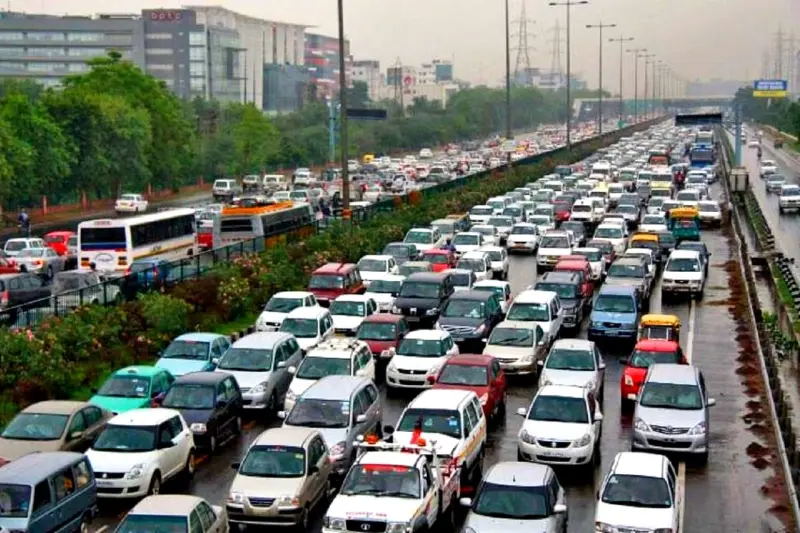

India to finalise a comprehensive Urban Decongestion Policy targeting cities with populations exceeding one million, with plans to construct new ring roads alongside existing projects.
According to a report in Mint, the Centre is recalibrating its highway strategy to focus on elevated corridors, ring roads and bypasses around major cities, in a bid to ease traffic congestion and bring down logistics costs. The shift signals a move away from the earlier emphasis on inter-city expansion towards tackling urban decongestion.
The Ministry of Road Transport and Highways and the National Highways Authority of India are spearheading the initiative to divert heavy commercial traffic away from congested urban centres through access-controlled ring roads, bypasses and elevated corridors.
The Bharatmala programme previously identified 191 congestion points across key cities on the national highway network, with multiple interventions planned, including 29 ring roads addressing 44 congestion points, 54 bypasses targeting 56 points, and 76 lane expansions addressing 91 points.
The infrastructure push aims to reduce travel times, cut vehicular emissions and improve road safety whilst boosting economic productivity in urban areas.
The policy envisions innovative financing models, including cost-sharing arrangements and Value Capture Financing, to accelerate project implementation.
Officials emphasised that the ring roads and bypasses will be closely aligned with urban master plans to ensure balanced growth, whilst creating dedicated high-speed arteries that allow through-traffic to completely avoid city centres.
The PM Gati Shakti National Master Plan's decongestion strategy had identified 156 critical infrastructure gaps and enabled planning for 8,891 kilometres of roads.
Government studies have revealed India's logistics costs have declined from a historic 13-14 per cent of GDP to 7.97 per cent, with the new infrastructure expected to push this figure closer to the seven per cent target by 2030.
Earlier, Union Road Transport Minister Nitin Gadkari emphasised that decongesting cities is critical to economic productivity, environmental sustainability and quality of life.
The ministry has allocated Rs 3.10 lakh crore for road infrastructure in the 2026 budget, with NHAI receiving Rs 1.87 lakh crore to execute the ambitious programme that promises to transform urban mobility across the country.
Taken together, the new ring roads, bypasses and elevated corridors will mark a decisive turn in how India plans the next chapter of its urban growth.