
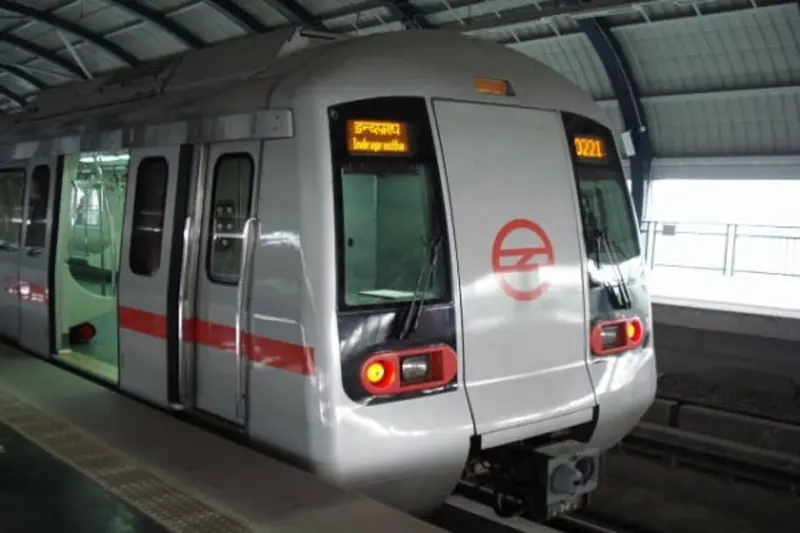

Delhi's next major Metro expansion has moved closer to reality, with the Detailed Project Report (DPR) for Phase V(B) submitted to the Centre and now awaiting Union Cabinet clearance.
Earlier this week, the Delhi government also approved the proposal after a high-level review with DMRC officials. Final financial sanction from both the Centre and the Delhi government will be required before construction begins.
The proposed package spans nearly 97 km and is designed to extend rapid transit access to several underserved and fast-growing areas of the capital, while creating new interchange links with the existing network.
Key Proposed Corridors
Dhansa Bus Stand-Nangloi (11.859 km)
Fully elevated with nine stations, connecting outer-west Delhi localities including Ranhola, Bakkarwala and Najafgarh Extension. Interchanges planned with Grey and Green Lines.Central Secretariat-Kishangarh (15.969 km)
Mostly underground route with 10 stations, improving links to RK Puram, New Moti Bagh and JNU.Samaypur Badli-Narela (12.89 km)
Elevated extension with eight stations through Siraspur, Alipur and Holambi Kalan, bringing Narela deeper into the Metro grid.Kirti Nagar-Palam (9.967 km)
Mixed elevated and underground alignment with six stations, serving west Delhi residential and industrial belts.Jor Bagh-Mithapur (16.991 km)
A strategic north-south corridor connecting Lodhi Colony, Okhla, Jasola and Madanpur Khadar.Shastri Park-Mayur Vihar Phase III (13.197 km)
Eight stations linking east Delhi zones such as Geeta Colony, Gandhi Nagar and Patparganj.Keshavpuram-Rohini Sector 34 (16.285 km)
Fully elevated corridor connecting Pitampura, Rohini and Delhi Technological University.
"Four of these corridors will be taken up as priority projects, with a completion target of 2029," CM said. The remaining three corridors will be taken up in subsequent phases of development.