
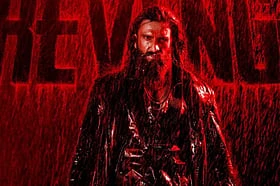

Dhurandhar 2 is a masterful blend of fact and fiction, and the blend is seamless because Dhar knows exactly where one ends and the other begins, and he is not confused about which serves the story.
I finally watched Dhurandhar 2 at a late-night show on a Wednesday, and yes, the hall was almost full, and yes, as most reviews say, the movie is violent. I am not enamoured by cinematic violence. Decades of watching Hindi film heroes punch their way through armies of goons has anaesthetised most of us to screen bloodshed. Violence in Hindi movies has always been a spectacle, not a sensation.
But what director Aditya Dhar has achieved in Dhurandhar 2 is something incredible. The violence feels cathartic, purgatory, purifying. Only once before has on-screen violence felt so cathartic, and yes, so lyrical. That was in Kill Bill Volume 1, where Uma Thurman faces Lucy Liu in a snow-drenched, moonlit sword fight that transcends blood and gore and becomes something close to poetry in motion. Dhar achieves a similar alchemy in Dhurandhar 2. The violence does not disgust. It releases. The question worth asking is what makes the depiction of on-screen violence in Dhurandhar 2 feel like justice while other similar depictions feel merely gratuitous? The answer lies in the weight of history behind it.
The Ghost In The Director's Chair
While making Dhurandhar, Aditya Dhar was not merely making a spy thriller; he was performing an exorcism. Dhar is a Kashmiri Hindu. His family was among the hundreds of thousands who were driven from the land of their ancestors, not too long ago in history. Their exodus was not forced by famine, not by open war between armies, but by a slow, orchestrated campaign of terror and intimidation, punctuated by one of the most shameful nights in independent India's history, January 19, 1990. That night, mosque loudspeakers across Srinagar blared messages that were unmistakably genocidal in intent. Kashmiri Hindus were given a choice: raliv, chaliv, ya galiv - convert, flee, or die. Hundreds of thousands of Kashmiri Hindus fled in a single night, leaving behind homes, temples, orchards, memories, and the ashes of their ancestors.
For over three decades, this exodus, the largest mass displacement of a religious minority in post-partition India, was systematically erased from mainstream cultural memory. The dominant secular cultural discourse of the time turned the perpetrators of this genocide as victims, while the actual victims were made invisible as they were forced to languish in refugee camps in Jammu, where many still live.
In the climax of Dhurandhar 2, when Major Iqbal, the ISI handler, delivers his justificatory monologue, that cocktail of fake grievance, religious supremacism, and Islamist ideology, Dhar is not merely writing a fictional dialogue. He is transcribing history. These are real words that blared from mosque speakers in the Kashmir Valley on that bleak January night. It is the mindless hatred that drove Aditya Dhar's family from their home.
No wonder the violence feels so cathartic to the average movie goer in Bharat. Pakistan has been bleeding India by a thousand cuts for decades now, but it is the first time in history that a mainstream Hindi film has looked that history in the eye and refused to blink.
Hamza - The Spy Without A Face
Ranveer Singh's intense portrayal of Hamza deserves detailed attention because it represents a conscious, almost radical departure from how Bollywood typically imagines its patriotic heroes. Hamza is not the bombastic Sunny Deol in Gadar displaying chest thumping, hand pump-wrenching, operatic nationalism. He is not Nana Patekar in Tiranga, volcanic, declamatory, delivering patriotism in a performative speech. Ranveer Singh's Hamza is controlled to the point of appearing cold. His patriotism is not performed for the audience, it is lived internally, and we are given only a few fleeting glimpses from time to time. Watch Ranveer's eyes when he talks about what Pakistan has been doing, that is where the performance lives. A barely perceptible tightening when he must deny his own identity. A stillness that is more eloquent than any dialogue when he receives orders that will cost him something deeply personal. A coiled, dangerous quality in moments of confrontation, not rage, but precision.
Hamza is what a good spy must be. Emotion is a liability in his profession. Attachment is a vulnerability to be weaponised by adversaries. Hamza has learnt to bury everything, and Ranveer makes us feel the cost of that burial with every gesture of his without ever making it overly sentimental. The genius of the characterisation is in what Hamza is willing to sacrifice. Not just his safety. Not just his identity. But his relationships. His family. His very name. He is not a larger than life hero in the Bollywood sense, he is something older, more tragic, more real. He is the person who walks into the darkness so others can sit in the light, and who cannot ever tell anyone that he was the one who helped kept the lights on.
The Walk That Broke Me
Dhar saves the most moving sequence of the movie till the end. Hamza, who has spent the entire film being someone else, burying the son and the brother under layers of a fake cover identity, when he finally walks towards his childhood home as Jaskirat, I felt the weight of his every single step. As he walks towards the home of his childhood, he can see his family, or what's left of it. They are there, his mother, sister, nephews, all within reach, caught in an ordinary moment of domesticity, boys playing hockey, mother sweeping the tiny courtyard, sister hanging clothes to dry, completely unaware that the man watching them from a distance is one of them.
Hamza has earned this moment. He has bled for this country, he has given up everything, and yet, this one simple human act of walking into his own home and being known by the people who love him, is the one thing he cannot have. Hamza's walk is slow. It should be. It is the walk of a man carrying the full weight of his choice. Every step is a negotiation between duty and longing. And when he stops, when he understands that he cannot cross that invisible threshold, the pain in his eyes is the entire moral architecture of the film made visible.
Dhar and Ranveer understand something vital that lesser filmmakers miss, that the greatest sacrifice is not the dramatic one, the one made in the heat of battle. The greatest sacrifice is the quiet, daily, uncelebrated one. The one nobody sees.
Ajay Sanyal, The Devil In The Details
One of the clearest markers of a director's confidence is what he does with his supporting characters. Ajay Sanyal's character, based on an easily identifiable NSA, Ajit Doval, played superlatively by R. Madhavan, deadpan, watchful, seemingly impassive throughout, is a masterclass in restraint. This is a man who has seen much, feels everything, and shows nothing until he is exhorting a dying Zahoor Mistry to say Bharat Mata Ki Jai. The glow in Madhavan's eyes then, that hint of glee, of deep, private satisfaction, is both chilling and deeply human at the same time. This is not cruelty or schadenfreude. This is a man who has worked hard all his life for precisely this moment, and who allows himself, just this once, the smallest expression of it. The preceding scene where he leaves a Havan to take Hamza's call is also telling, it is not duty over Dharma, Dhar is telling us that duty is Dharma!
I also appreciated the detail of Sanyal's grandson sleeping soundly in his arms while he speaks to the ISI chief. A child who knows nothing of the world his grandfather navigates. An image of innocence nested inside a conversation about terror and treachery. It is the kind of detail that cannot be scripted, it can only arise from a director who is thinking about every frame, who understands that cinema works in layers, and that meaning accumulates in precisely these moments of apparent casualness.
The casting director deserves a separate round of applause. Every character modelled on a real historical figure bears a resemblance that goes beyond mere physical likeness. These characters move, speak, and inhabit their roles as if they have absorbed not just the appearance but the essence of their real-life counterparts. This level of attention is rare in Hindi cinema.
On The Question Of 'Propaganda'
The word 'propaganda' has been deployed against this film with a lot of enthusiasm by the usual movie critic lobby. Let us examine this charge with the seriousness it deserves, which is to say, very little.
Yes, Dhurandhar clearly picks a side. It unapologetically presents a perspective. It is not neutral. But then, neither was Bombay, which was widely praised for humanising Muslim characters during the communal riots but had relatively little to say about what triggered those riots. Parzania, which told the story of a Parsi boy lost during the 2002 Gujarat riots with great emotional power and no particular interest in balance, was also not neutral. It made villains only out of the Hindus. Neither was Haidar neutral. Haidar was a sustained, aesthetically sophisticated exercise in presenting the Indian Army as the primary villain of the Kashmir conflict, based on a Shakespeare play, ignoring three decades of Pakistan-sponsored Islamic terrorism and the 1990 genocide and exodus of the Kashmiri Hindus entirely.
And yet, not one of these films triggered the breast-beating, the hand-wringing, the solemn op-eds about cinema's responsibility to 'represent all sides' that Dhurandhar 2 has caused. When cinema humanises Muslim suffering and drums up fictitious accounts of Aman Ki Asha, it is called 'nuanced', but when it humanises Hindu suffering and presents real life, actual historical events of Pakistan-sponsored terrorism, it is called 'propaganda'.
This is not a critique of cinema. This is the death scream of a self-styled movie critic lobby that once acted as gatekeepers, but are now increasingly getting irrelevant.
Fact, Fiction And Faith
Dhurandhar 2 is a masterful blend of fact and fiction, and the blend is seamless because Dhar knows exactly where one ends and the other begins, and he is not confused about which serves the story. This is a film made by a director with complete mastery of his medium, of pacing, of silence, of the grammar of action cinema and the deeper grammar of human psychology. It is also a film made by a man with something to say, something that has been waiting a long time to be said, and who has now found the language to say it. The violence in Dhurandhar 2 feels cathartic because it is earned. The emotion is real because it comes from a wound that has never properly healed. And the film is powerful because it refuses, finally, to look away.
For decades, Indian moviegoers have watched filmmakers apologise for the terror acts of Pakistan, they have watched the true history of India misrepresented, glossed over or simply ignored by the culture industry. Dhurandhar does not give the victims of Islamic terror justice, no film can do that. But it gives them something they have been denied for too long. It gives them a witness who tells their story as it happened!