
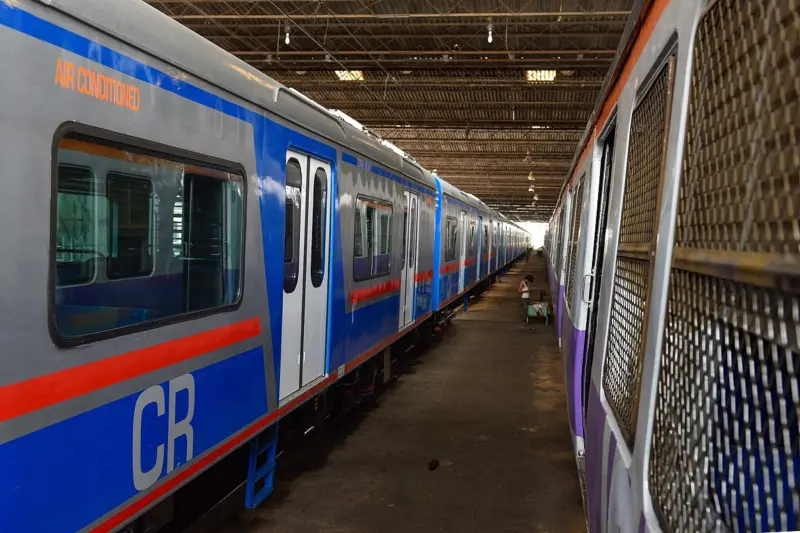

Mumbai's suburban rail network faces a pivotal moment as its first non-air-conditioned local train equipped with automatic doors undergoes crucial testing.
Railway officials say airflow capacity has been increased by nearly 65 per cent, supported by roof-mounted blowers and dual air intake systems, whilst wider sliding windows and louvred doors are designed to maintain circulation even when doors remain shut.
The 12-car train arrived at Kurla Carshed from Integral Coach Factory on Monday evening, marking a significant departure from traditional open-door rakes.
Ventilation has also been upgraded; roof-mounted systems now push 10,000 cubic metres of air per hour per unit, up from 6,000, supported by wider 1,900 mm sliding windows and louvred doors that allow airflow even when closed.
Central Railway will now begin a series of trials, including high-speed and load testing, before allowing passenger runs on the less crowded Nerul-Uran corridor.
The initiative stems from urgent safety concerns following a tragic incident in June 2025 near Mumbra, where five passengers died, and nine others were injured after falling from an overcrowded local train.
In 2025, overcrowding led to over 2,200 fatalities, which translates to roughly 6 to 10 deaths each day.
The train also has four First Class compartments instead of three, along with improved safety systems such as automatic anti-drag doors, fire detection, and emergency communication units.
However, commuters accustomed to open doors for natural ventilation remain cautious.
During rush hour, train compartments often carry up to 5,500 passengers against an intended capacity of 1,200, increasing the risk of fainting, suffocation and heat-related illnesses.
Officials said trials will determine how well ventilation performs under peak crowd conditions, with trials focused on passenger comfort and amenities; specifically, measuring the oxygen levels inside the compartments while passengers are travelling.
The new rake presents a noticeable trade-off. Seating capacity has slightly reduced, while standing space has increased significantly-clearly designed to accommodate more passengers.
While this may ease movement inside, it also means more bodies generating heat in enclosed coaches, putting additional pressure on the ventilation system.
It will now undergo trials and intensive safety testing before being opened to the public in about three months, likely around July 2026, when commuters will finally judge whether the system delivers on both safety and comfort.
Please click here to add Swarajya as your preferred and trusted news source on Google