
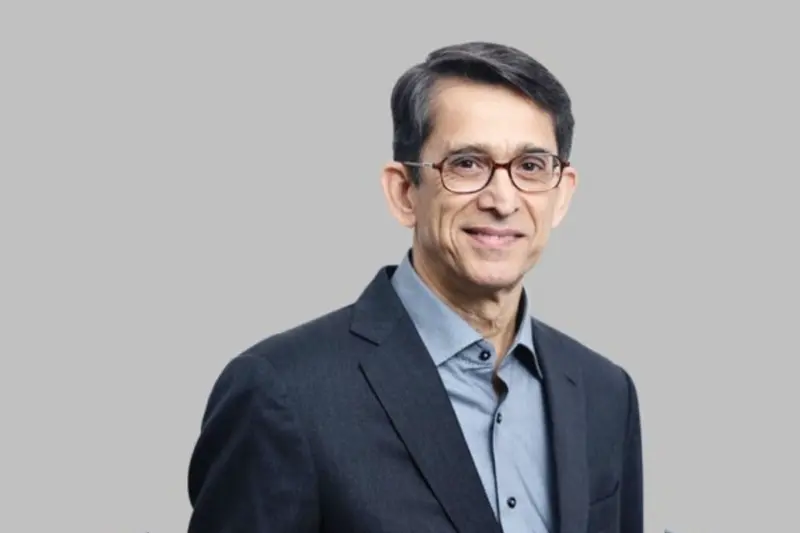

Ravi Pandit built KPIT Technologies from a Pune accounting firm into a globally respected automotive software company while never leaving home.
An obituary for a vanishing kind of Indian entrepreneur.
On the wooden shelf of a book shop at the New Delhi airport, sandwiched between glossy business bestsellers and airport-thrillers, I first spotted Leapfrogging to Pole-Vaulting. The title sounded like a corporate slogan, but the book's blurbs piqued my curiosity.
There were endorsements from, among others, Ratan Tata, NR Narayana Murthy, Mukesh Ambani, Anand Mahindra and Kiran Mazumdar-Shaw.
Now, these are individuals who rarely lend their reputations casually to management books. If all of them had found something meaningful in the work, then clearly the book was saying something larger about India, growth, innovation and the future.
The book, once opened, revealed the minds of men who believed technology had meaning only when it uplifted societies and ordinary lives.
That curiosity about the book inevitably led to curiosity about one of its authors, Ravi Pandit. (The book's co-author is the eminent scientist Raghunath Mashelkar). And subsequently, the more one read about Ravi, the more one realised that he represented the vanishing species of Indian businessmen who chose to remain understated institution builders.
The pact of return
SB Ravi Pandit, 76, the co-founder and chairman of KPIT Technologies, passed away in Pune on 8 May. Born in 1950, the thing about Ravi was, he was globally fluent, technologically sophisticated, financially accomplished, but culturally grounded and emotionally anchored to home.
That last part mattered enormously to him. For, he was a man with formidable qualifications. A gold medal-winning chartered accountant. A management graduate from the MIT Sloan School of Management. A professional who could very easily have built himself a lucrative life in the United States at a time when India in the 1980s was still trapped in shortages, bureaucracy and economic hesitation.
The story goes that Ravi had taken an educational loan to fund his time at MIT, and made a silent pact with himself that the moment that loan was repaid, he would return to India. And he kept his word.
While his peers were building the American Dream, Ravi returned to Pune and began again from the ground up, eventually helping build what would become one of India's most respected automotive software and mobility engineering companies.
In Pune, within the ecosystem of his father's accounting firm, Kirtane & Pandit, he began discussing a new possibility with his friend Kishor Patil and technology expert Shirish Patwardhan. It was an unlikely combination on paper - two accountants and a technologist trying to build an IT venture at a time when most Indian businesses were still uncomfortable with even purchasing computers.
A giant leap of faith
In hindsight, that decision appears visionary, as Ravi himself was trained not as an engineer or programmer. His background was in chartered accountancy and management studies. Also, it is easy to forget how uncertain the terrain looked in the 1980s and early 1990s. India had not yet become the world's back office. IT parks were not aspirational monuments. Venture capital did not hover around every engineering campus.
But Ravi and his team sensed that technology would not remain a niche support function but become the defining force of the future economy. That is how KPIT was formed in 1990.
The founders relied initially on the long-standing relationships cultivated through Kirtane & Pandit. Old accounting clients became the first believers in a technology future they themselves barely understood. Ravi would later reflect that when entering an entirely new field, one needs clients willing to endure the inevitable mistakes and uncertainties of the early years. That insight captured his temperament perfectly. He believed institutions were built patiently, through credibility and continuity.
And unlike many Indian tech companies that chased generic outsourcing contracts, KPIT has evolved into a deeply specialised engineering and mobility technology firm, particularly in the automotive sector. Today it is a trusted partner to global automobile majors, working on cutting-edge technologies such as autonomous driving, electric vehicles and software-defined mobility across 15 countries.
True path-setter
It is illuminative here to understand that Ravi recognised early that software would not remain confined to desktops and offices and would enter vehicles, machines, mobility systems and industrial ecosystems. That strategic clarity helped transform his company into a globally respected engineering player.
The company's defining moment came in 2002, when Cummins Infotech merged with KPIT, creating KPIT Cummins Infosystems. For many entrepreneurs, such a merger with a global engineering giant could have diluted the company's identity. Ravi instead used it as a springboard to build specialised engineering capabilities. The firm steadily expanded across Europe, the United States, Japan and China, embedding itself into the worldwide automotive technology supply chain.
As a result, KPIT today is one of the few Indian firms to build genuine intellectual depth in automotive engineering software, filing patents and developing specialised mobility technologies.
The anchored entrepreneur
But growth numbers and valuations alone cannot explain why Ravi leaves behind genuine admiration. There was something deeply reassuring about his public persona. He was modern without being uprooted. Even as KPIT expanded globally, Pune remained his emotional and operational centre of gravity. It was not accidental that he continued to work from there while many contemporaries migrated permanently into the circuits of Mumbai, Bengaluru, London or Silicon Valley.
People who knew him often spoke of his disciplined routines. Pranayama, yoga, reflection and reading. He remained deeply rooted in the Marathi intellectual tradition, and possessed of a humility that is increasingly rare in the era of the celebrity founder.
His leadership at KPIT was characterised by this same low-profile tenacity. He shunned the headlines and let the company's work in electric mobility and sustainable technology speak for him.
A legacy of giving back
Apart from leading KPIT, Ravi chaired his dad's Kirtane & Pandit as it expanded into a multi-country professional services firm. He also served on the board of Thermax and advised several institutions shaping India's developmental and policy conversations.
Even in his final years, there was little evidence of withdrawal into ceremonial corporate retirement. He remained engaged with innovation platforms, student engineering initiatives and research awards. At KPIT Sparkle and the KPIT Shodh Awards, he continued encouraging young innovators, researchers and engineers.
His civic commitments were equally significant. Ravi co-founded the Pune International Centre and Janwani, helping create spaces for civic dialogue and urban development. He tackled the most granular problems of his city, from waste management to urban planning.
He supported the Centre for Sustainable Development at the Gokhale Institute of Politics and Economics and served as the president of Jnana Prabodhini.
His environmental and rural development work included associations with the World Resources Institute India and the Aga Khan Rural Support Programme.
A Maharashtrian of industry and intellect
In Leapfrogging to Pole-vaulting, Ravi and Dr Mashelkar argued that scarcity should not be a limitation. It can be a catalyst for innovation. They championed a world where technology works for the betterment of society, not just the enrichment of a few. Ravi actually lived this philosophy. He viewed himself not as a billionaire (though he eventually appeared on the Forbes list), but as a steward of institutions that would outlive him and continue to make a meaningful difference.
As we said, he wore his achievements lightly. He avoided the cult of celebrity entrepreneurship. In an age where founders increasingly curate themselves like influencers, Ravi Pandit remained stubbornly low-profile.
And maybe that is why his passing feels especially sad and significant.
Pune will remember him as one of the architects of its technology identity. Maharashtra will remember him as proof that globally respected entrepreneurship could emerge without abandoning linguistic, cultural and civic roots. And Indian industry will remember him as a man who saw the future early, but never lost sight of where he came from.