
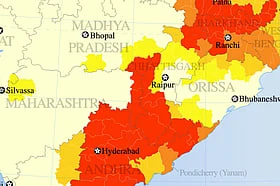

For fifty years, a Maoist insurgency bled through India's central heartland, and for most of that time, the Republic couldn't quite bring itself to treat it as a war.
In April 2026, the Home Minister declared the insurgency over - not through a peace accord or a negotiated settlement, but because the State had finally decided to behave like one.
On a spring evening in March 2026, the Union Home Minister rose in the Indian Parliament and delivered a declaration that, even five years earlier, would have sounded like fantasy: India is now Naxal-free.
There was no ceasefire to announce, no treaty to brandish, no rebel general shaking hands with a politician on a podium - just the quiet, bureaucratic finality of a state informing its legislature that the largest internal security threat in its history had been extinguished.
The top commanders of the CPI (Maoist) were either dead or in custody, thousands of jungle cadres had surrendered over the preceding decade, and the elaborate urban network that had sustained the insurgency with money, legal cover, and intellectual legitimacy had been systematically dismantled.
Most Indians, to the extent they registered the news at all, likely understood it as a military story - better weapons, superior intelligence, a few decisive jungle encounters. But the deeper and more uncomfortable truth is that India's five-decade Maoist insurgency was not ultimately defeated by firepower; it was defeated by a shift in posture, by the belated and politically costly decision of the Indian State to abandon its long habit of ideological ambivalence toward armed rebellion and to assert, with full force and without apology, its monopoly on the legitimate use of violence - the very thing that Max Weber, more than a century ago, identified as the defining characteristic of a modern state. The analytical team behind