




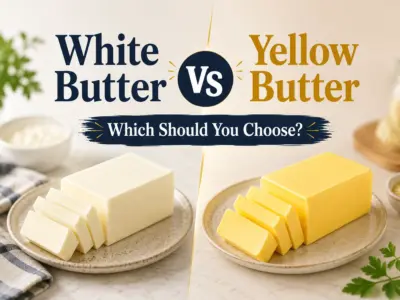

White butter and yellow butter are two of the most common butter varieties today. In recent years, many have replaced yellow butter with white butter.
So which of these two is healthier?
White Butter VS Yellow Butter: Understanding the Fundamental Difference
The biggest difference between white butter and yellow butter is that only of them is natural. White butter is made from churning fresh cream (malai). While yellow butter is produced commercially.
Yellow butter tends to have a salty taste, while white butter is much milder in taste. Shelf life is another key difference here as yellow butter lasts longer due to preservatives.
Nutritional Comparison of White Butter & Yellow Butter
Yellow butter is extremely high in sodium. It also contains preservatives and other types of additives that may be harmful. Yellow butter also contains a higher concentration of saturated fat.
On the other hand, white butter is rich in multiple fat-soluble vitamins including vitamin A, vitamin D, vitamin E and vitamin K. One tablespoon of yellow butter includes 105 kilocalories while the same tablespoon of white butter contains close to 90 kilocalories.
Health Implications of White Butter & Yellow Butter
Yellow butter contains beta carotene, which is really good for the eyes and immune system. However, yellow butter contains more nutrients as it is unrefined. When it comes to digestion, white butter is much better than its yellow counterpart. Studies have shown that the lactose content in white butter is lower, which makes it a good option for people with lactose intolerance.
Cooking Differences Between White Butter & Yellow Butter
White butter can be only cooked on low heat due to its low melting point. It adds a smooth and mild flavour to dishes. In comparison, yellow butter is much easier to deal with, as it can be cooked on low heat as well as medium heat.
Another big difference is the moisture content. White moisture is higher in moisture (18% to 20%), so it might splutter before and during the melting process. On the other hand, yellow butter tends to melt quickly and easily.
Final Thoughts: Which is the Healthier Choice?
Both white rice and brown rice have their benefits. The choice between the two depends on your lifestyle as well as your preferences. Choose yellow butter if you want something that is versatile and rich. But if you seek something that's lighter, white butter might suit you more. Do keep in mind that both varieties contain saturated fat, with white butter having a slightly lesser concentration.
Disclaimer: The information provided in this article is only for educational purposes. Kindly consult a nutritionist before making any dietary choices.