




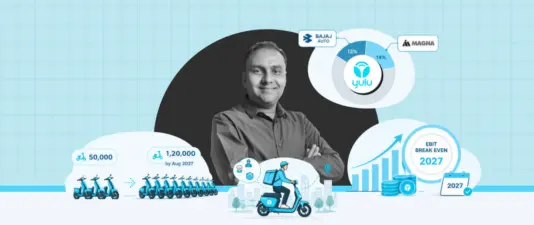

Micro-mobility platform Yulu, which rents lightweight e-scooters to mainly gig workers, expects to break even at the EBIT level by the end of 2027, even as it prepares to sharply expand its fleet.
Unlike EBITDA, EBIT accounts for depreciation, or the reduction in the value of the vehicles as they age. Reaching EBIT breakeven would mean Yulu is covering both its regular operating costs and the depreciation of the fleet. Yulu turned EBITDA-positive in April 2025. Its revenue jumped from Rs 123 crore in FY24 to Rs 242 crore in FY25, while its net loss decreased from Rs 143 crore to Rs 126 crore.
The company raised $93 million in a Series C round led by GEF Capital in August 2026 to scale its fleet and service hubs. So far, it has funded most of its e-scooter fleet through equity, with debt accounting for only about a fifth of its capital. It plans to increase the share of debt to half of its capital initially, before relying more heavily on debt over time. Bajaj Auto owns 13% of Yulu, while Canadian auto-parts supplier Magna holds 14%.
Both groups have strategic roles that go beyond their shareholdings: Bajaj manufactures Yulu's custom-designed scooters, and Magna is its partner in a battery-swapping JV, Yuma, set up in 2022. Yuma also serves other clients. Originally, Yulu was built mostly around short-duration scooter rentals for city commuters. Covid-19 pushed it towards longer-term rentals for gig workers, who now form the core of its business. The new business model depends on keeping vehicles in use across delivery and mobility platforms, supported by local centres for rider onboarding, maintenance and battery swapping.