





Golaghat, June 7: Fresh controversy has erupted within the Asam Sahitya Sabha after a court order stalled a proposed representative meeting, bringing simmering disagreements over the organisation's internal functioning and leadership selection process into sharp focus.
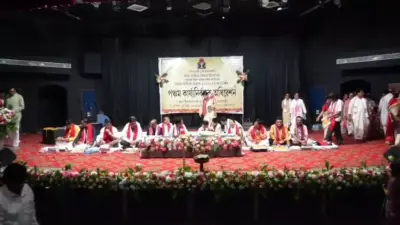
The issue came to the fore during the Sabha's 5th executive session for the 2025-27 term, held on Sunday at Birangana Sati Sadhani Kalashetra in Golaghat.
The session, hosted by the Golaghat District Sahitya Sabha, was attended by representatives from various district units and central committee office-bearers.
However, the meeting was overshadowed by a legal dispute that led to the cancellation of a representative meeting scheduled to be held alongside the executive session.
According to sources, former legal adviser of the Asam Sahitya Sabha, Anantram Medhi, approached the Court of the Civil Judge (Senior Division)-I, Kamrup (Metro), alleging that the proposed representative meeting was being conducted in violation of established procedures and that attempts were being made to extend terms through an irregular process.
Two separate cases were reportedly filed before the court seeking a stay on the representative meeting. Following a hearing on June 3, the court issued an interim order restraining the Sabha from conducting the meeting until further directions.
As a result, the representative meeting was called off, although the executive session proceeded as scheduled.
The development has triggered intense discussion within literary and cultural circles, with many viewing the dispute as part of a broader debate over governance, representation and democratic functioning within Assam's premier literary body.
Speaking on the controversy, Asam Sahitya Sabha vice-president Padum Rajkhowa stressed the organisation's inclusive character and underscored the need for a transparent and democratic process in electing its future leadership.
"Last presidential election witnessed considerable turbulence and generated widespread discussion. We do not want such a situation to arise again. The next president should be elected through a genuinely democratic process where district branches and grassroots units have a meaningful voice," he said.
He argued that concentrating decision-making powers in the hands of a few individuals would run contrary to democratic principles.
"It would be unfair if only a handful of people were allowed to decide the leadership of such a large organisation. The views of the branches and representatives must be respected. Democracy cannot function if important decisions are taken by just five people," Rajkhowa said.
Referring to the organisation's long tradition of representing diverse strands of Assamese society, he said the Sabha must continue to uphold its inclusive legacy.
"Asam Sahitya Sabha belongs to everyone. It is not defined by any religion, caste, tribe or community. People from different ethnic, linguistic and social backgrounds have contributed to its growth, and that collective spirit remains its strength," Rajkhowa said.
The court's intervention has added a new dimension to the ongoing debate within the Sabha, raising fresh questions about organisational procedures, leadership succession and the extent of participation that district units should have in key decisions.