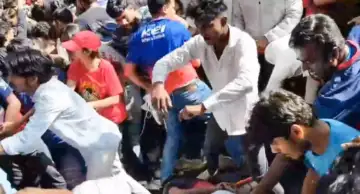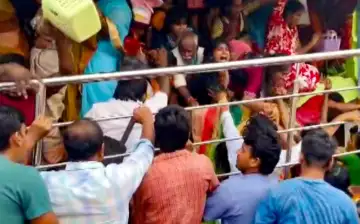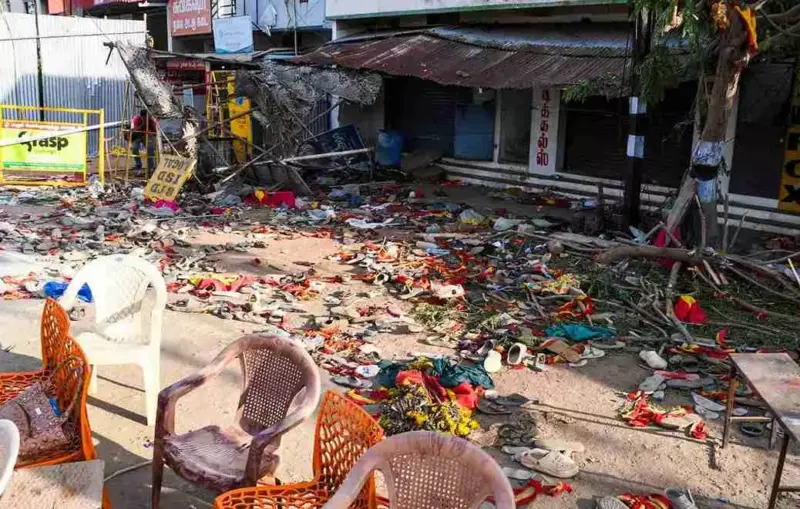

In September 2025, 30-year-old Suriya (identified by first name only) was one of those present at a rally called by actor-politician Vijay's party, the Tamilaga Vettri Kazhagam (TVK), in Tamil Nadu's Karur district.
The stampede, on September 27, reportedly claimed 41 lives, including nine children. Earlier this week, on January 12, Vijay was questioned by the CBI in New Delhi in the ongoing probe in the case, reportedly including on his alleged delay in arriving at the venue and management lapses.
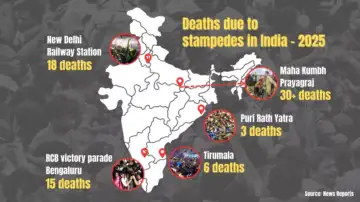
The Karur stampede was, however, not an isolated incident. From the tragedy that struck devotees at the Maha Kumbh in Prayagraj in January 2025 to the deaths at the Sri Venkateswara Swamy Temple in Srikakulam, Andhra Pradesh, in November, India saw a series of stampedes in 2025 that reportedly claimed over 120 lives.
Nearly six months after flash floods wreaked havoc in Dharali, why locals are yet to move on
It started with a rush for sacred darshan tokens at the Tirumala Venkateswara Temple in Tirupati, Andhra Pradesh, with six lives lost in January 2025. Then, on January 29, over 30 devotees lost their lives in a pre-dawn chaos at the Sangam during the Maha Kumbh in Prayagra. Another 18 lives were lost in the rush for trains at New Delhi railway station on February 15, caused by a crowd of pilgrims desperate to reach Prayagraj for the then ongoing Kumbh Mela. The Sri Lairai Devi Temple in Goa in May was the scene of another one of last year's stampedes, as six-seven people lost their lives as a crowd thronged to participate in an annual 'jatra' (festival). A victory parade for the Indian Premier League team Royal Challengers Bangaluru (RCB) in June saw 15 fans lose their lives amidst frenzied celebration at Bengaluru's M. Chinnaswamy Stadium. The Puri Rath Yatra, also in June, saw three devotees trampled near Gundicha Temple during the divine procession. Then there was Karur, in September. And in November, nine devotees, including children, lost their lives in a stampede at the Sri Venkateswara Swamy Temple in Srikakulam, Andhra Pradesh, during a rush on the auspicious day of Ekadashi.
Disaster management experts emphasise on proactive measures or preparedness, proper capacity building and mock drills to avoid such untoward incidents.
"When there is a disaster, we talk about all these [preventive measures]. We have been reactive [instead of proactive] right from the beginning. When the disaster management authority was set up, it was expected that there would be a paradigm shift from our earlier rescue and relief centric approach to looking at the pre-disaster phases including prevention, preparedness and mitigation and the post-disaster phases including reconstruction, rehabilitation, long term rehabilitation and reconstruction," says M Sasidhar Reddy, former vice chairman of the National Disaster Management Authority. "However, authorities have been focusing only on the rescue and response approach," he adds.
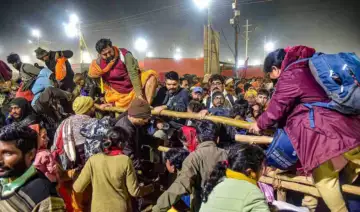
Devotees attempt to cross a barricade at the Maha Kumbh on the say of the stampede. PTI File Photo
Experts also emphasise on making stampede prevention a compulsory school subject, running awareness campaigns in cinemas, and persuading celebrities to stop luring massive crowds for quick profit through "exclusive" or "limited" offers. Religious events pose the toughest challenge owing to the fear of hurting sentiments.
According to reports, 2025 was the "second deadliest" in terms of stampede related tragedies in recent memory. The data journalism and fact-checking site Factly cites the National Crime Records Bureau's Accidental Deaths and Suicides in India report to state that 3,074 people died in stampedes between 2001 and 2022 - that's approximately 145 on average every year. Jharkhand, Maharashtra, Andhra Pradesh and Tamil Nadu purportedly account for half of the total deaths in stampedes since 2001.