
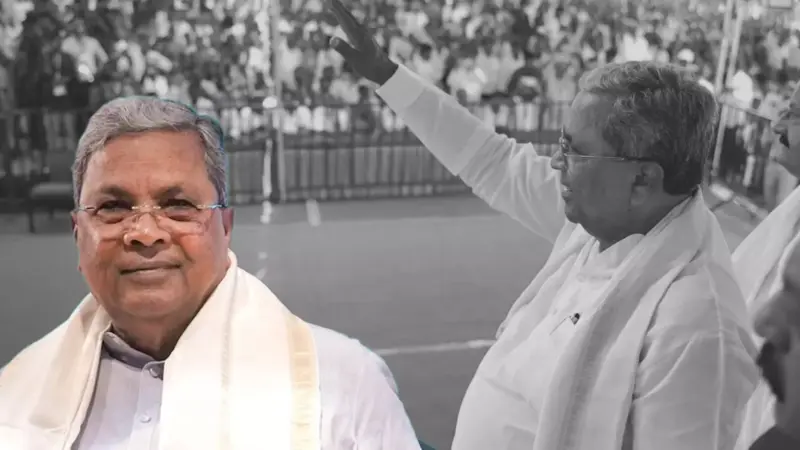

Karnataka Chief Minister Siddaramaiah has become the longest-serving chief minister in the state's history, completing a cumulative tenure of seven years, seven months, and 20 days.
The achievement places Siddaramaiah in a rare national league of long-serving chief ministers, alongside leaders such as Jyoti Basu in West Bengal, Naveen Patnaik in Odisha, and Pawan Kumar Chamling in Sikkim. While the numerical record is clear, the political significance of Siddaramaiah's tenure lies in the conditions under which it was achieved.
Speaking to The Federal, consulting editor KS Dakshina Murthy, who has closely tracked Karnataka politics for decades, attributed Siddaramaiah's longevity to political experience, adaptability, and governance choices rooted in welfare delivery.
Political grounding
Siddaramaiah's political career spans nearly four decades, beginning in the socialist stream and the Janata Dal. He worked closely with former Prime Minister HD Deve Gowda during his early years, gaining a close view of coalition politics and governance.
Dinesh Amin Mattu on Siddaramaiah vs Devaraj Urs: Why this record could define a legacy
"He comes with a very rich experience," Dakshina Murthy said, noting that Siddaramaiah has navigated multiple political phases and ideological shifts. He served a full and relatively stable term as chief minister between 2013 and 2018, a period marked by fewer controversies following the turbulent tenure of BS Yediyurappa.
Over time, Siddaramaiah emerged as a mass leader known for direct communication and metaphor-laden public speeches. This oratorical style helped him consolidate his standing within the Congress as a leader with state-wide appeal.
Welfare as strategy
A defining feature of Siddaramaiah's recent tenure has been the rollout of large-scale welfare guarantee schemes. These include free bus travel for women and direct financial assistance to women from lower-income households-initiatives that initially attracted scepticism over fiscal sustainability.