




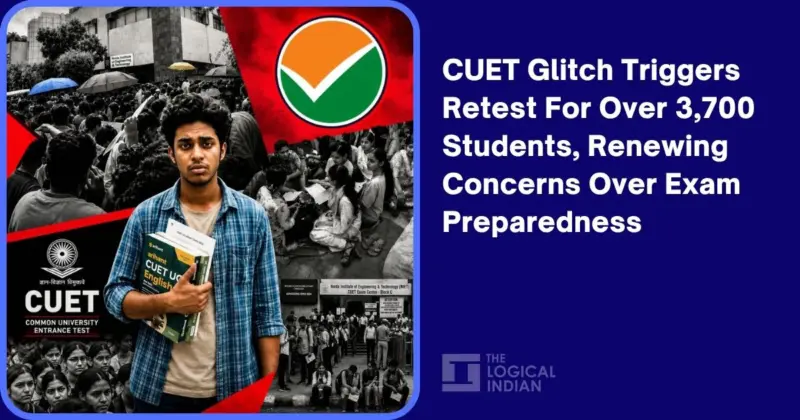

More than 3,700 candidates appearing for the Common University Entrance Test (CUET-UG) 2026 will be given a retest after a technical glitch disrupted examinations at several centres on 30 May.
The National Testing Agency (NTA) said the issue originated in systems operated by Tata Consultancy Services (TCS), the technology partner responsible for conducting the computer-based exam.
While most students were eventually able to complete their tests after delays and were given compensatory time, thousands linked to a major examination hub in Noida, were unable to take the exam as scheduled. Students and parents reported confusion and long waiting periods, while NTA and TCS have promised corrective measures. The incident has renewed concerns about the reliability of India's digital examination infrastructure.
A Major Entrance Exam Faces Disruption
CUET has become one of India's most important entrance examinations, serving as the gateway to undergraduate admissions in central, state and participating universities. Lakhs of students rely on the exam each year to secure seats in prestigious institutions across the country.
On 30 May, however, technical problems delayed examinations at multiple centres. Candidates who had arrived at their venues on time were left waiting for hours as officials attempted to resolve the issue. The disruption quickly gained attention online, with students and parents sharing their experiences and concerns on social media.
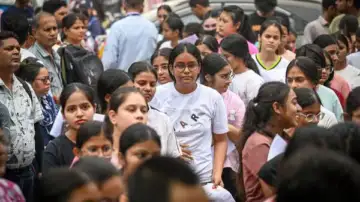 Students Waiting In Queue Out-side Exam Hall (Source: Mint)
What Caused The Delay?
According to the National Testing Agency, the disruption was caused by a technical issue in systems managed by Tata Consultancy Services. The problem affected the delivery of computer-based examinations at select centres, delaying the start of scheduled tests.
NTA stated that the issue was eventually resolved and that most candidates who remained at their centres were able to complete their examinations with additional time provided to compensate for the delay. Authorities also revised schedules at some locations to reduce the impact on later examination shifts. The agency maintained that ensuring fairness for all candidates remained its priority throughout the process.
Noida Among The Worst-Affected Locations
Although several centres reported delays, a major examination hub in Noida emerged as one of the most severely affected locations. Students and parents described prolonged uncertainty, with many receiving limited information about whether the examination would proceed.
Some candidates reportedly left after waiting for hours, believing the exam would not take place, while others stayed and completed their papers once systems were restored. Images and videos shared online showed large numbers of students outside centres, highlighting the scale of the disruption and prompting wider discussion about communication and contingency planning during examination emergencies.
Retest Announced For Affected Candidates
Following the disruption, NTA announced a one-time retest for 3,765 candidates who had completed biometric attendance but were unable to sit the examination because of the technical failure and delays.
The decision was broadly welcomed by students and parents, many of whom argued that candidates should not be penalised for circumstances beyond their control. However, education experts noted that retests can create additional stress and uncertainty for students who must once again prepare for a high-stakes examination. NTA has said affected candidates will receive separate communication regarding the date, venue and schedule of the fresh examination.
Students Raise Concerns Over Stress
For many candidates, the incident highlighted more than a technological failure. Students described feeling anxious and exhausted after spending several hours waiting under examination conditions without clear information.
Parents also voiced concerns about the lack of timely updates during the disruption. Many said they struggled to understand what was happening and whether their children would be able to complete the exam.
Education experts have pointed out that while compensatory time may address practical concerns, it cannot fully offset the mental fatigue and anxiety caused by prolonged uncertainty. The incident has therefore drawn attention to the emotional pressures faced by students participating in competitive entrance examinations.
Questions Over Examination Management
The disruption has renewed scrutiny of the systems responsible for conducting large-scale national examinations. In recent years, concerns relating to examination administration, technical failures and operational challenges have repeatedly sparked public debate.
Critics argue that examinations affecting lakhs of students require stronger safeguards, robust backup systems and greater transparency. The CUET incident has also raised questions about oversight of private technology providers responsible for managing critical examination infrastructure.
The episode has intensified calls for improved accountability and stronger contingency planning to ensure that technical failures do not disrupt the academic futures of students.
The Challenge Of Digital Testing
India's growing reliance on computer-based examinations offers benefits such as standardisation, efficiency and improved security. However, the CUET disruption demonstrates the challenges of managing digital examinations on a massive scale.
Even a single technical issue can affect thousands of candidates within a short period. Experts believe examination authorities must invest in stronger infrastructure, regular system audits, emergency response mechanisms and clearer communication strategies to maintain public confidence.
As digital testing becomes increasingly central to India's education system, ensuring reliability will be critical to protecting the interests of students.
The Logical Indian's Perspective
The CUET glitch is a reminder that behind every examination is a student whose future may depend on a single day. While technology can improve efficiency, it must be supported by reliable systems, transparent communication and strong safeguards. The decision to offer a retest is an important step towards fairness, but it also highlights the need for greater accountability from both examination authorities and technology partners.
As India continues to modernise its education system, the focus must remain on students and their well-being. Building trust requires not only efficient technology but also empathy, preparedness and responsiveness when problems arise. Every student deserves a fair and stress-free opportunity to compete on equal terms. What steps do you think examination authorities should take to ensure that technical failures do not disrupt students' futures in the years ahead?
More than 3,700 candidates appearing for the Common University Entrance Test (CUET-UG) 2026 will be given a retest after a technical glitch disrupted examinations at several centres on 30 May. The National Testing Agency (NTA) said the issue originated in systems operated by Tata Consultancy Services (TCS), the technology partner responsible for conducting the computer-based exam.
A Major Entrance Exam Faces Disruption
Students Waiting In Queue Out-side Exam Hall (Source: Mint)What Caused The Delay?
Noida Among The Worst-Affected Locations
Retest Announced For Affected Candidates
Students Raise Concerns Over Stress
Questions Over Examination Management
The Challenge Of Digital Testing
The Logical Indian's Perspective