




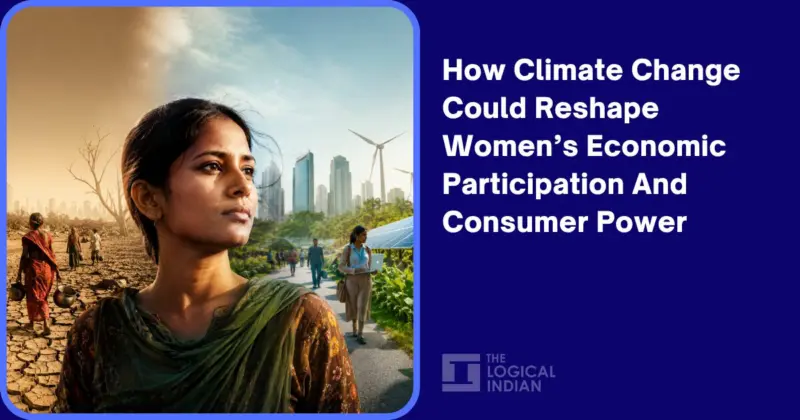

Climate change is no longer just an environmental issue. It is increasingly becoming a workforce, consumer, and economic story with major implications for businesses and global growth.
Across developing economies, extreme heat, floods, droughts, food insecurity, and water shortages are beginning to reshape how women work, earn incomes, migrate, and influence household spending.
At the same time, the transition toward cleaner energy and sustainable consumption is creating new economic opportunities that could gradually alter workforce participation patterns worldwide.
For companies, investors, and policymakers, the relationship between climate change and women's economic participation may become one of the most important long-term business shifts of the next decade.
Climate Risks For Women
The economic impact of climate change affects women disproportionately in many regions because women remain heavily represented in climate-sensitive sectors such as agriculture, informal labor, textiles, food processing, and caregiving work.
According to the United Nations, women account for nearly 80% of people displaced by climate change globally. Rising sea levels, droughts, floods, and extreme weather events often force families to migrate, while women frequently face greater economic vulnerability during displacement.
In countries like India, where millions of women depend on agriculture and informal employment, climate disruption increasingly threatens household incomes and financial stability.
Extreme heat is also emerging as a labor productivity issue. Longer heatwaves reduce outdoor working hours, affect crop yields, and increase health risks for workers in farming and construction sectors where women often contribute unpaid or low-income labor.
Women Workforce Vulnerability
The World Bank has warned that climate change could push more than 130 million people into poverty by 2030 without stronger adaptation measures.
Women in low-income households are expected to face some of the highest risks because climate-related shocks frequently increase unpaid caregiving burdens while reducing access to education, healthcare, and stable employment opportunities.
This creates a wider economic challenge.
Lower female workforce participation affects household consumption, labor productivity, and long-term economic growth. In emerging economies, climate disruptions can therefore slow development not only through environmental damage but also through declining workforce resilience.
Businesses operating in agriculture, textiles, food supply chains, and rural manufacturing sectors are particularly exposed to these risks because climate instability directly affects labor availability and production consistency.
Female Consumer Power Shift
Climate change is also influencing consumer behavior globally.
UN-linked research estimates women influence approximately 75% to 80% of consumer purchasing decisions worldwide. That gives women enormous influence over how future consumption markets evolve.
As sustainability becomes more important in purchasing decisions, businesses are increasingly targeting environmentally conscious consumers through cleaner packaging, ethical sourcing, renewable energy products, electric mobility solutions, and sustainable fashion strategies.
This shift is especially important for industries including retail, beauty, FMCG, food, mobility, and home products.
Consumer-facing brands increasingly recognize that women often shape household spending patterns related to food choices, energy use, healthcare, transportation, and sustainability preferences.
For companies, climate strategy is therefore becoming closely linked with consumer strategy.
Women In Renewable Energy
The transition toward clean energy is also creating new employment opportunities.
According to the International Renewable Energy Agency, women account for roughly 40% of jobs in the global solar industry compared with approximately 22% in oil and gas.
That gap matters because renewable energy industries are expected to expand significantly over the coming decades as countries invest in decarbonization and energy transition policies.
India is already scaling investments in solar manufacturing, battery storage, green hydrogen, and renewable infrastructure under its long-term clean energy goals.
If renewable industries continue growing faster than fossil fuel sectors, the energy transition could gradually reshape workforce participation patterns by creating more opportunities for women in emerging green industries.
However, experts also warn that gender gaps remain significant in leadership roles, technical positions, and climate financing access.
ESG And Corporate Strategy
Climate change and gender diversity are increasingly intersecting within corporate governance discussions as well.
The United Nations has noted that companies with stronger gender diversity often demonstrate better environmental reporting and sustainability governance practices.
This matters because ESG investing continues influencing capital allocation decisions globally. Investors increasingly evaluate how companies manage climate risks, workforce diversity, labor resilience, and long-term sustainability strategies together.
For businesses, climate adaptation is no longer only about emissions reduction.
Companies increasingly need to understand how climate disruptions affect labor participation, supply chains, consumer demand, insurance costs, and workforce productivity, particularly in climate-vulnerable economies.
The business risks associated with climate change are therefore becoming broader and more interconnected.
Future Green Economy Trends
The larger economic story emerging from climate research is not only about environmental damage.
It is about how climate disruption may gradually reshape labor markets, migration patterns, household economics, consumption behavior, and investment priorities across the global economy.
Women are likely to remain central to many of those changes because they simultaneously represent a vulnerable workforce segment, a major consumer influence group, and a growing part of the renewable energy transition.
As governments and corporations accelerate climate adaptation strategies, the intersection between climate policy, workforce participation, and consumer economics may become increasingly important for long-term business planning.
Climate change is no longer only transforming weather systems. It is beginning to reshape the future structure of economic participation itself.
The Logical Indian's Perspective
Climate change in India is increasingly becoming an economic and social challenge, especially for women working in agriculture, informal labor, and climate-sensitive sectors. At the same time, women are also emerging as powerful drivers of sustainable consumption and renewable energy participation.
The issue highlights the need for balanced policies that improve climate resilience, workforce inclusion, healthcare access, education, and green job opportunities without slowing economic growth. For India, climate adaptation must now be viewed not only as environmental protection but also as long-term economic planning.
Climate change is no longer just an environmental issue. It is increasingly becoming a workforce, consumer, and economic story with major implications for businesses and global growth.
Climate Risks For Women
Women Workforce Vulnerability
This creates a wider economic challenge.
Female Consumer Power Shift
Climate change is also influencing consumer behavior globally.
Women In Renewable Energy
ESG And Corporate Strategy
Future Green Economy Trends
The Logical Indian's Perspective