




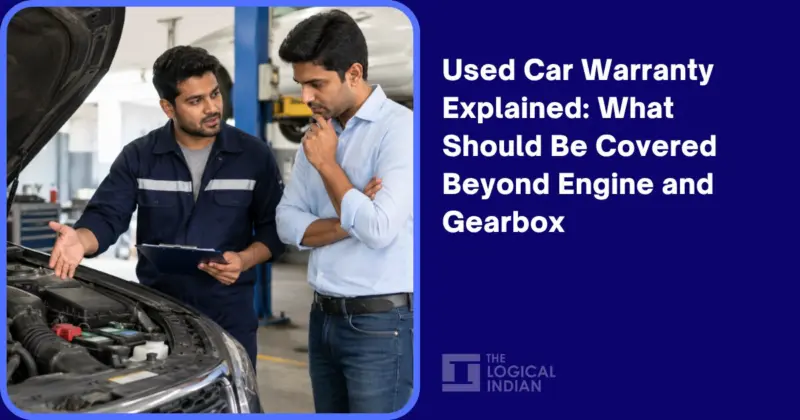

The word warranty appears in almost every used car transaction in India today. It is used by local dealers, printed on pamphlets, mentioned in listings, and referenced during negotiations.
But the actual meaning of a used car warranty varies largely depending on who is offering it, what components it actually covers, for how long, and under what conditions a claim will be honoured.
A buyer who assumes that having a warranty means having full protection against post-purchase mechanical expenses is often wrong. Most standard used car warranties are narrow in scope, short in duration, and contain exclusion clauses that cover the most common failure points. Understanding exactly what a warranty includes and excludes is essential before considering it meaningful post-purchase protection.
This article explains what a genuinely comprehensive used car warranty ecosystem looks like, what terms buyers need to understand before signing, and why the structure of warranty coverage matters as much as whether a warranty exists at all.
The Difference Between Warranty, Repair Assurance, and Extended Coverage
Warranty, Repair Insurance and Extended coverage are all policies that serve related but distinct purposes, and therefore, it is common for most buyers to use all three interchangeably. The reality, however, is often surprising.
A basic or standard used car warranty is a commitment by the seller to cover repair costs for specific components, in case those components fail due to material defects within a defined period. What this typically means in practice is that engine and gearbox failures caused by internal component failure are covered, but everything else, including clutch, suspension, tyres, brakes, electricals, and air conditioning, may not be. At Cars24, every eligible vehicle comes with a 12-month standard warranty coverage that offers long-term protection against unexpected component failures.
Repair assurance, on the other hand, is a shorter-horizon product designed to cover unexpected mechanical failures in the immediate post-purchase period. Cars24 provides a 30-day repair assurance layer as part of the buyer protection framework, addressing the situations where a fault emerges in the weeks immediately after the purchase.
An extended warranty takes the basic engine and gearbox coverage and extends its duration for even longer periods. The same idea is followed by Cars24, which offers a Lifetime Warranty Plan for eligible vehicles that provides protection for up to 12 years or 1,50,000 km, covering the engine assembly, transmission, and drivetrain components. A first-of-its-kind policy in the used car segment, the platform's Lifetime Warranty Plan takes long-term protection a notch above what the industry has witnessed over the years.
What the Cars24 Lifetime Warranty Plan Actually Covers
The Lifetime Warranty Plan from Cars24 is available on all Cars24-owned stock vehicles that are under 12 years old from the date of registration with less than 1,50,000 km on the odometer. The policy's coverage is comprehensive for powertrain, engine and transmission components.
- On the engine side, the policy covers major parts such as the cylinder head and engine block, which form the engine's structural foundation, along with the crankshaft, pistons, and piston rings that work together to convert combustion energy into mechanical motion. It also includes the camshaft and valves, which regulate airflow and fuel delivery to ensure smooth, efficient engine operation.
- In addition, essential supporting components such as the oil pump, water pump, and vacuum pump are covered, helping ensure proper lubrication, cooling, and pressure management throughout the vehicle's powertrain.
- Transmission coverage also extends to both manual and automatic gearboxes and includes shafts, gears, synchromesh components, bearings, selectors, planetary gear sets, servo rings, oil pump, and output shafts.
- For the drivetrain coverage, the components included are the front and rear differential housings, rear axles, transfer case housing, front drive axles, and propeller shaft with a universal joint.
What is explicitly not covered includes wear and tear items such as oil, filters, brake pads, tyres, belts, and clutch plates, non-powertrain electronics, commercial vehicle use, and damage from accidents, floods, or fire. This is not unusual for a powertrain warranty and is consistent with how a typical insurance policy handles the same categories of damage.
How to Actually Read Warranty Terms Before Paying
The most important questions to ask about any used car warranty are specific, not general. Asking if there is a warranty is not enough. The questions that determine whether a warranty provides real protection are which components are covered by name, what is the maximum claim amount per incident, what is the deductible per claim, how many claims are permitted over the warranty period, which workshops are authorised for repairs, and what documentation is required to support a claim.
On covered components: a warranty that says engine coverage but excludes seals, gaskets, and ancillary components leaves gaps. The Cars24 Lifetime Warranty Plan, however, specifies covered components explicitly, which creates clarity for claims.
On maximum claim amount: many third-party warranties cap each claim or the total claims over the warranty period. A claim cap that is lower than the repair cost of a major engine rebuild effectively means the warranty provides partial protection rather than full coverage. Cars24's Lifetime Warranty, on the other hand, allows for unlimited claims during the warranty period, subject to eligibility conditions being met.
On workshop authorisation: warranties that restrict repairs to specific workshops are not inherently problematic if those workshops are genuinely accessible and qualified. The Cars24 Lifetime Warranty Plan requires servicing at Cars24-certified workshops every six months or 6,000 km to maintain coverage. Repairs under the plan are cashless and use genuine parts.
On exclusions: the most common warranty disputes in the used car market arise from exclusions that the buyer did not notice. Wear and tear is a broad category. Understanding exactly what falls under wear and tear versus mechanical failure can make a significant difference in claim outcomes.
Why Indian Driving Conditions Make Warranty Coverage More Relevant
Strong warranty coverage matters even more in India than in many other automotive markets. Road quality varies dramatically between cities and across the same city on different routes. Traffic patterns involving frequent stop-and-go cycles create thermal stress on engines and transmissions that is different from highway driving. Monsoon seasons introduce both road damage and the risk of water ingress through compromised seals.
In this context, the components that are most frequently stressed are exactly the ones that standard warranties often exclude. Suspension bushings degrade faster on rough roads. Clutch wear accelerates in stop-and-go traffic. Tyres wear unevenly when roads are inconsistently cambered. Brakes experience more thermal cycling in traffic.
A used car warranty that is genuinely useful in India covers the components that actually face elevated stress in Indian conditions. The powertrain coverage under the Cars24 Lifetime Warranty Plan addresses the most expensive failure category: the components where repair costs are high enough that an unprotected buyer would face genuine financial difficulty.
What Buyers Should Ask Before Assuming Warranty Means Everything Is Covered
The single most effective thing a used car buyer can do before treating a warranty as meaningful protection is to ask for the full terms document, not a summary. A one-line mention of warranty in a listing or during a sales conversation is not a commitment to anything specific.
The full document should specify the covered components by name, the duration by both time and mileage, the exclusions, the authorised repair network, the claim process, the deductible if any, and the conditions under which the warranty can be voided. If a seller cannot or will not provide this document, the warranty should not be considered in the buying decision.
For buyers considering a Cars24 vehicle, the warranty options are documented and explained publicly. The distinction between the standard repair assurance layer, extended warranty options, and the Lifetime Warranty Plan is transparently available at the platform's website. Understanding which tier applies to a specific vehicle before purchase removes uncertainty from what is otherwise the most opaque element of a used car transaction.
The word warranty appears in almost every used car transaction in India today. It is used by local dealers, printed on pamphlets, mentioned in listings, and referenced during negotiations. But the actual meaning of a used car warranty varies largely depending on who is offering it, what components it actually covers, for how long, and under what conditions a claim will be honoured.
The Difference Between Warranty, Repair Assurance, and Extended Coverage
What the Cars24 Lifetime Warranty Plan Actually Covers
How to Actually Read Warranty Terms Before Paying
Why Indian Driving Conditions Make Warranty Coverage More Relevant