

Samsung has expanded its Galaxy A-series with the launch of the Galaxy A57 5G and Galaxy A37 5G, pushing the lineup into what can be described as the upper mid-range or "FE-like" price territory.
With the A57's top variant crossing the ₹60,000 mark, the question arises: is Samsung feeling the pinch of rising costs, or is it facing a memory crunch?
The pricing of the Galaxy A57 5G (₹56,999 onwards) and Galaxy A37 5G (₹41,999 onwards) places both devices close to where Fan Edition models typically operate. This creates an overlap that could make consumers weigh these devices not just against competitors, but also against Samsung's own premium-lite portfolio.
Both phones follow a similar packaging approach. Inside the box, users get the handset, a USB cable, SIM ejector tool and documentation. A charger is not included, which continues Samsung's ongoing strategy across segments.
The Galaxy A57 5G and Galaxy A37 5G will be available across retail outlets, Samsung Exclusive Stores, Samsung's official website and other online platforms.
Samsung is offering three purchase options for buyers. Customers can opt for an instant cashback of ₹3,000 via bank or UPI transactions. Alternatively, there is a 24-month zero-interest, zero down payment EMI plan. A third option includes an upgrade bonus of ₹3,000.
Galaxy A57 5G
8GB + 256GB: ₹56,999
12GB + 256GB: ₹62,499
Galaxy A37 5G
8GB + 128GB: ₹41,999
8GB + 256GB: ₹47,499
12GB + 256GB: ₹52,999
At first glance, distinguishing between the two devices is difficult. Samsung has kept the design language consistent across both models. The front and back panels use Gorilla Glass Victus+, and the in-hand feel remains largely the same.
Button placement, SIM tray, and speaker layout are mirror images on both devices. Even the triple camera module, complete with its raised housing, sticks to the same blueprint.
Differences exist, but they are subtle. The Galaxy A57 features a metal frame, while the A37 uses a polycarbonate frame. The A57 is also slimmer at 6.9mm compared to 7.4mm on the A37. Minor variations in microphone placement are visible, but overall dimensions remain nearly identical.
Samsung has kept the display experience uniform across both devices. Each phone features a 6.7-inch Full HD+Super AMOLED panel with a 120Hz refresh rate.
In practical use, there is little to separate the two. Viewing angles, brightness and smoothness are consistent. The only visible difference is slightly thinner bezels on the A57, though the gap is minimal.
Both devices feature a triple rear camera setup. The primary sensor is 50MP on both, accompanied by a 5MP macro camera.
The difference comes in the ultra-wide sensor. The Galaxy A57 gets a 12MP ultra-wide camera, while the A37 uses an 8MP unit. On paper, this could translate to better detail and wider usability on the A57, though real-world impact would depend on processing.
The front camera remains identical at 12MP across both models. Samsung's on-device Object Eraser tool is also present on both, allowing users to remove unwanted elements from photos.
Battery, software and support: Fully aligned
Both smartphones pack a 5,000mAh battery with support for 45W fast charging. Software and ecosystem features are also aligned.
They run Android 16-based One UI 8.5, come with IP68 rating for dust and water resistance, stereo speakers, and promise up to six years of OS and security updates. This level of long-term support remains a strong point in Samsung's favour.
The main difference lies in the processor. The Galaxy A57 is powered by the Exynos 1680 chipset, while the A37 runs on the Exynos 1480. Both are made for mid-range performance, but the A57 should be more efficient and handle multitasking and long use better.
The prices highlight this difference, with the A57 edging into premium territory and the A37 staying in the upper mid-range.
On first impression, Samsung appears to be standardising features across its A-series while creating differentiation through materials, chipsets and pricing tiers.
Since the design, display, battery, and software are so similar, your choice might depend more on performance and build quality than on the overall experience.
However, with pricing inching closer to premium territory, the question remains whether consumers will see these as well-positioned mid-range devices or as expensive alternatives in a segment where competition continues to intensify.
In the end, it depends on what you value most: long-term software updates, Samsung's ecosystem and brand, or just getting the best hardware for your money.
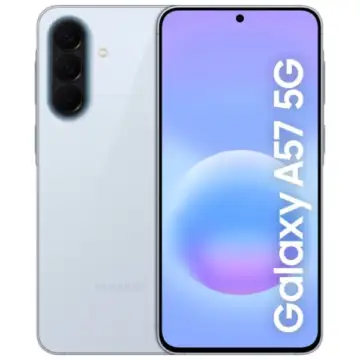
- ChipsetExynos 1680
- RAM (GB)8, 12
- Storage (GB)256
- Display6.7-inch, 1080 × 2340 pixels
- Front Camera12MP
- Primary Camera50MP + 12MP + 5MP
- Battery5000mAh
- Operating SystemAndroid 16

- ChipsetExynos 1480
- RAM (GB)8, 12
- Storage128, 256
- Display6.7-inch, 1080 × 2340 pixels
- Front Camera12MP
- Primary Camera50MP + 8MP + 5MP
- Battery5000mAh
- Operating SystemAndroid 16