
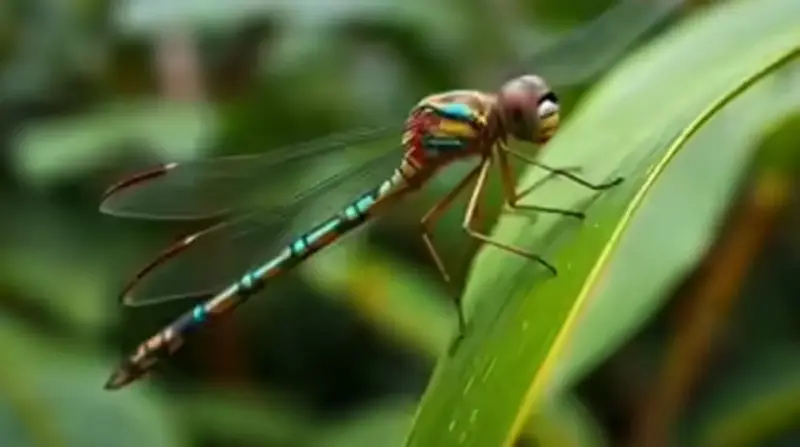

ITANAGAR - Scientists have discovered two previously unknown dragonfly species in the remote Siang Valley of Arunachal Pradesh, adding to a growing body of evidence that the region harbours significant biodiversity that remains largely unexplored.
The newly identified species - the Clouded Boghawker (Sarasaeschna nuboides) and the Siang Boghawker (Sarasaeschna sigotaayo) - were observed around a shallow forest pond in the valley, where researchers recorded them flying swiftly and perching close to the water's surface, indicating a strong association with freshwater microhabitats.
A Third Species Found in Assam
The Siang Valley discoveries form part of a broader finding of three new dragonfly species across Northeast India.
The third species - the Long-tailed Boghawker (Sarasaeschna dosdewaensis) - was documented in Assam's Karimganj district, a location that scientists are increasingly recognising as a significant hotspot for odonata diversity.
Why Dragonflies Matter
Dragonflies belong to the order Odonata - an ancient group of insects with origins dating back over 100 million years, predating the dinosaurs. They are among the fastest-flying insects in the world and play a vital ecological role by controlling populations of mosquitoes and other flying insects.
Their large, multifaceted eyes - composed of up to 30,000 individual facets - provide nearly 360-degree vision, making them highly efficient aerial predators.
Dragonflies are commonly found near freshwater ecosystems and are often confused with their close relatives, damselflies. The key distinction: damselflies are generally smaller and more delicate, and hold their wings upright and together when at rest, while dragonflies keep their wings spread horizontally.
A Reminder of What Remains Undiscovered
The identification of three new species in a single research effort underscores the ecological significance of Northeast India - and reinforces the case for sustained scientific exploration and conservation of its unique and fragile habitats.