




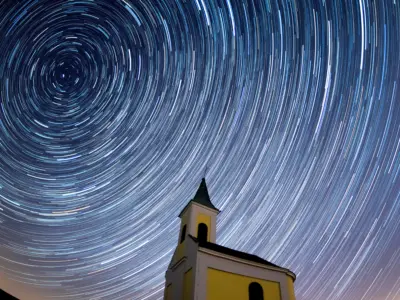

Lyrid Meteor Shower:Good news for space fans! An old meteor shower has begun. It is a unique astrological event that happens from April 17 through April 26, where Earth will pass through the debris trail of the Lyrid meteor shower.
Here's everything you need to know about this meteor shower.
What is the Lyrid Meteor Shower?
The Lyrid meteor shower is an annual celestial event occurring in April, when Earth passes through debris from the comet C/1861 G1 Thatcher, which orbits the Sun once every 415 years.
It is known for its fast and bright meteors, which typically produce 10 to 20 meteors per hour during its peak. The 2026 shower is active from April 16 to 25, with its peak activity on April 22.
Where to see the Lyrid meteor shower?
The Lyrid meteor shower is visible from the Northern Hemisphere (South Florida). For the best view, NASA recommends heading to a spot far from city lights.
The shower is typically visible from moonset until just before dawn and offers a wide viewing window. The best nights to watch are April 21 and 22, when activity peaks.
How to see the Lyrid meteor shower?
To see the Lyrid meteor shower, give your eyes about 30 minutes to adjust to the darkness. This makes it much easier to spot faint meteors streaking across the sky.
Upcoming meteor showers in 2026
If you miss the Lyrid meteor shower, don't worry. There are plenty more celestial shows to come this year. The next meteor shower is expected to peak on May 04, 2026.
How to know if the shooting star is a Lyrid?
Shooting stars belonging to the Lyrid meteor shower appear to streak away from a patch of sky, known as the shower’s radiant, close to the bright star Vega, whose blue-white light can be spotted shining in the constellation Lyra. This summer constellation rises to its highest point in the eastern sky in the predawn hours in mid-to-late April.
Lyrid meteors may be seen anytime after dark when the radiant is above the horizon.
When to look for shooting stars?
To see the shooting stars, you must head outside around three hours before sunrise and locate the bright star Vega in the eastern sky.