





E-commerce growth doesn't show up out of nowhere. It starts small, hidden in search trends, social chatter, and early buying behavior.
Most brands only notice it when it's already visible, which is usually when competition has already moved in.
In 2026, timing is everything. If you can spot where demand is building early, you can enter markets before they get crowded and expensive. AI now makes this possible by connecting small signals and turning them into clear directions.
Let's take a look at how to predict e-commerce growth hotspots in the US using AI.
Search Trend Analysis at Regional Level
One of the most reliable ways to predict e-commerce growth hotspots is by tracking how search behavior shifts across different regions. Search data reveals intent before a purchase happens, which makes it one of the earliest indicators of demand taking shape.
As Rachel Sinclair, Acquisitions Director at US Gold and Coin, said, "Early signals often come from subtle changes in behavior rather than obvious demand. Spotting those shifts before they become mainstream is what creates a real advantage in any market."
In 2026, AI tools make it possible to break this down far beyond country-level insights. You can now analyze patterns at the state, city, and even micro-market level. Instead of relying on assumptions, brands get a clearer picture of where interest is quietly building.
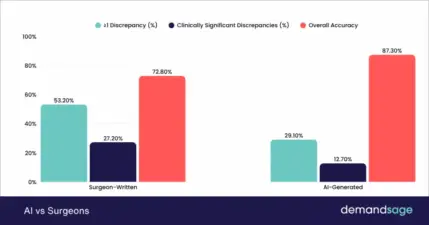
This level of accuracy isn't just theory. In other data-heavy fields like healthcare, AI-driven analysis has already outperformed traditional human-only approaches, reaching around 87.3% accuracy compared to 72.8%, while also cutting down critical errors significantly.
Source: DemandSage
So this clearly shows AI is better at spotting patterns in large, complex datasets.
The core idea remains simple. When people in a specific region begin searching for a product category more frequently than usual, something is shifting. It might be lifestyle changes, rising income, seasonal demand, or even influence from online trends. AI systems can track these changes in real time and compare them against historical patterns to identify meaningful movement.
Ákos Doleschall, Managing Director at Hustler Marketing, notes, "Raw numbers don't mean much without context. What really matters is how quickly behavior changes and whether that change sustains over time, because that's where real opportunity starts to form."
This is where "velocity" becomes more important than volume. High search volume in a major city is expected. But a sudden increase in a smaller city or suburban area often signals early-stage demand. These are usually the places where growth hotspots begin.
AI also helps separate short-term spikes from long-term trends. A surge caused by a viral moment might disappear quickly, while steady growth over weeks signals a deeper shift. By analyzing these patterns over time, brands can avoid reacting to noise and instead focus on consistent signals.
Another layer comes from category clustering. AI groups related searches to reveal broader intent. For example, increasing searches for home office desks, ergonomic chairs, and productivity tools in the same region may indicate a growing remote-work-driven market.
When used effectively, these insights allow brands to adjust ad targeting, plan product launches, and optimize inventory before competitors even notice the shift.
Christian Vanderwall, Founder and VP of Engineering of Space Base App, says, "The real value of data comes from connecting patterns, not just collecting them. Systems that can link signals across regions and categories make it much easier to act early instead of reacting late."
Social Listening and Geo-Based Sentiment Tracking
Social media is often where demand signals appear first, but most brands only look at it in a surface-level way. In 2026, AI-driven social listening goes much deeper by connecting conversations with location data and sentiment patterns.
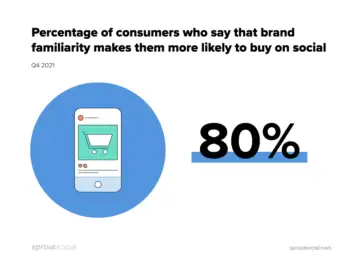
Data shows that 80% of consumers are more likely to buy on social media when they're familiar with a brand.
Source: Sprout Social
That familiarity becomes even more powerful when it clusters within specific regions, where repeated exposure builds recognition faster and starts shaping buying intent earlier than traditional data sources can capture.
Marissa Burrett, Lead Design for DreamSofa, said, "People don't respond only to products - they respond to how often those ideas show up in their daily environment. Repeated visual and conversational exposure is what slowly turns interest into preference."
Instead of only tracking topics, the focus shifts toward where conversations are happening and how people feel about them. This combination helps uncover early interest in specific regions before it appears in search trends or sales data.
For example, if a skincare product, fitness routine, or even a home lifestyle trend starts getting repeated mentions in a particular city, AI can detect that cluster and analyze sentiment. A rise in positive or curiosity-driven conversations often signals early-stage adoption.
What makes this even more useful is context extraction. AI can analyze full conversations-not just keywords-to understand why interest is growing. It might be linked to weather changes, local influencers, gym culture, or broader lifestyle shifts in that region.
Another strong signal is engagement density. When a region shows unusually high engagement around a category without matching sales yet, it often indicates awareness building before conversion begins.
Noam Friedman, CMO of Tradeit, adds, "Engagement without conversion isn't wasted attention - it's early-stage intent forming. The gap between interest and action is where the strongest growth opportunities usually appear."
AI-Based Purchase Pattern Clustering
Search and social data show intent, but purchase behavior shows commitment. That's why analyzing buying patterns across regions is one of the strongest ways to identify real e-commerce growth hotspots.
AI systems can group customers into behavioral clusters based on how often they buy, what they buy, and how their spending changes over time. When this data is mapped geographically, it becomes easier to see which regions are actually converting interest into consistent consumption.
Jonathan Lord, CTO of Flux Marine, said, "When you look at usage data over time instead of isolated transactions, patterns become much clearer. You start seeing how behavior settles into routines, and that's where real demand becomes predictable."
One key signal is repeat purchase growth. If a region shows rising repeat orders in a specific category, it usually means the product is becoming part of daily life there. That shift is more valuable than a one-time spike because it reflects habit formation rather than curiosity.
Another useful pattern is category expansion. This happens when customers in a region begin buying across related categories over time-for example, fitness equipment buyers also moving into supplements or wearable devices. At scale, this signals a maturing and more confident market.
Karen Noryko, Career Content Director at Jobtrees, adds, "Career paths and decision patterns show the same behavior as purchasing journeys. Once people start expanding within a related set of choices, it usually reflects growing confidence and clearer long-term intent."
AI also helps identify high lifetime value zones. Some regions consistently produce customers who spend more and stay active longer. These areas may not always show the highest volume, but they often deliver the strongest long-term profitability.
Another important layer is timing. Changes in purchase frequency can reflect broader lifestyle or economic shifts. For example, a sudden rise in mid-ticket purchases in suburban regions can indicate improving disposable income or shifting consumption habits.
According to Bill Sanders, from CocoFinder, "Consistency over time matters more than isolated spikes. When buying behavior repeats across regions and categories, it becomes a far more reliable indicator of real demand than any short-term trend."
When brands track these patterns properly, they stop treating all regions the same. Instead, they can prioritize high-growth clusters for advertising, inventory, and expansion, building a strategy driven by real behavior rather than assumptions.
Competitor Ad Spend Heat Mapping
Where competitors spend their money often reveals where they believe demand is growing. In 2026, AI tools can track ad activity across regions and turn it into clear heat maps that reflect market pressure in real time.
The basic idea is simple. If multiple competitors increase ad spend in a specific area, it usually signals early signs of demand or active market testing. It doesn't always confirm maturity, but it does highlight where attention is shifting.
Dan Close, Founder and CEO at We Buy Houses in Kentucky, said, "Competitor activity often acts as an early indicator of confidence in a market. When multiple players start testing the same geography, it usually means demand signals are strong enough to justify experimentation."
AI systems can break this down by geography, category, and campaign type. For example, a spike in ad spend for home fitness products in certain states may indicate emerging lifestyle trends. When multiple brands move in the same direction, the signal becomes stronger and more reliable.
Another useful insight is identifying low-competition gaps. AI can reveal regions where demand is rising but ad saturation is still low. These areas often present the best opportunities because acquisition costs remain lower while intent is increasing.
Elizaveta McDowell, CEO of AQUAMARISE®, said, "Market attention rarely moves randomly. When multiple signals, like search, engagement, and advertising, start aligning in the same region, it usually reflects an underlying shift in how people are making decisions."
Ad frequency patterns also matter. If a brand gradually increases exposure in a specific city, it often suggests that early campaigns are performing well enough to scale. This acts as a validation signal for emerging market potential.
"Capital tends to follow measurable momentum. Once early signals become consistent across channels, investment behavior starts to mirror that confidence, especially in competitive or fast-moving markets," says Tariq Attia, Founder of IW Capital - EIS Investment.
AI can also detect shifts in creative strategy. When brands change messaging by region, it usually reflects localized insights-such as emphasizing affordability in one area and premium positioning in another-further confirming how demand varies across markets.
Marketplace Data Intelligence (Amazon, Shopify, etc.)
Marketplaces are one of the clearest sources of real demand because they reflect actual buying decisions, not just interest. In 2026, AI systems can analyze marketplace data at scale to identify where products are gaining traction geographically.
One of the strongest signals is ranking movement. When a product category starts climbing in rankings within specific regions, it indicates rising demand. AI can track these shifts over time and connect them to location-based sales patterns.
Tom Rockwell, CEO of Concrete Tools Direct, shares, "Product movement on marketplaces often reflects practical need more than curiosity. When some tools or categories start climbing in specific regions, it usually points to real usage requirements changing on the ground."
Another key indicator is shipping distribution. If a product begins shipping more frequently to certain states or cities, it shows demand is forming unevenly across regions. These clusters often become early signals of future growth hotspots.
AI also helps identify breakout products early. These are items that gain sudden momentum in specific regions before becoming national trends. Tracking this movement allows brands to understand where consumer interest is forming first, rather than reacting after scale.
Jae Fraser, Founder and CEO of Little Scholars School of Early Learning, shares, "Breakout behavior is rarely random. When you see something gain traction in one area before others, it often reflects how local context, preferences, or exposure are shaping early adoption patterns."
Return rates and review sentiment also play an important role. Strong positive feedback in a specific region can signal cultural or lifestyle alignment, helping explain why certain products perform better in some areas than others.
Category-level analysis adds another layer of clarity. Instead of focusing only on individual products, AI can track how entire categories evolve across regions. Rising demand for home improvement or wellness products in specific states, for example, can point to broader lifestyle shifts.
When combined, this data forms a detailed map of real buying behavior across regions. It helps brands identify where to expand, which markets to prioritize, and where to test new products before scaling nationally.
Economic and Demographic AI Modeling
One of the most overlooked ways to predict e-commerce growth hotspots is by looking at how people live, earn, and move across regions. Purchase behavior doesn't exist in isolation. It is shaped by income levels, population shifts, employment trends, housing patterns, and lifestyle changes. In 2026, AI makes it possible to connect all of these signals into a single predictive view.
Economic data helps identify where purchasing power is rising. If a region shows consistent growth in income, job opportunities, or new business activity, it usually leads to higher online spending within a short lag period. AI models can track these changes in near real time instead of waiting for traditional reports.
Desmond Dorsey, Chief Marketing Officer at Bayside Home Improvement, mentions, "Housing growth and buyer behavior tend to move together over time. When new developments, relocations, or community expansion pick up in a region, it usually signals broader confidence in local economic stability and future spending power."
Demographics add another layer. Younger populations tend to adopt new e-commerce categories faster, while growing suburban areas often show shifts in household spending patterns. When AI maps these shifts geographically, it becomes easier to identify regions that are quietly entering a consumption phase.
"Lifestyle decisions like where people choose to live often shape everything that follows-how they spend, what they prioritize, and which services they adopt. Those patterns become visible long before they fully show up in sales data," said William Boynton, CEO & Founder of HomeScore.
Migration patterns are also powerful indicators. When people move from expensive urban centers to emerging cities, they bring established buying habits with them. This often creates sudden demand spikes in previously overlooked regions. AI systems can detect these movement trends and link them to potential category growth.
Another important factor is lifestyle transition. For example, areas experiencing more remote work adoption may show rising demand for home setups, productivity tools, and wellness products. These shifts don't appear instantly in sales data, but they show up early in behavioral indicators.
When all of this is combined, economic and demographic modeling becomes a forward-looking system. Instead of reacting to demand after it appears, brands can anticipate where consumer capacity and interest are likely to grow.
Multi-Channel Demand Forecasting Models
The strongest way to predict e-commerce growth hotspots is by combining all available signals into one system. Search data, social trends, purchase behavior, competitor activity, and economic indicators all tell part of the story. On their own, they are useful. Together, they become highly predictive.
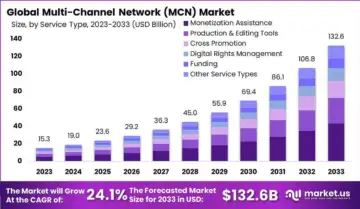
In fact, the rapid rise of multi-channel ecosystems reflects this shift. The Global Multi-Channel Network (MCN) market is projected to grow from $15.3B in 2023 to $132.6B by 2033, at a 24.1% CAGR.
Source: Market.us
This shows how quickly brands are investing in unified, cross-platform growth systems.
Edward Tian, CEO of GPTZero, adds, "When signals come from multiple systems, the real challenge is separating meaningful patterns from generated or distorted noise. The more data sources you combine, the more important it becomes to validate what is actually authentic movement versus artificial spikes."
In 2026, AI systems can merge these data streams into unified forecasting models. These models don't just show what is happening now-they estimate where demand is likely to move next based on cross-channel behavior patterns.
The key advantage of multi-channel forecasting is validation. When multiple signals point to the same region, confidence increases significantly. For example, if search interest, social engagement, and marketplace sales all rise in a specific area, that region is likely becoming a true growth hotspot.
AI models also help reduce noise. Single-channel spikes can be misleading. A viral post might increase searches temporarily without leading to real sales. But when multiple data points move together, it becomes a reliable trend instead of a random event.
In an interview, Rameez Ghayas Usmani, Award-Winning HARO Link Builder & CEO of HARO Link Building, said, "Authority signals across channels matter more than isolated visibility. When multiple independent sources start reinforcing the same narrative, it becomes much easier to identify which trends are real and worth acting on early."
To Sum it Up
AI is changing how e-commerce growth is predicted in the US. Instead of relying on past sales, brands can now look at early signals like search trends, social conversations, purchase behavior, and even logistics data to understand where demand is forming.
The real advantage in 2026 comes from spotting these patterns before they become obvious. When multiple data sources point to the same region, it becomes much easier to decide where to invest, expand, and advertise. Brands that use AI for prediction instead of reaction will be able to enter new markets earlier and grow faster with less risk.