
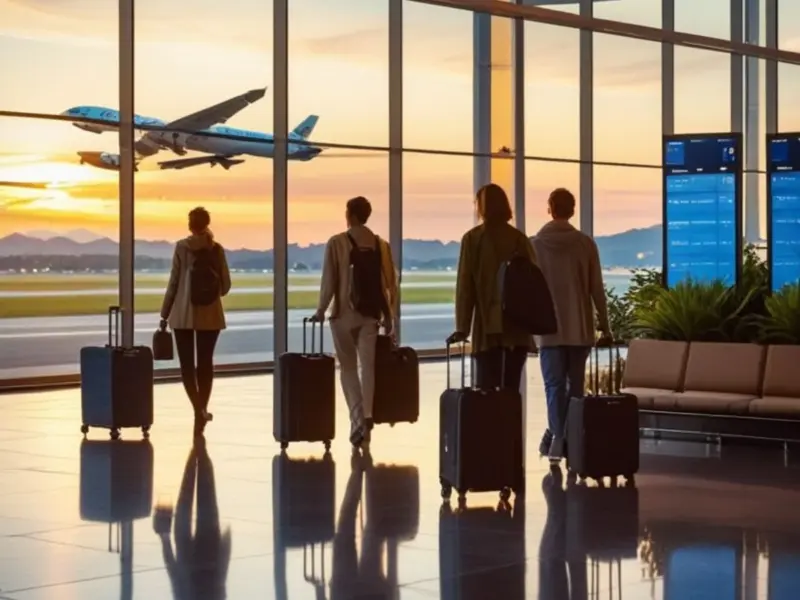

Airline Travel Disrupted Latest News: The airline industry has been experiencing turbulent times due to an increase in delays in major airports around the world as weather conditions, staffing issues, infrastructural development and limitations in airspace have combined to cause problems for many people flying in either direction between continents.
The information from flight tracking applications indicates that about 20-25% of planes arrive late in major airports with average delays of 30 to 60 minutes.
Airline Travel Disruption: Staffing Shortages Worsen Security & Air Traffic Bottlenecks
The staffing shortages for key government positions have become another significant factor leading to delays. In the United States, the recent failure of budgeting of the Department of Homeland Security, which commenced in February 2026, has led to delays in passengers going through security checks at the country's airports. It was discovered in the last budget crisis of 2025 that 22% - 23% of flights had experienced delays before the effects of the budget crisis could be felt.
Airline Travel Disruption: Runway Work & Airspace Restrictions Squeeze Capacity
The infrastructure works as well as temporary closure of the airspace have also lowered the airports capacities. At the San Francisco International Airport, repaving the north-south runways has caused delays for flights coming into the airport, whereby 25% of all flights arriving were delayed by 30 minutes. In February 2026, unexpected closure of the airspace in Texas and New Mexico led to diversions and in-flight holding.
Airline Travel Disruption: Key U.S. Hubs Most Affected
According to data, Newark Liberty Airport, JFK airport, LaGuardia Airport, Chicago O'Hare Airport and San Francisco airport emerge as the poorest performers amongst U.S. airports with regards to delays expected in 2026. Delays are in the range of 40-60 minutes and are caused by weather, congestion and restricted airspace surrounding these airports.
Airline Travel Disruption: European Airports Grapple with Strikes, ATC Delays & Weather
Across Europe, there have been delays in air traffic control that have nearly doubled in the last ten years. In March 2026, there were numerous flight cancellations and many delayed flights because of strikes, duty-time limitations for the crew and technical problems in airports such as Heathrow in London, Schiphol in Amsterdam, Charles de Gaulle in Paris and Frankfurt.
Airline Travel Disruption: Passenger Impact & Compensation Challenges
Extended delays have caused much inconvenience and passengers are facing difficulties ranging from missing connecting flights to having to spend the night at hotels. Passenger groups indicate that there is an increasing number of complaints made by passengers regarding compensation claims within EU and US passenger rights systems.
Airline Travel Disruption: Structural Causes Behind Persistent Delays
It can be seen from the combined statistics of flights across the globe that delays have become a characteristic of air transportation and not an individual case anymore. Some of the reasons for these delays are adverse weather conditions, heavy traffic, shortage of gates and runways, tight airline schedules, lack of staff and technical malfunctions.
Airline Travel Disruption: Industry Responses & Outlook
Airlines and airport authorities are investing in advanced arrival-management systems, predictive scheduling tools, and calls for staffing reform. Despite these measures, travelers in 2026 should expect continued delays, particularly during peak spring and summer periods, as airports struggle to balance rising demand with operational constraints.
Disclaimer: This article is for informational purposes only. Flight delays may vary and passengers should check with airlines for real-time updates.