
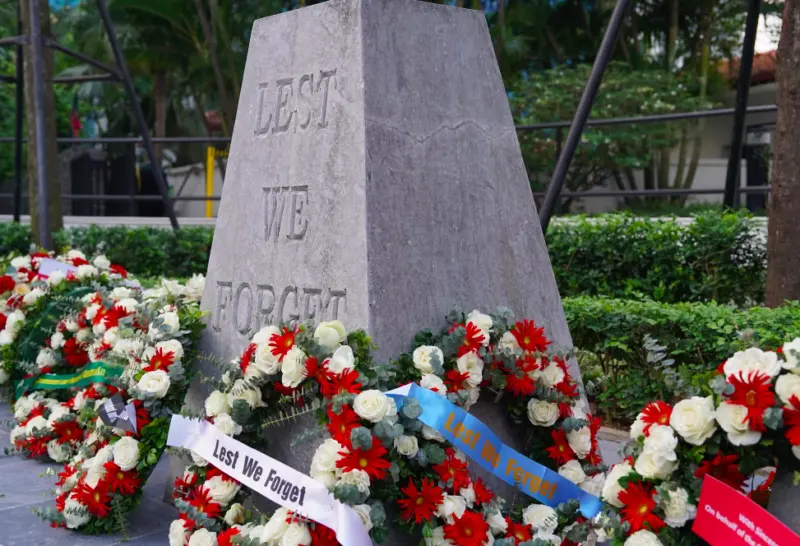

Millions of people gathered in the pre-dawn darkness on Saturday to mark the 111th anniversary of the Gallipoli landings. On the rugged shores of the Turkish peninsula, at the Cenotaph in London, and in town squares across Australia and New Zealand, the solemn strains of the "Last Post" rang out, anchoring a world grappled by tensions and geopolitical instability in a tradition of "courage, mateship, and sacrifice."
The primary dawn service at Anzac Cove began at 5:30 a.m. local time, exactly 111 years after the Australian and New Zealand Army Corps first waded ashore into a hail of Ottoman fire.
Governor-General of New Zealand Dame Cindy Kiro, addressing a crowd of thousands, underscored that while the 1915 campaign was a military failure, it forged a "shared humanity" that remains a vital blueprint for modern diplomacy.
A Legacy Tested by Modern Geopolitical Turmoil
The 2026 commemorations arrive during a period of heightened geopolitical tension, with speakers at various services drawing parallels between the historical lessons of Gallipoli and current global conflicts. In London, where crowds gathered at the New Zealand and Australian Memorials at Hyde Park Corner, the focus shifted toward the endurance of the "Special Relationship" and the collective responsibility to maintain peace in an increasingly fractured world.
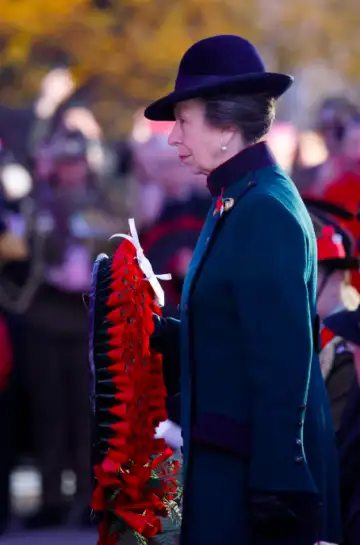
(Princess Anne of the UK Royal Family attends the Dawn Service commemorating Anzac Day at the New Zealand Memorial at Hyde Park Corner. Credit: X)
In Turkiye, the Commonwealth nations marked the 111th anniversary of the Gallipoli Campaign at the Cape Helles Memorial in Canakkale. Diplomats and military officials paid tributes to the soldiers from the UK, Australia, New Zealand, India and other nations.
Attendees underwent airport-style screening to enter the Gallipoli Peninsula National Park, as local authorities managed a "Level 4" security environment influenced by ongoing instability in the neighbouring Middle East. Despite these logistical hurdles, the turnout exceeded expectations, signalling a deep-seated public desire for communal reflection and unity.
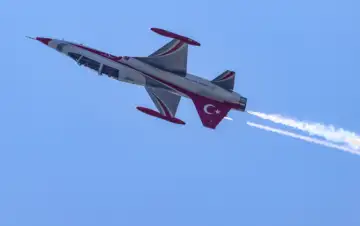 (Turkish Air Force aerobatics team, Turkish Stars, performs a demonstration over the Canakkale Strait to mark the 111th anniversary of the Gallipoli land battles. Credit:X)
Bridging Generations and Cultures: Modernising Anzac Legend
A significant theme of this year's anniversary was the inclusion of broader narratives within the Anzac story. In Geelong, Australia, digital projections on City Hall showcased the often-overlooked contributions of First Nations soldiers and female nurses who served during World War I. These displays aimed to modernise the Anzac legend, ensuring it resonates with a younger, more diverse generation of Australians and New Zealanders.
Elsewhere, the Shrine of Remembrance in Melbourne hosted a massive dawn service with free public transport provided to facilitate record attendance. Meanwhile, the Australian and New Zealand embassies held a joint dawn service at Buttes New British Cemetery, honouring the "diggers" of the Western Front.
A parade of veterans marched through the heart of London, symbolising the unbroken link between the world wars and modern service personnel. A wreath-laying ceremony was held at the Cenotaph in Whitehall to honour the Australian and the New Zealand Armed Forces.
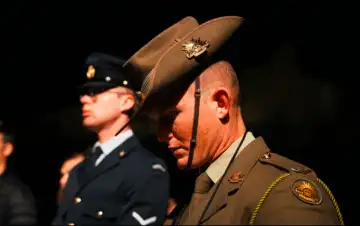
(On the 111th anniversary of the Çanakkale Land Battles, a ceremony was held at the Martyrs' Monument on the Historic Gallipoli Peninsula. At dawn, the Dawn Service was conducted at Anzac Cove. Credit: X)

(In Canakkale, the Anzacs commemorated their ancestors with the 'Dawn Service.' Credit: X)
The 'Forgotten' Anzacs: The Vital Role of Indian Soldiers at Gallipoli
While Anzac Day is synonymous with the fallen Australian and New Zealand troops, a crucial but often overlooked chapter of the 1915 Gallipoli campaign belongs to the 16,000 Indian soldiers who fought alongside them.
From the very first day of the landings, Indian artillery, infantry, and supply units were integral to the Allied effort, earning the deep respect and lifelong admiration of the original Anzacs.
On this day in 1915, as the first waves of Anzacs struggled to establish a foothold at Anzac Cove, they were supported by the 7th Indian Mountain Artillery Brigade.
While larger British guns were delayed by the difficult terrain, the Indian batteries, equipped with light, versatile pack howitzers, were among the first to get their guns ashore and into action. The 26th Jacob's Mountain Battery landed just hours after the initial infantry, providing the only effective artillery fire during the critical first afternoon of the invasion. These units were highly skilled in mountain warfare, a necessity for the steep, jagged ridges of the peninsula. Their ability to "drag guns by hand" into impossible positions saved countless lives on the 400 Plateau.
The 29th Indian Infantry Brigade, comprising units like the 14th Sikhs and several Gurkha battalions, faced some of the most brutal fighting of the campaign.At the Battle of Gully Ravine on June 4, 1915, the 14th Sikhs demonstrated legendary discipline, losing 80% of their strength, approximately 371 soldiers, in a single day without a single soldier wavering or retreating.
For decades, the Indian contribution to the Anzac legend remained a "forgotten" narrative. However, this year, the inclusion of Indian-Australian veterans in marches across Sydney, Melbourne, and London has become a mainstay.
'Peace' as the Ultimate Tribute
The ceremonies in Turkiye concluded with the reading of Mustafa Kemal Atatürk's famous 1934 tribute to the fallen Anzacs, delivered by Turkish military officials. The message, declaring that there is "no difference between the Johnnies and the Mehmets" as they lie side by side, served as a poignant reminder of reconciliation.
As the world navigates through economic challenges and regional conflicts, the 111th anniversary of Anzac Day served as more than just a historical look back. It functioned as a global pause, reinforcing a collective commitment to the values of endurance and compassion first defined in the trenches of 1915.