




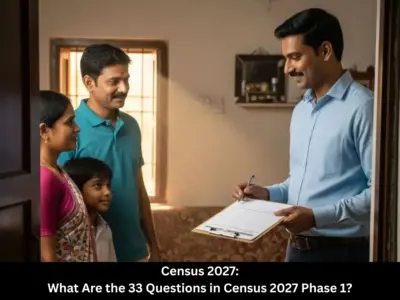

Census 2027: India has officially begun its long-awaited national census after a delay of more than a decade, marking the start of what officials describe as the world's largest population exercise.
The government launched Census 2027 Phase 1 on April 1, 2026, covering all states and Union Territories across the country. This phase focuses on house listing and housing data collection, which will continue until September 30, 2026.
Officials say the latest census introduces several major changes, including digital data collection and self-enumeration for citizens. This marks the first fully digital census in India's history, with enumerators using mobile applications to collect household details.
The census also carries historical importance because it includes caste data collection during the next phase, the first such exercise since 1931.
Census 2027: What is the India Census 2027 Phase 1?
Phase 1 of Census 2027 is officially called the House Listing and Housing Census (HLO).
During this stage, trained enumerators visit every household and record detailed information about housing conditions and household facilities. The exercise includes data about:
Type and condition of houses
Availability of drinking water
Electricity access
Sanitation facilities
Household assets
Officials will carry out this phase over six months, giving each state 30 days to complete fieldwork. Citizens also have the option to fill out their details online before the enumerator visits.
Census 2027: What Are the 33 Questions of Census 2027 Phase 1?
The government has finalised 33 questions for the House Listing phase. These questions focus on housing, amenities, and household assets.
Complete List of 33 Census Questions
- Building number
- Census house number
- Predominant material of the floor
- Predominant material of the wall
- Predominant material of the roof
- Use of census house
- Condition of the census house
- Household number
- Total number of persons in the household
- Name of head of household
- Sex of head of household
- SC/ST/Other category status
- Ownership status
- Number of dwelling rooms
- Number of married couples
- Main source of drinking water
- Availability of drinking water
- Main source of lighting
- Access to a latrine
- Type of latrine
- Waste water outlet
- Availability of bathing facility
- Availability of kitchen and LPG/PNG
- Main fuel used for cooking
- Radio/transistor availability
- Television availability
- Internet access
- Laptop/computer availability
- Telephone/mobile availability
- Bicycle/scooter/motorcycle availability
- Car/jeep/van availability
- Main cereal consumed
- Mobile number (for communication)
These questions help authorities understand living conditions and infrastructure availability across India.
Census 2027: Full Timeline of India Census 2027
The government has planned the census in multiple stages to ensure nationwide coverage.
Key Census 2027 Dates
Phase 1: House Listing & Housing Census
- Start Date: April 1, 2026
- End Date: September 30, 2026
- Focus: Housing and household details
- Self-Enumeration Window: 15 days before field visits
Special Timeline for Snow-Bound Areas
- Start: October 2026
Phase 2: Population Enumeration
- Expected Month: February 2027
- Focus: Individual demographic details
Reference Date (Most States)
- March 1, 2027 (00:00 hrs)
This structured timeline ensures accurate data collection across diverse regions.
Census 2027: What Makes Census 2027 Different From Previous Census Exercises?
Census 2027 introduces several major changes compared to earlier surveys.
- Key New Features
- Fully digital data collection
- Self-enumeration portal for citizens
- Mobile-based data entry
- Inclusion of caste data in Phase 2
- Expanded questionnaire with new technology-related questions
Officials say digital tools will reduce errors and improve data quality. Nearly 30 lakh enumerators will participate in this exercise, making it one of the largest administrative operations in the world.
Census 2027: Why is Census 2027 Important for India?
Experts consider Census 2027 crucial for policymaking and economic planning.
Government agencies use census data to:
- Allocate funds to states
- Plan infrastructure projects
- Improve healthcare services
- Design welfare schemes
- Develop education programs
Accurate census data also supports research, urban planning, and disaster management.
Officials believe that the updated data will play a major role in shaping India's development strategy for the next decade.
Census 2027: What Citizens Should Do During Census 2027
Authorities have advised citizens to cooperate with enumerators and provide accurate information. People can also complete the process online through the official self-enumeration portal before the field visit.
Officials stress that all census information remains confidential and is protected under the law. The data collected cannot be used for legal or taxation purposes.