




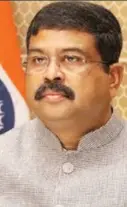

The reactions of opposition leaders following Dharmendra Pradhan's resignation suggest they are dissatisfied with the possibility of peace returning, as they have already begun raising additional demands.
The resignation of Dharmendra Pradhan should not be viewed merely as someone's victory or someone else's defeat. The significance of this resignation goes far beyond the politics of winning and losing.
Before expressing my views, let me make one thing absolutely clear: I have always been, am, and will remain firmly opposed to paper leaks. The menace of paper leaks primarily harms the country's most talented students. Children of wealthy families, who often neglect their studies and rely on their parents' financial influence, have been able to exploit leaked examination papers to secure admission into prestigious courses, pushing genuinely deserving and hardworking students aside.
No government or political party has, over the years, taken sufficiently effective measures to completely eradicate this malpractice. However, every wrongdoing eventually reaches its breaking point. Following the leak of the NEET examination paper, students' anger erupted on such a scale that the Union Education Minister was ultimately compelled to resign. Had he accepted moral responsibility earlier, perhaps the situation would not have escalated to such an extent.
One positive development was that the Prime Minister personally took cognizance of the matter and addressed students through social media. He assured them that the government is sensitive to their concerns and would introduce stringent laws to ensure that no one dares to leak examination papers in the future. He also promised reforms to strengthen the examination system, making paper leaks virtually impossible. The dismissal of 47 senior officials of the National Testing Agency (NTA) was presented as an indication of the government's resolve. A Bill on this issue is also expected to be introduced in Parliament on Monday. Fasttrack courts have reportedly been established to ensure that those responsible for paper leaks receive punishment within a time-bound period of three months.
The real issue, however, is that the entire opposition, along with what is described as the "Cockroach Janata Party," used the students' movement as a political platform without offering any concrete solutions to eliminate paper leaks. Instead, they sought to keep the agitation alive for political gain, believing that if they could not come to power through elections, they might weaken or topple the government through unrest and disorder.
The blueprint for such protests was laid by Rahul Gandhi in his speech on 5 February 2020, when he remarked that the public would drag Prime Minister Modi onto the streets and beat him with sticks. Similarly, on 13 May 2026, Arvind Kejriwal, during a press conference in New Delhi, referred to the youth movements in Nepal and Bangladesh and indirectly expressed hope that similar circumstances would emerge in India.
Congress leader Udit Raj predicted movements in India similar to those witnessed in Bangladesh, Nepal, and Sri Lanka. Shiv Sena (Uddhav faction) leader Sanjay Raut has made similar remarks on multiple occasions.
With Dharmendra Pradhan's resignation, the conspiracy by leaders such as Rahul Gandhi, Akhilesh Yadav, Arvind Kejriwal, Mamata Banerjee, Omar Abdullah, Tejashwi Yadav, and others to spread violence across the country under the guise of a student movement has now collapsed. Foreign forces, working through various domestic elements, were continuously attempting to intensify the agitation behind the scenes.
Every political party sought to derive political advantage from the situation. Otherwise, why did no opposition party condemn the large-scale violence that took place from 20 July onwards in the name of the student movement? Why was there no condemnation of attacks on police personnel and journalists? Why was no concern expressed for the inconvenience caused to ordinary citizens?
Why anti-India slogans were permitted at Jantar Mantar, why demands for the restoration of Article 370 were raised, why derogatory remarks were made against Premanand Maharaj and Hinduism, why slogans declaring "only Allah's name will remain" were raised, why calls for bringing down Parliament were made, and why abusive remarks against Prime Minister Narendra Modi and Home Minister Amit Shah were heard?
The movement gradually shifted away from being a protest against paper leaks and became a platform for numerous unrelated political and ideological issues.
The reactions of opposition leaders following Dharmendra Pradhan's resignation suggest they are dissatisfied with the possibility of peace returning, as they have already begun raising additional demands.
The government can now return to its work. Parliament will be able to pass legislation that are in India's national interest, while the weakened opposition will continue to object.
Although Dharmendra Pradhan's resignation may have prevented India from descending into widespread violence this time, those who sought to instigate unrest are unlikely to stop. Therefore, both the government and the public must remain vigilant to safeguard the nation's continuous progress, development, and prosperity.