




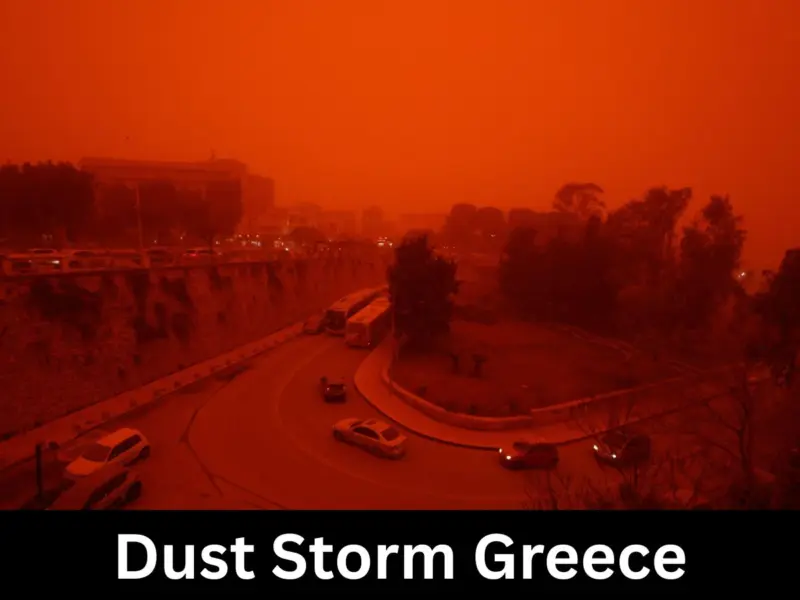

Dust Storm Greece: A vast Saharan dust storm has engulfed parts of Greece, casting an eerie orange hue across the skies and disrupting travel.
The unusual weather event has prompted flight delays, ferry cancellations, and health warnings, particularly on the island of Crete.
Residents stepped outside under thick, dusty skies, with some describing the atmosphere as apocalyptic. The storm, driven by winds carrying fine particles from the Sahara Desert, has affected cities from Heraklion to Athens, highlighting the growing impact of extreme weather across Europe.
Authorities are urging caution, especially for travellers and people with respiratory issues, as the dust continues to spread across the Mediterranean region.
Dust Storm Greece: Saharan Dust Storm Covers Greece in Orange Haze
A massive Saharan dust storm has swept across parts of Greece, turning skies a dramatic orange and disrupting daily life. The rare weather event has reduced visibility, affected transport, and raised serious health concerns across multiple regions.
The dust cloud arrived just ahead of the busy Easter travel period, adding pressure on airports and local authorities. Residents in several cities stepped out under hazy, dust-filled skies, while officials urged caution.
Driven by strong winds from North Africa, the storm has highlighted how interconnected global weather systems can disrupt everyday life. It has also sparked renewed concerns about extreme weather patterns becoming more frequent.
Dust Storm Greece: What Caused the Saharan Dust Storm Over Greece?
The dust storm originated in the Sahara Desert, where strong winds lifted massive amounts of sand and fine particles into the atmosphere. These particles then travelled across the Mediterranean due to shifting pressure systems.
Meteorologists say a combination of warm air currents and strong southerly winds pushed the dust toward southern Europe. This process, while natural, intensified due to unstable weather conditions in the region.
As the dust travelled, it spread across several countries, reaching Greece in high concentration. The scale of this event has made it more disruptive than typical seasonal dust movements.
Dust Storm Greece: Why is Greece Covered in Orange Haze?
The orange glow seen across Greece is caused by sunlight interacting with dense dust particles suspended in the air. These particles scatter light in a way that creates a reddish-orange appearance.
When the dust mixes with moisture and clouds, it intensifies the colour and reduces visibility further. Rainfall during the storm has turned the airborne dust into muddy residue, coating surfaces across cities.
This combination of dust and rain has created both visual impact and practical challenges, from dirty streets to reduced air quality.
Crete Storms Turn Orange: What Are the Latest Ground Reports?
The island of Crete has been among the worst-affected areas, with cities like Heraklion experiencing thick dust clouds throughout the day. Visibility dropped significantly, affecting movement and outdoor activity.
Residents described the sky as unusually dark and orange, creating an almost surreal atmosphere. In Santorini, similar scenes unfolded, with dust settling on buildings, roads, and vehicles.
People have been wearing masks to protect themselves from inhaling dust particles, while authorities continue to advise caution and limited outdoor exposure.
Crete Dust Storm: Flights & Travel Disrupted: What Travellers Need to Know
Travel has been heavily impacted, especially at Heraklion International Airport, where low visibility forced delays and diversions. Passengers faced disruptions as airlines adjusted schedules to ensure safety.
Ferry services across the region also experienced interruptions due to strong winds and rough sea conditions. This has created additional challenges for tourists and locals trying to move between islands.
Authorities have urged travellers to check updates before departure and allow extra time for their journeys. With the holiday season approaching, disruptions could continue if conditions persist.
Weather Alerts in Greece: Is the Situation Dangerous?
Greek authorities issued weather alerts, including red warnings in several regions, as conditions worsened. The combination of dust, wind, and rainfall has created hazardous conditions for both health and travel.
Air quality has dropped sharply, posing risks for vulnerable groups such as children, elderly individuals, and those with respiratory issues. Officials have advised people to stay indoors where possible.
Emergency services remain on alert, monitoring the situation closely as conditions continue to evolve across affected areas.
Impact Beyond Greece Dust Storm: Libya & Wider Mediterranean Hit
The impact of the dust storm extends beyond Greece, affecting parts of Libya, where cities like Tobruk declared a state of emergency. Dense dust clouds have created serious health concerns in these regions.
In mainland Greece, areas near Athens have also faced severe weather, including flooding and dangerous conditions linked to the same system. Reports indicate casualties due to extreme weather impacts.
This widespread disruption shows how a single weather system can affect multiple countries simultaneously.
Why Saharan Dust Storms Are Becoming More Frequent?
Experts believe climate change is playing a role in increasing the frequency and intensity of such dust storms. Rising global temperatures and shifting wind patterns allow dust to travel further and more often.
Southern Europe has already experienced a rise in extreme weather events, including wildfires and floods. These changing patterns create conditions that make large-scale dust transport more likely.
Scientists warn that such events could become more common in the future, raising concerns about long-term environmental and health impacts.
Dust Storm Greece: What Happens Next? Will Conditions Improve Soon?
Weather forecasts suggest that the dust cloud will gradually clear as wind patterns shift in the coming days. However, some regions may continue to experience poor air quality for a short period.
Authorities are closely monitoring the situation and may extend advisories if needed. Travel conditions are expected to improve once visibility returns to normal levels.
Until then, residents and travellers are advised to remain cautious, follow official updates, and plan their activities carefully.