




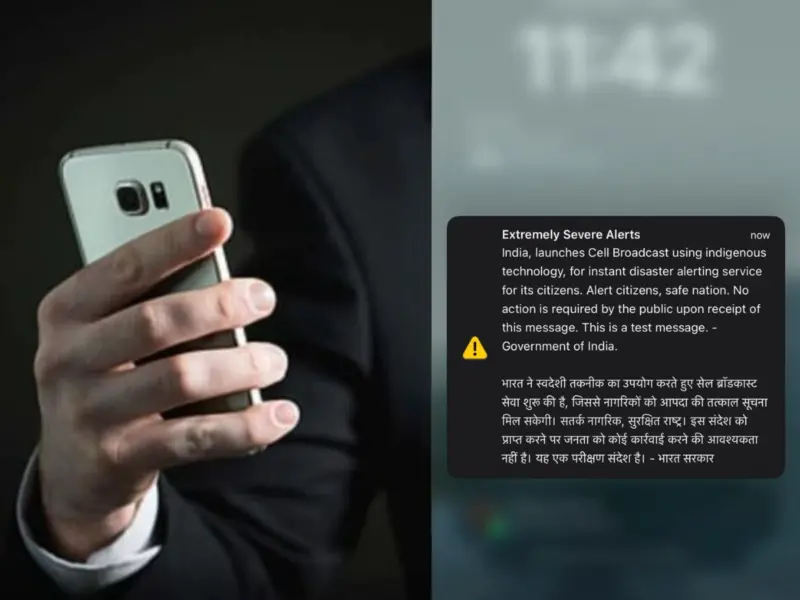

Emergency Severe Alerts: Did you also get shocked if your phone suddenly blares a loud alarm with a flash message? Don't be Panic, as it could be part of a nationwide safety drill.
India is actively testing a new emergency alert system designed to instantly warn citizens during disasters. The initiative aims to strengthen real-time communication when every second matters.
What is the NDMA Cell Broadcast 'Emergency Alert' System?
India is rolling out a new emergency messaging system called Cell Broadcast Alerts to deliver critical warnings directly to mobile phones. Unlike regular SMS, these alerts can reach a large number of users in a specific area within seconds.
The system is being tested nationwide by the National Disaster Management Authority (NDMA), and its goal is to ensure that people receive timely alerts during emergencies such as earthquakes, tsunamis, lightning strikes, or industrial hazards.
Emergency Severe Alerts: Why You May Have Received a Message?
As part of the ongoing testing, many users are receiving a flash message from NDMA. The message reads, "NDMA will test Cell Broadcast Alerts on 2 May 2026 in your area. On receiving the message on your mobile phone, no action is required. Please do not panic."
These alerts are only part of a planned drill and do not signal any real emergency.
Who Launched the 'Emergency Alert' System and How Widely is It Operational in India?
According to an official government statement, the alert system was launched on May 2, 2026, by Union Home Minister Amit Shah, along with Union Communications Minister Jyotiraditya Scindia. The initiative is powered by SACHET (Integrated Alert System), developed by the Centre for Development of Telematics (C-DOT), the Department of Telecommunications' premier R&D centre.
Built on the Common Alerting Protocol recommended by the International Telecommunication Union, the system is now operational across all 36 states and union territories of India.
Emergency Severe Alerts: How does the Alert work on Your Phone?
When the alert is triggered, your phone may:
- Ring loudly with a sharp alarm tone
- Display a flash message on the screen
This ensures the alert grabs immediate attention, even if your phone is on silent or being used for something else. However, only users who have enabled test alerts in their phone settings may receive these trial messages for now.
Didn't Get 'Emergency Test' Alert: How to Enable or Disable Test Alerts in Android and iPhones?
Developed by the Centre for Development of Telematics (C-DOT) and powered by the SACHET platform, the system is designed to instantly send alerts to all compatible devices in a specific area during emergencies, even overriding silent or do-not-disturb modes.
However, these "test messages" were only delivered to mobile phones with Cell Broadcast test channels enabled. Users can choose to turn these alerts on or off by going to: Settings → Safety and Emergency → Wireless Emergency Alerts → Test Alerts.
NDMA Cell Broadcast Alert System: What is the Technology Behind the System?
The alert system is part of the Integrated Alert System known as SACHET. It has been developed by the Centre for Development of Telematics (C-DOT).
It uses the globally recognised Common Alerting Protocol (CAP), recommended by the International Telecommunication Union, ensuring compatibility and reliability.
NDMA Cell Broadcast Alert System: Is any Disaster Coming? Why the Government is Testing It Now?
Authorities are conducting these tests to evaluate the system's performance, speed, and reliability before launching it fully across India. The exercise also checks how well mobile networks handle mass alerts.
This preparation is crucial for improving disaster response and ensuring that warnings reach people without delay.
Emergency Severe Alerts: What Happens After Nationwide Rollout?
Once fully operational, the system will:
- Send alerts in multiple Indian languages
- Reach all mobile users, regardless of settings
- Deliver warnings based on location-specific risks
This means even those who haven't enabled test alerts will receive emergency messages during real situations.