
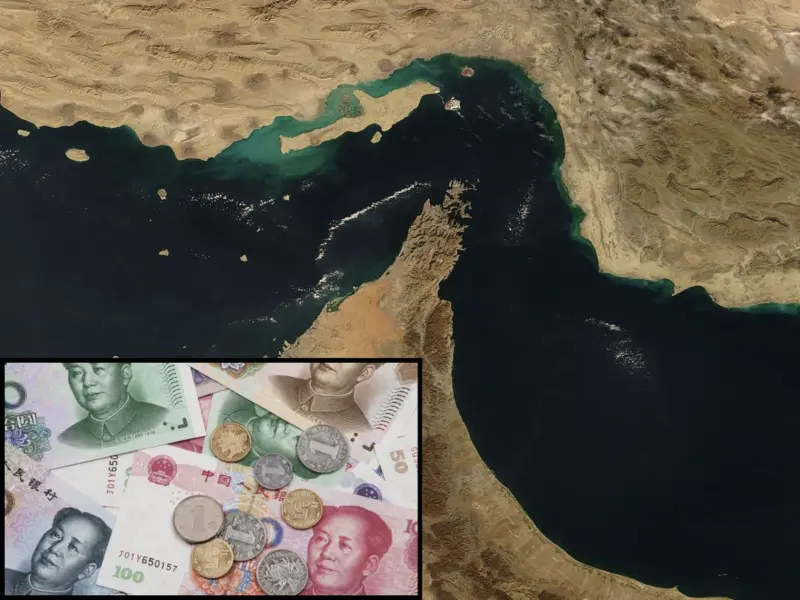

A viral claim suggesting that India paid in Chinese Yuan to allow its oil tankers to pass through the Strait of Hormuz has triggered widespread confusion online.
The claim surfaced at a time when tensions in West Asia remain high, making such reports more sensitive and impactful.
Several social media posts alleged that only countries paying in Chinese currency were being allowed to navigate through the crucial maritime route. The narrative quickly gained traction, raising concerns about possible shifts in global trade practices and India's strategic position.
However, the Indian government has stepped in to set the record straight. Officials have strongly rejected these claims, calling them misleading and baseless. Here is a detailed fact check explaining what really happened.
Fact Check: Did India Pay in Chinese Yuan to Cross the Strait of Hormuz?
The claim that India paid in Chinese Yuan to allow its oil tankers to pass through the Strait of Hormuz is false. There is no official confirmation or credible evidence supporting this narrative.
The reports originated from unverified social media accounts and were amplified without factual backing. Some posts even suggested a new payment system was being enforced in the region, which is not true.
No government authority or credible international agency has confirmed any such requirement for transit through the Strait. The claim lacks proof and has been dismissed by Indian officials.
What Did the Indian Government Say?
The Indian government responded quickly to the viral misinformation. The fact-check unit of the Ministry of External Affairs (MEA) publicly rejected the claim and warned users against spreading such content.
The ministry stated on social media, 'Fake News Alert! Please stay alert against such false and baseless claims and posts on social media!'
By issuing this clarification, the government aimed to prevent panic and misinformation, especially at a time when regional tensions are already high.
How Did This Fake News Spread?
The claim gained momentum through multiple social media platforms, where posts suggested that Indian tankers had paid in Chinese Yuan to secure passage. Some of these posts referenced foreign media outlets, which added a layer of perceived credibility.
One widely circulated claim read, 'Reports claim that an Indian oil tanker was reportedly allowed to cross after paying in Chinese Yuan, marking a notable shift in regional trade pr payment practices.'
Such posts were shared widely without verification, highlighting how quickly misinformation can spread during geopolitical crises.
What Actually Happened in the Strait of Hormuz?
In reality, Indian-flagged LPG tankers Jag Vasant and Pine Gas safely navigated through the Strait of Hormuz under close monitoring. The movement took place amid heightened tensions in the region.
The Indian Navy coordinated the passage of these vessels to ensure safety. After crossing the Strait, the tankers were scheduled to receive further escort as they moved toward the Gulf of Oman.
There was no special payment arrangement involved in this transit. The operation followed standard security protocols due to the sensitive situation in the region.
Why is the Strait of Hormuz So Important?
The Strait of Hormuz is one of the world's most critical oil transit routes. A significant portion of global oil supply passes through this narrow waterway, making it strategically vital.
Any disruption or misinformation related to this route can impact global markets and energy security. This is why false claims about payment systems or restricted access can create unnecessary panic.
Given the ongoing tensions in West Asia, the situation in the Strait remains under close international observation.
Fact Check Verdict: Is the Chinese Yuan Claim True?
The claim that India paid in Chinese Yuan to move its tankers through the Strait of Hormuz is false and misleading. The Indian government has clearly denied it and labelled it as fake news.
The movement of Indian vessels took place under naval coordination and standard security measures, not through any financial arrangement involving foreign currency.
This incident highlights the importance of verifying information before sharing it, especially during sensitive geopolitical situations.