




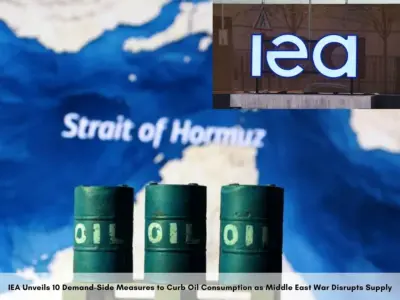

The International Energy Agency set out a range of demand-side actions that governments, businesses, and households can take to alleviate the economic impacts on consumers of the disruptions to oil markets stemming from the war in the Middle East.
The conflict has triggered the largest supply disruption in the history of the global oil market, with shipping through the Strait of Hormuz reduced to a trickle.
Around 20 million barrels per day of crude oil and oil products typically transit the Strait, which normally carries about 20% of global oil consumption. Due to the severe market tightening caused by the loss of these flows, crude oil prices have risen past $100 per barrel, and refined products like diesel, jet fuel, and liquefied petroleum gas have seen even more dramatic increases.
What Is the Current Status of Oil Supply?
Restoring transit through the Strait of Hormuz remains essential to stabilize global energy markets. In the meantime, countries are acting on both supply and demand. On March 11, IEA member countries agreed to release 400 million barrels of oil from emergency reserves-the largest stock draw in the agency’s history.
However, IEA Executive Director Fatih Birol said supply-side measures alone cannot fully offset the scale of the disruption. “The war in the Middle East is creating a major energy crisis, including the largest supply disruption in the history of the global oil market,” Birol said. “In the absence of a swift resolution, the impacts on energy markets and economies are set to become more and more severe.”
What are IEA’s 10 Demand-Side Measures?
The IEA paper identifies ten quick-to-implement initiatives for governments, enterprises, and people. These initiatives are largely aimed at road transport, which accounts for approximately 45% of world oil use, but they also address aviation, cooking, and industrial.
1. Work from home where possible
Working from home displaces oil use from commuting, particularly where jobs are suitable for remote work.
2. Reduce highway speed limits by at least 10 km/h
Lower speeds reduce fuel use for passenger cars, vans, and trucks.
3. Encourage public transport
A shift from private cars to buses and trains can quickly reduce oil demand.
4. Alternate private car access to roads in large cities on different days
Number-plate rotation schemes can reduce congestion and fuel-intensive driving.
5. Promote car sharing and efficient driving behaviors.
High car occupancy and eco-driving can quickly reduce fuel usage.
6. Effective driving for commercial road trucks and delivery of products.
Better driving habits, vehicle maintenance, and load optimization can reduce diesel use.
7. Divert LPG use from transportation.
Bi-fueling and converting vehicles from LPG to gasoline can help to preserve LPG for cooking and other vital uses.
8. Avoid flying travel where alternatives exist.
Reducing corporate flights can quickly relieve pressure on the aviation fuel market.
9. Wherever possible, apply contemporary cooking solutions.
Encourage electric cooking and other modern options to reduce dependence on LPG.
10. Maximize flexibility with petrochemical feedstocks and apply short-term efficiency and maintenance initiatives.
Through immediate operational changes, industry can help free up LPG for important uses while also lowering oil use.
Why Are These Measures Needed?
Addressing demand is a critical and immediate tool to reduce pressure on consumers by improving affordability and supporting energy security. While demand-side efforts cannot equal the volume of disrupted supply, they can help to lower costs, reduce market stresses, and keep fuels available for important purposes until regular flows return.
The IEA said widespread adoption of these measures, where possible, would amplify their global impact and help cushion the shock. Governments can set a good example by implementing public sector initiatives, taking regulatory action, and offering targeted incentives, all while ensuring that consumer assistance is timely and targeted to those in greatest need.
What Are Governments Already Doing?
The IEA also published an overview of all demand-related policy measures that have been announced by governments since the start of the crisis. Many countries are already acting to protect consumers through conservation and financial measures similar to those discussed in the report.
Experience from previous crises shows that well-targeted support mechanisms are more effective and fiscally sustainable than broad-based subsidies.
FAQs: IEA’s Demand-Side Measures
Q: How much oil supply has been lost?
A: Around 20 million barrels per day typically transit the Strait of Hormuz. Traffic has been reduced to a trickle since the war began.
Q: What is the current oil price?
A: Crude oil prices are above $100 per barrel, with refined products like diesel and jet fuel seeing even sharper increases.
Q: What did the IEA already do on supply?
A: On March 11, IEA member countries agreed to release 400 million barrels of oil from emergency reserves-the largest stock draw in the agency’s history.
Q: Why are demand-side measures necessary?
A: Supply-side initiatives alone cannot completely mitigate the amount of disruption. Addressing demand relieves consumer pressures and promotes energy security.
Q: What are the key measures for road transport?
A: Working from home, reducing speed limits, encouraging public transport, alternating private car access, car sharing, and efficient driving practices.
Q: How can households help?
A: Working from home, using public transport, car sharing, reducing air travel, and switching to electric cooking where possible.
Q: What measures target LPG shortages?
A: Diverting LPG from transport to cooking, switching to alternative modern cooking solutions, and allowing industry to shift to alternative feedstocks.
Disclaimer: This information is based on inputs from news agency reports and extended explanation of the IEA reports. TSG does not independently confirm the information provided by the relevant sources.