
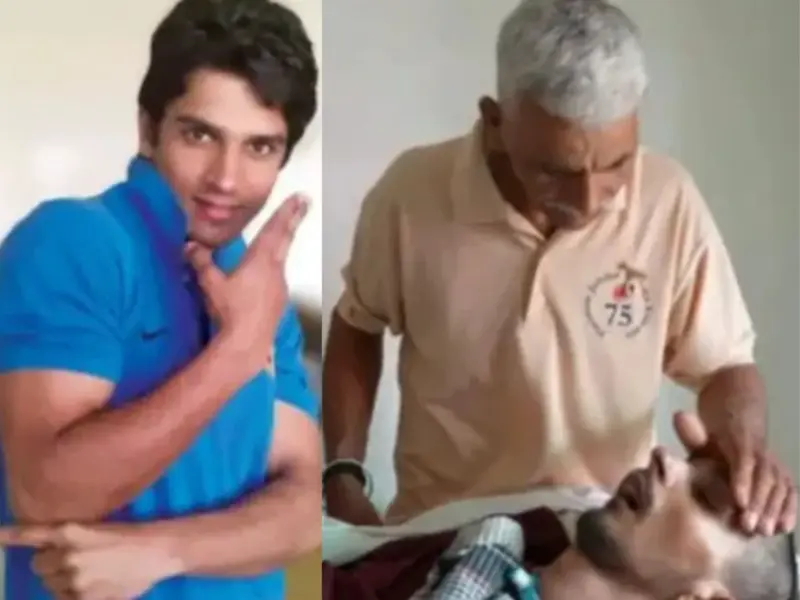

For more than 13 years, the life of Harish Rana has remained suspended between life and death. Once a young and energetic bodybuilder with strong muscles and a bright future ahead, he now lies motionless on a hospital bed, unable to respond to the world around him.
A recent photograph circulating online shows a heartbreaking contrast. The once muscular 20-year-old is now extremely frail after years of lying in bed. His thick hair has disappeared, and his body has weakened drastically. Standing beside him is his mother, draped in a red scarf, gently looking at her son with affection and hope that has lasted for over a decade.
But that hope may finally come to an end.
After years of waiting for their son to wake up from a coma, Harish Rana's parents approached the Supreme Court of India seeking permission for euthanasia, also known as the "right to die with dignity."
In a historic ruling, the court allowed passive euthanasia in his case, a decision that may mark a significant moment in India's legal and medical history.
What Happened to Harish Rana?
Harish Rana's life changed dramatically on Raksha Bandhan in August 2013. On that day, he accidentally fell from the fourth floor of his PG accommodation.
The fall caused severe head injuries that permanently damaged his brain. Soon after the accident, his body became paralysed, and he slipped into a deep coma.
Since then, Rana has never regained consciousness.
Medical reports say that he has been receiving nutrition through a feeding tube for years. Because he has remained bedridden for such a long period, his body has developed several complications, including wounds caused by prolonged immobility.
Despite continuous care, doctors have found no medical possibility of recovery.
Harish Rana Euthanasia Case: How Will the Process Be Carried Out at AIIMS?
According to medical experts, Harish Rana will be shifted to the palliative care unit of All India Institute of Medical Sciences (AIIMS) following the Supreme Court's order.
Palliative care focuses on ensuring comfort and dignity for patients with severe or terminal illnesses. Doctors in such units do not attempt aggressive treatments aimed at prolonging life.
Instead, they focus on reducing suffering.
Dr Sushma Bhatnagar, a former head of AIIMS' pain and palliative care department, explained how such cases are managed.
In palliative care, doctors allow the patient to die naturally. They neither artificially prolong life nor hasten death deliberately.
Patients continue to receive basic medical care, such as:
- Pain management
- Hygiene and nursing care
- Medicines for comfort
- Emotional support
However, doctors do not shift such patients to intensive care units or provide aggressive treatments.
Harish Rana Euthanasia Case: What is Passive Euthanasia?
Doctors explain that the court has permitted passive euthanasia, not active euthanasia.
Passive euthanasia means withdrawing life-sustaining medical treatments from a patient who has no chance of recovery. Instead of actively causing death, doctors simply stop treatments that artificially prolong life.
This may include removing:
- Ventilators
- Feeding tubes
- Dialysis support
- Other life-support systems
Once these supports are withdrawn, the patient eventually dies naturally due to the underlying medical condition.
Harish Rana Euthanasia Case: Parents Approach Supreme Court for 'Right to Die with Dignity'
For more than a decade, Rana's parents kept hoping that their son would wake up someday. But time gradually took its toll on them as well. Now elderly and physically weak, they said they could no longer continue the long medical struggle.
They finally filed a petition in the Supreme Court of India requesting permission for "dignified euthanasia."
A bench led by Justice J.B. Pardiwala and Justice K.V. Viswanathan heard the case carefully. The court reviewed medical records and reports submitted by doctors and the hospital treating Rana.
After examining the evidence, the judges concluded that there was no realistic chance of recovery. During the hearing, the bench even referred to the famous line from William Shakespeare's play Hamlet, "To be or not to be."
The judges explained that sometimes life presents situations where it becomes extremely difficult to decide whether suffering should continue or be brought to an end.
Finally, the court allowed euthanasia for Harish Rana, reportedly the first such decision in India under these circumstances.
Harish Rana Euthanasia Case: What Will Change in Harish Rana's Treatment?
Following the Supreme Court order, several changes may occur in Rana's treatment plan.
Doctors will gradually withdraw medical interventions that keep him alive artificially.
For example:
- Life support systems may not be used.
- If his breathing worsens, doctors may not place him on a ventilator.
- Repeated medical tests, like blood tests or X-rays, may stop.
- Feeding through tubes may eventually be reduced or discontinued gradually.
At the same time, doctors will ensure that Rana does not experience unnecessary pain.
A dedicated nurse will continue caring for him, maintaining cleanliness, monitoring his condition and ensuring he remains comfortable.
Harish Rana Euthanasia Case: How Long Will It Take?
Doctors say it is impossible to predict how long Rana might survive once passive euthanasia begins. Every patient's body responds differently.
Dr Bhatnagar explained that younger patients sometimes survive longer even after life-support systems are withdrawn. Because Harish Rana is still relatively young, his body may continue functioning for some time.
However, no doctor can accurately estimate when his life will end.
Harish Rana Euthanasia Case: Case That Raises Difficult Questions
The Harish Rana case has reopened an emotional debate in India about euthanasia and the right to die with dignity.
Supporters believe that keeping someone alive for years without hope of recovery causes unnecessary suffering, not only to the patient but also to their family.
Others argue that life must be preserved at all costs.
For Rana's parents, however, the issue is deeply personal. After waiting for 13 years beside their son's hospital bed, they believe allowing him to leave peacefully is the most compassionate choice.
Their long wait may soon end, but the legal and ethical questions raised by this case will likely continue for years.