

A new diplomatic development has added a surprising twist to the ongoing tensions in the Middle East. Reports suggest that a planned Israeli strike targeting top Iranian leaders was halted after urgent intervention from Pakistan, potentially preventing a major escalation.
The development highlights how backchannel diplomacy is playing a crucial role even as military tensions remain high. With global powers watching closely, the situation now appears to be shifting, at least temporarily, towards negotiation rather than confrontation.
US-Israel-Iran War Update: Did Pakistan Stop Israel from Targeting Iranian Leaders?
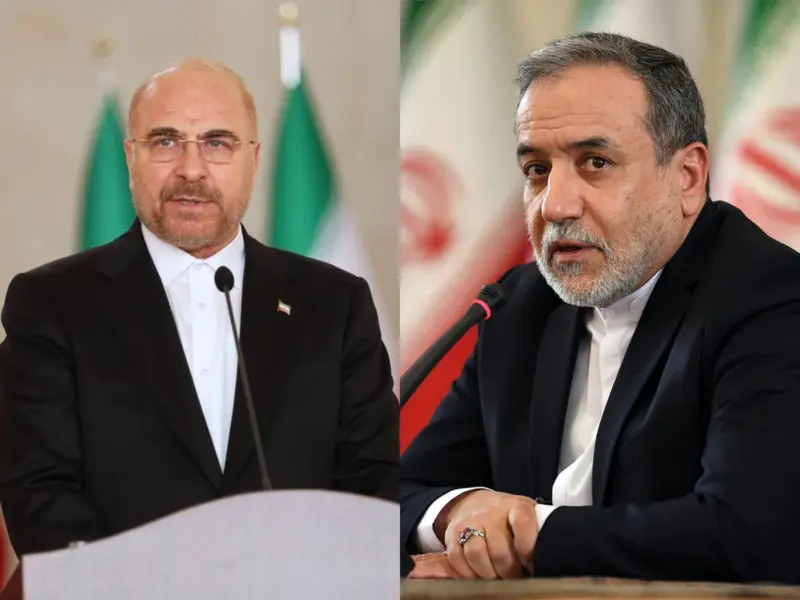
According to reports, Israel had identified and was preparing to target Iran's Foreign Minister Abbas Araghchi and Parliament Speaker Mohammad Baqer Qalibaf.
However, a Pakistani official claimed that Islamabad intervened by alerting Washington about the risks of such a move. The official stated, "The Israelis had their coordinates and intended to strike. We told the US that eliminating them would leave no one to negotiate with, so Washington asked Israel to hold off."
While there is no official confirmation from Israel or the US, the reported pause suggests that diplomatic considerations may have influenced military planning.
US-Israel-Iran War: Why Were Araghchi & Qalibaf Important Targets?
Both leaders play critical roles within Iran's power structure. Abbas Araghchi serves as the country's chief diplomat, handling international negotiations and representing Iran on the global stage.
Mohammad Baqer Qalibaf, on the other hand, holds significant political influence as parliament speaker and maintains strong ties to Iran's military and security establishment.
Targeting such figures could have disrupted Iran's leadership at a crucial time. More importantly, it might have eliminated key individuals capable of engaging in dialogue, potentially escalating the conflict further instead of resolving it.
US-Israel-Iran War: How Araghchi & Qalibaf Escaped the Assassination List?
Reports suggest that both Abbas Araghchi and Mohammad Baqer Qalibaf were initially marked as potential targets in a planned Israeli strike during the ongoing conflict.
According to a Pakistani official, Israel had already identified their locations and was preparing to act. However, the situation reportedly changed after Pakistan intervened diplomatically and raised concerns with the United States.
"The Israelis had their coordinates and intended to strike. We told the US that eliminating them would leave no one to negotiate with, so Washington asked Israel to hold off," the official said.
This intervention appears to have led to a temporary pause in the targeting plan. Reports indicate that both leaders were removed from the hit list for a limited period, allowing space for possible diplomatic engagement.
US-Israel-Iran War: Who is Abbas Araghchi? Iran's Foreign Minister
Abbas Araghchi is a seasoned diplomat and one of Iran's most prominent international negotiators. He has played a key role in past nuclear discussions and diplomatic engagements with global powers.
Known for his strategic approach, Araghchi often acts as a bridge between Iran and the international community. His involvement becomes especially important during crises, where communication channels are limited.
His reported presence on a target list underscores how central he is to Iran's diplomatic strategy.
US-Israel-Iran War: Is Pakistan Acting as a Mediator Between the US & Iran?
Pakistan has increasingly positioned itself as a mediator in the ongoing conflict. Alongside countries like Egypt and Turkey, Islamabad is maintaining communication with both Tehran and Washington.
With formal diplomatic channels strained, such intermediaries have become essential. Pakistan is reportedly facilitating message exchanges and may even serve as a venue for future talks.
This role reflects both strategic diplomacy and regional interests, as stability in the Middle East directly impacts global energy flows and security dynamics.
US-Iran Peace Talks: What is the 15-Point Proposal?
A major element shaping current discussions is a reported 15-point proposal conveyed by Donald Trump through Pakistan.
The proposal reportedly includes demands such as reducing Iran's enriched uranium stockpile, halting nuclear activities, limiting missile capabilities, and scaling back regional influence.
While Washington has indicated optimism, Iran has not yet agreed to negotiations. Officials in Tehran have stated they are still reviewing the proposal, suggesting that any breakthrough may take time.
Strait of Hormuz Update: What Did Iran Say About Shipping?
Iran has also clarified its position on the strategically crucial Strait of Hormuz. Abbas Araghchi stated, "The Strait is not fully closed; it is closed only to enemies and their allies."
He added that ships from "friendly countries" such as India, China, Russia, Iraq, and Pakistan are being allowed to pass.
This selective restriction reflects Iran's attempt to exert pressure while maintaining ties with key partners, especially those dependent on energy supplies passing through the region.
Why This Development Matters for Global Stability?
The reported decision to pause targeted strikes carries major global implications. Eliminating senior leaders could have triggered a rapid escalation, potentially drawing more countries into the conflict.
Instead, the intervention suggests that some level of restraint still exists. It also highlights the importance of diplomacy in managing crises that have far-reaching economic and security consequences.
Global markets, particularly energy sectors, remain sensitive to developments around the Strait of Hormuz and leadership stability in Iran.
What Happens Next in the US-Iran Conflict?
The situation remains highly fluid, with both military and diplomatic tracks unfolding simultaneously. While tensions continue, the reported pause in targeting key leaders could open a window for negotiations.
However, without formal agreements or confirmed talks, uncertainty remains high. Both sides are likely to continue strategic positioning while assessing the possibility of dialogue.
In this evolving landscape, mediators like Pakistan may play a crucial role in determining whether the conflict escalates further or gradually de-escalates.