
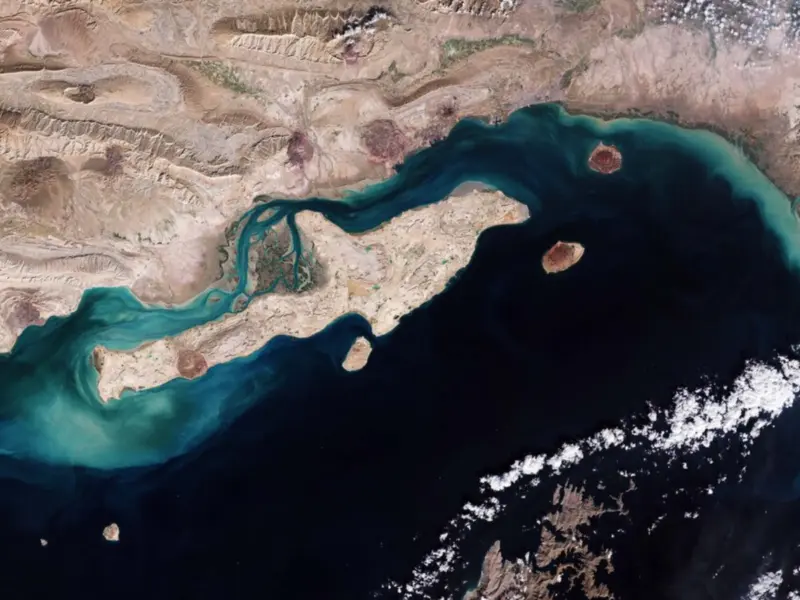

Iran-Israel Update: The largest Island in the Persian Gulf with approximately 1,445 square kilometres area is Qeshm Island which is characterized by dramatic landscapes and salt caves as well as mangrove forests.
Though it was previously a tourist attraction to the natural wonders, it has unobtrusively turned into a place of strategic importance to the military, which attracts the attention of the world regarding its contribution to the defense infrastructure of Iran and its domination of the Strait of Hormuz.
Where is Qeshm Island?
Qeshm is found on the southern coast of the Strait of Hormuz, a distance of about 22 kilometres to Bandar Abbas. It is the largest island in the Persian Gulf with a geography that takes up an area of about 1,445 square kilometres (558 square miles). It is strategically positioned on one of the most active sea routes in the world by the Clarence Strait that separates the country and the main Iranian territory.
Who Owns Qeshm Island?
Qeshm falls under the Iranian jurisdiction, namely, Qeshm County in Hormozgan province. The administration of the Iranian government is the one that governs the island as a free trade zone as well as industrial zone and manages its increased military presence.
How to Visit Qeshm Island?
There are a number of convenient ways to reach Qeshm with the help of a tourist:
- By Air: The local flights link Qeshm to Tehran, Shiraz, Isfahan and Mashhad. Qeshm Air is an operator of international flights in Dubai.
- By Sea: Ferries operate between the main harbor in the town of Bandar Abbas giving a picturesque route across the Strait of Hormuz.
- Travel Tips: The best months to visit are October and March because of cooler temperatures and the local guides are able to lead people to cultural and ecological areas.
Historical Significance of Qeshm Island
The history of strategic importance of Qeshm is long. Nearchus, the Greek explorer referred to it as Oaracta and Islamic geographers referred to it as Abarkawan. In 1621, Portuguese colonizers erected a fort which was subsequently captured by Persian and British troops. Its position became appealing to the Ottomans, the Kingdom of Hormuz and other forces which made it a military and commercial center in centuries.
Strategic Significance of Qeshm Island
The island is at the entry point of the Strait of Hormuz where almost 20% of world oil flows through. Its size and location enable Iran to spy or even block traffic. Analysts refer to Qeshm as Iranian unsinkable aircraft carrier where underground installations are located to regulate or disrupt the strait during conflict situations.
Qeshm Island: Natural & Cultural Attractions
Qeshm still has spectacular natural characteristics:
- Valley of Stars: Erosions of rocks which are related to local myths.
- Namakdan Salt Cave: The Salt cave is among the longest caves in the world.
- Chahkooh Canyon: Dramatic geological formations.
- Hara Mangrove Forest: Critical habitat for migratory birds.
Cultural events like the Nowruz Sayyadi fishing festival celebrate the island's maritime traditions.
Qeshm Island: How Iran Turned a Holiday Island into a Strategic Missile Hub
In the recent years, underground missile silos, fast-attack boat bases and coastal defense installations have turned out to be a part of Qeshm. These facilities, according to the Iranian government, are referred to as underground missile cities and allows the Tehran government to retain asymmetric naval operation.
What's Hidden Under Iran's Qeshm Island?
Under caves and forests, there are tunnels which contain missiles, stores of weapons, and surveillance systems. Military analysts caution that these networks provide Iran with the capability to disrupt shipping via the Strait of Hormuz, which is dangerous to the supply of energy globally and international trade.
Inside Qeshm: How Iran Controls the Strait of Hormuz
Qeshm can be used to impose Iranian power in the Persian Gulf due to its strategic location. Traffic in shipping can either be slowed down or redirected as witnessed in the recent months due to Tehran warnings that interfered with tanker routes. The retired military officials stress the position by which the island supports the asymmetric defense strategy of Iran.
Life on Qeshm: How Residents Are Affected
The people of the island are uncertain, as there are 148,000 of them. Fishing and maritime trade is still an important part of existence but military action interferes with normal life. The 30 villages without water following the US airstrikes on the desalination facilities and the human cost of strategic militarization is signified by Iranian retaliatory strikes.
FAQ's
1. Is Qeshm safe for tourists?
Yes, however, travel warnings can differ because of tensions in the area.
2. What language is spoken?
Persian dialect of Bandari and the majority of the citizens are Sunni Muslims.
3. Can you explore the caves and canyons?
Yes, guided tours are recommended.
4. How long to explore Qeshm?
A minimum of 3-5 days to cover main sites.
5. Are there restrictions near military zones?
Yes, there are places that civilians are prohibited to enter.