




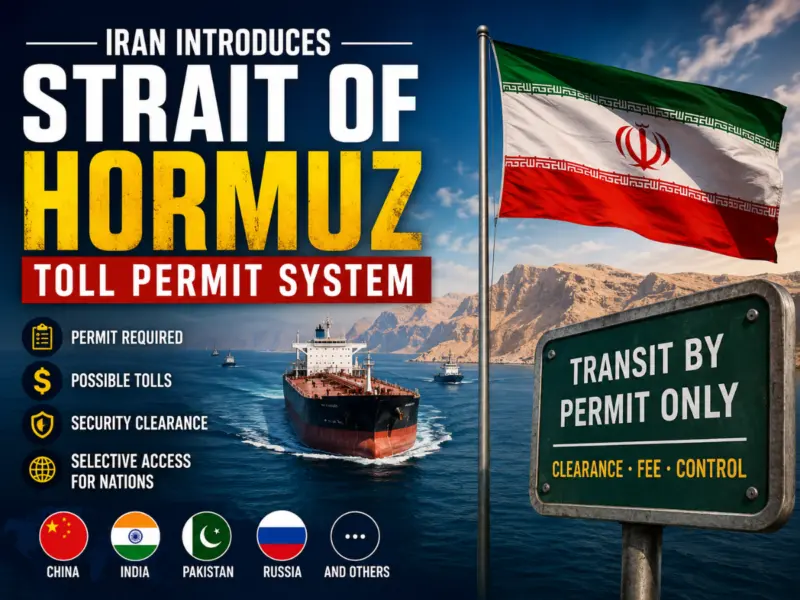

Iran has formally introduced a new permit-based transit mechanism for vessels passing through the strategically crucial Strait of Hormuz, escalating tensions over one of the world's busiest oil shipping routes.
The move comes amid ongoing geopolitical friction involving Iran, the United States, Israel & Gulf nations, with Tehran now seeking tighter control over maritime traffic through the narrow waterway.
According to reports from Reuters, Lloyd's List and regional media outlets, ships transiting the strait may now be required to obtain prior authorization, share cargo details and potentially pay transit-related fees under a newly established Iranian framework.
What is Iran's New Strait of Hormuz Permit System?
Iran has reportedly established a new body called the Persian Gulf Strait Authority to oversee vessel movement through the Strait of Hormuz. Under the mechanism, commercial vessels are expected to coordinate transit with Iranian authorities before entering the corridor.
The system reportedly includes:
- Advance submission of vessel and cargo information
- Transit authorisation or clearance codes
- Possible toll or transit fee assessments
- Security coordination for approved vessels
Reuters reported that Iran began implementing the new oversight mechanism on May 5, while Iranian state-linked media described it as a "traffic management" framework for the waterway.
Which Nations Can Get Clearance?
Reports suggest Iran may prioritise or selectively allow passage for countries considered "friendly" or diplomatically aligned with Tehran. While no complete official list has been publicly released, analysts and regional reports indicate that vessels linked to countries maintaining working ties with Iran could face fewer restrictions.
Countries believed to be under consideration for smoother transit include:
- China
- India
- Pakistan
- Russia
- Some Gulf and Asian trading partners are maintaining energy cooperation with Tehran
At the same time, Iranian-linked reports have suggested restrictions could apply to vessels associated with the United States or Israel amid the broader regional confrontation.
However, there remains uncertainty over how strictly the rules will be enforced and whether all commercial operators will ultimately comply.
Will Ships Have to Pay a Toll?
Several reports indicate Iran has explored a toll-based system tied to oil cargo volumes. Some outlets previously reported a proposed fee structure of around $1 per barrel for certain shipments, though Tehran has publicly denied charging Indian vessels for passage. (India Today)
Japanese shipping giant Mitsui O.S.K. Lines recently stated that its vessels passing through Hormuz did not pay any Iranian transit charges and would continue operating under international navigation law.
Why the Strait of Hormuz Matters
The Strait of Hormuz remains one of the world's most critical maritime chokepoints, linking the Persian Gulf to global shipping lanes. Roughly one-fifth of the world's oil and liquefied natural gas trade passes through the corridor, making any disruption a major concern for global energy markets.
The latest Iranian measures follow months of military escalation and shipping disruptions in the region. International maritime observers warn that stricter controls or toll demands could increase insurance costs, delay shipments and further destabilize global oil prices.
International Reaction Growing
The proposed system has triggered concern among Western nations and maritime organizations. A draft United Nations resolution backed by the US and Gulf allies reportedly calls on Iran to stop imposing what it describes as "illegal tolls" and ensure freedom of navigation in the waterway.
(The information is based on inputs from agencies)