
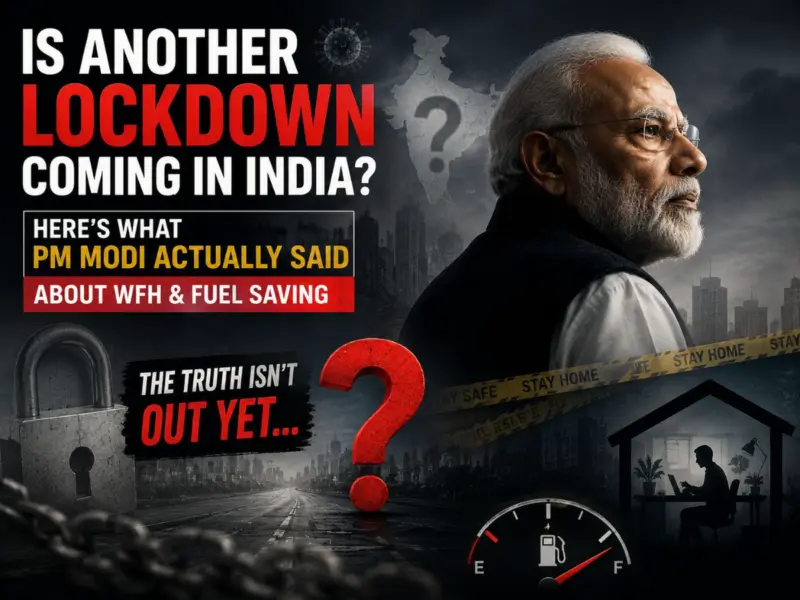

Prime Minister Narendra Modi's recent appeal asking citizens to revive Covid-era habits such as work-from-home, online meetings and reduced fuel consumption has sparked widespread discussion across social media platforms, with many users questioning whether India could once again move towards lockdown-like restrictions.
The remarks, made during a public event in Hyderabad, quickly triggered online searches related to "2026 lockdown", "WFH returning" and "Covid restrictions", as many people linked the Prime Minister's comments to memories of the pandemic years.
However, the government has not announced any lockdown, curfew, travel ban or mandatory work-from-home policy.
Is India Going Into Another Lockdown?
As of now, there is no official indication that India is preparing for another lockdown.
Multiple reports clarified that the Prime Minister's comments focused on voluntary fuel-saving practices rather than public health restrictions or emergency measures.
Government officials have not announced:
- Any lockdown
- Movement restrictions
- Office closures
- Mandatory remote work
- Curfew measures
- Covid-related advisories
The latest appeal appears to be linked primarily to economic and energy concerns rather than any health emergency.
Why PM Modi Mentioned Work From Home Again
During his speech, Modi referred to systems adopted during the Covid-19 pandemic, including online meetings and remote work, as useful tools for reducing unnecessary fuel consumption.
"During the Corona period, we developed many systems of work from home, online meetings and video conferences, and we even became accustomed to them," Modi said.
"Today, the demands of the times are such that if we restart these systems, it will be in the national interest."
The Prime Minister urged citizens to voluntarily reduce travel and fuel usage as global energy prices continue rising due to tensions in West Asia.
Global Oil Crisis Behind the Appeal
India currently imports more than 85 per cent of its crude oil requirements, making the country highly vulnerable to disruptions in global energy supply.
The ongoing tensions involving the United States, Iran and the Strait of Hormuz have pushed crude oil prices sharply higher in recent weeks.
Analysts believe the government's messaging is aimed at:
- Conserving fuel
- Reducing import pressure
- Managing inflation
- Protecting foreign exchange reserves
- Limiting economic disruption
Unlike the pandemic years, officials have not connected the appeal to any virus outbreak or public health crisis.
What Else Did PM Modi Ask Citizens To Do?
Along with encouraging work-from-home and virtual meetings, Modi also appealed to people to:
- Use public transport
- Prefer carpooling
- Reduce unnecessary travel
- Use electric vehicles
- Limit fuel consumption
- Avoid non-essential foreign trips
- Postpone non-essential gold purchases for a year
According to reports, the Prime Minister framed these suggestions as national-interest measures aimed at strengthening economic resilience during global uncertainty.
Why Social Media Reacted Strongly
Despite the absence of official restrictions, the language used in the speech reminded many Indians of the COVID-19 lockdown period.
Terms like:
- Work-from-home
- Virtual conferences
- Online meetings
- Reduced travel
were heavily associated with the nationwide lockdowns imposed during the pandemic.
As a result, social media platforms quickly filled with speculation about possible future restrictions, especially among urban professionals and office workers who spent long periods working remotely between 2020 and 2022.
Opposition Questions Government's Messaging
Several opposition leaders questioned whether the government was indirectly signalling deeper economic concerns linked to rising oil prices and geopolitical instability.
Supporters of the government, however, defended the appeal and described it as a practical attempt to reduce fuel consumption and minimise inflationary pressure during a volatile global situation.
At present, officials continue to stress that the measures remain voluntary and preventive rather than mandatory.