




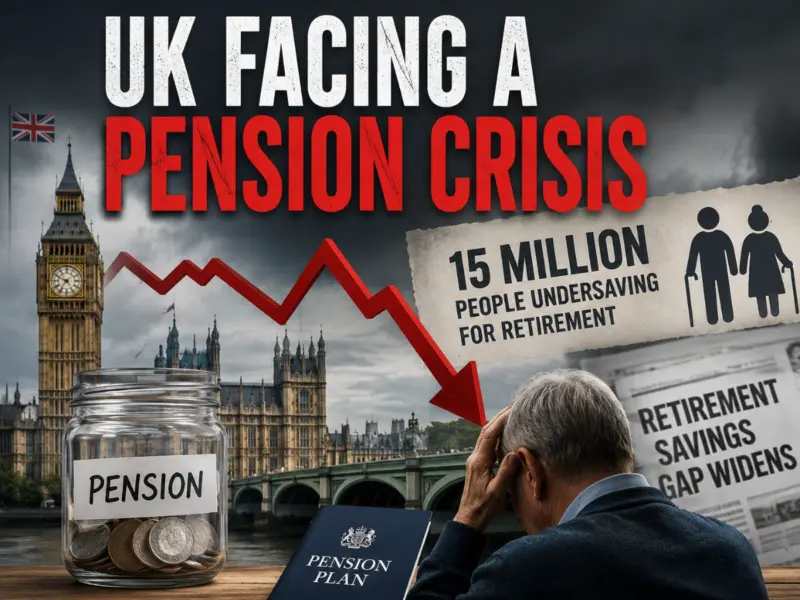

A new interim report from the Pensions Commission has warned that the UK pension system must evolve to match modern working patterns, as millions of people are currently not saving enough for retirement.
The report estimates that around 15 million people across the UK are undersaving for their later life, with the figure potentially rising to 19 million if no action is taken. It highlights that the problem is most severe among low and middle-income earners, self-employed workers, and women.
The current commission was set up by the UK government in July 2025 to address long-standing gaps in retirement savings. It follows the earlier Turner Commission, which helped introduce automatic enrolment and significantly increased pension participation-from 55% in 2012 to 89% today among eligible employees.
UK Pensions Commission Interim Report
The Commission found that the scale of under-saving is significant. Around 45% of working-age adults approximately 18 million people are not contributing to any pension at all, even though nearly half of them are in employment.
UK Pension Savings Gap
Among the self-employed, the situation is even more concerning, with only about 4% actively saving for retirement. Younger self-employed workers are saving even less. The report also notes that nearly half of working individuals are only saving at the minimum automatic enrolment level, without making any additional contributions for long-term security.
Pension Pots Often Withdrawn Early for Spending
The report also raises concerns about how pension savings are being used. It finds that nearly 3 in 10 private pension pots are accessed as soon as they become available, and about half are withdrawn completely. Alarmingly, almost 50% of these withdrawals are spent on large one-time purchases such as cars, holidays, or home improvements, rather than being kept for retirement income.
Pension Contributions and Inequality Concerns
The Commission highlighted that employer pension contributions under the statutory minimum tend to benefit higher earners more than lower-income workers. This leaves many low-paid employees with weaker retirement support compared to others in the workforce.
UK Pension Crisis Deepens for Low and Middle Earners
The interim findings show that low and middle-income groups are most at risk. Around half of workers are only contributing at the minimum auto-enrolment level, while many employers are also contributing only the basic amount, offering limited additional support. The Commission also warns that nearly 45% of working-age adults are not saving into any pension scheme, despite high employment levels.
UK Pension Commission Planning to Reform the Situation in Future
On the basis of the reports, the UK Pension Commission will continue gathering feedback from stakeholders over the next year before releasing its final recommendations in early 2027. The final report will focus on building a fair and sustainable pension system for future generations. It also stressed that any reforms must be introduced gradually to maintain public and political consensus. The government has already ruled out increasing automatic enrolment contribution rates during the current parliament.
Does UK Have A Pension Plan?
The pension system in the United Kingdom is built on three main pillars: the State Pension, workplace pensions, and private personal pensions. Together, these systems provide a basic income floor from the government, employer-supported savings, and additional private retirement planning options. The framework is designed to ensure financial support in old age while also offering extra assistance for low-income retirees.
UK State Pension 2026: Eligibility, Age and Payment Rates
The State Pension is funded by the government and paid to individuals once they reach the official retirement age, which is currently 66 for both men and women. To qualify for the full amount, individuals generally need around 35 years of National Insurance contributions.
The system operates under the "Triple Lock" guarantee, which ensures annual increases based on the highest of inflation, average earnings growth, or 2.5%.
Current payment levels include:
- New State Pension (post-April 2016 retirees): £241.30 per week (about £12,547.60 per year)
- Basic State Pension (pre-April 2016 retirees): £184.90 per week (about £9,614.80 per year)
Pension Credit UK: Financial Support for Low-Income Retirees
For pensioners with limited income, the government provides Pension Credit, a top-up scheme designed to raise weekly earnings to a minimum level. This support can also unlock additional benefits, including:
- Help with housing costs
- Council Tax reductions
- Free TV licence for those aged over 75
It plays a key role in reducing pensioner poverty and supporting vulnerable retirees.
Workplace Pensions UK: Auto-Enrolment and Employer Contributions
Under UK employment law, eligible workers are automatically enrolled into a workplace pension scheme through a system called auto-enrolment.
Both employees and employers contribute a percentage of salary into the pension fund, helping workers build long-term retirement savings throughout their careers. This system is a major part of the UK's retirement income structure.
UK State Pension Age Changes: Rising Retirement Age Explained
The current State Pension age is 66, but it is gradually increasing under government legislation.
- The age will rise to 67 between 2026 and 2028
- A further increase to 68 is planned between 2044 and 2046
These changes reflect longer life expectancy and aim to ensure the long-term sustainability of the pension system.
What are the changes for pensioners in the UK?
The full basic State Pension increased from £176.45 to £184.90 per week. At the same time, the Standard Minimum Guarantee under Pension Credit rose by 4.8%, in line with average earnings growth from April. It reached £238.00 per week for single pensioners and £363.25 per week for couples.
Disclaimer: This information is provided for general awareness and informational purposes only. It should not be considered financial, legal, or investment advice.