
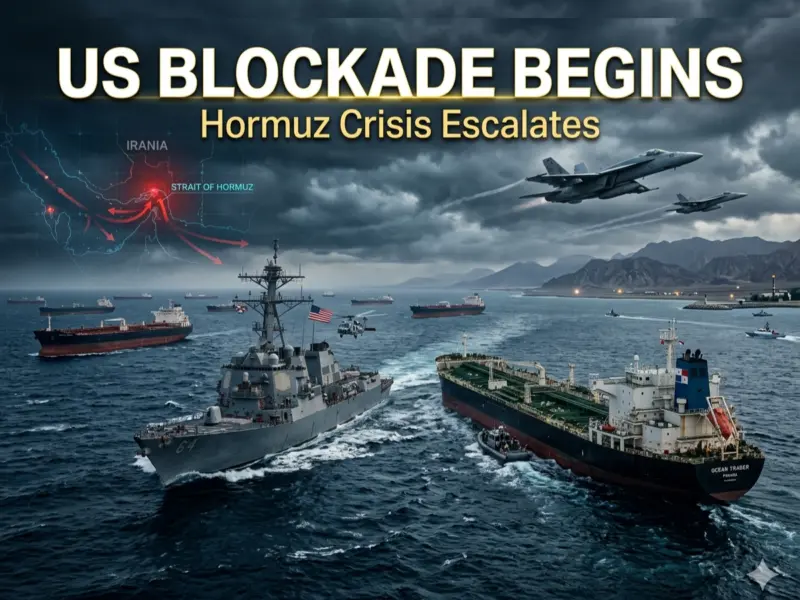

The United States has begun enforcing a naval blockade targeting maritime traffic linked to Iran in and around the Strait of Hormuz, marking a major escalation in the ongoing conflict with Tehran.
The move follows the collapse of diplomatic negotiations aimed at ending weeks of hostilities between the two countries.
According to the U.S. Central Command (CENTCOM), the blockade came into force on April 13 and applies to all vessels entering or leaving Iranian ports across the Gulf region. However, U.S. officials clarified that ships transiting the Strait of Hormuz to non-Iranian destinations will still be allowed to pass.
Latest War News: What the Blockade Covers - And What It Doesn't
While widely described as a "Strait of Hormuz blockade," the operation is more narrowly focused on cutting off Iran's maritime trade rather than fully shutting down the strategic waterway.
- Ships linked to Iranian ports may be intercepted, diverted, or seized.
- Neutral vessels crossing the Strait without Iranian destination are permitted.
- Humanitarian cargo is allowed but subject to inspection.
This selective enforcement aims to pressure Iran economically by disrupting its oil and gas exports, a key pillar of its economy.
Latest War News: Oil Prices Surge, Global Markets React
The announcement has already sent shockwaves through global markets. Oil prices surged above $100 per barrel amid fears of supply disruptions, given that roughly one-fifth of the world's oil passes through the Strait of Hormuz.
Analysts warn that prolonged disruption could fuel inflation, strain global supply chains, and increase energy costs worldwide.
Latest War News: Iran Warns of Retaliation
Iran has strongly condemned the blockade, calling it illegal and warning of potential military retaliation. Officials stated that if Iranian ports are targeted, other ports in the Persian Gulf region could also become unsafe.
Tehran has also threatened to respond if its naval or commercial vessels are intercepted, raising fears of direct naval confrontation in one of the world's most critical shipping corridors.
Latest War News: International Response Remains Divided
Key US allies have shown caution. The United Kingdom has declined to participate in the blockade, emphasising efforts to keep the strait open and avoid further escalation.
Other global powers have warned that the move could destabilise international trade and energy markets, with concerns growing over a wider regional conflict.
Latest War News: Strategic Importance of the Strait of Hormuz
The Strait of Hormuz remains one of the world's most critical chokepoints for energy supplies, handling a significant share of global oil and liquefied natural gas shipments. Any disruption in this narrow waterway has immediate global economic consequences.
Latest War News: A High-Risk Escalation
The blockade represents one of the most serious escalations in the US-Iran conflict in recent years. While Washington says the goal is to force Iran back to negotiations and ensure free navigation, the risk of military confrontation remains high as both sides harden their positions.
FAQs: Latest War News
1. What has the US announced regarding the Strait of Hormuz?
The United States has begun enforcing a naval blockade targeting ships linked to Iran, particularly those entering or leaving Iranian ports, following the breakdown of diplomatic talks.
2. Is the Strait of Hormuz fully closed?
No, the strait is not completely closed. Neutral ships not connected to Iran are still allowed to pass, though monitoring and inspections have increased.
3. Why is the Strait of Hormuz important?
The Strait of Hormuz is one of the world's most critical oil transit chokepoints, with a significant portion of global oil and gas shipments passing through it daily.
4. How has the blockade affected oil prices?
Oil prices have surged sharply, crossing key levels amid fears of supply disruption and escalating geopolitical tensions in the region.
5. What has Iran said about the blockade?
Iran has condemned the move, calling it illegal and warning of possible retaliation, raising concerns about further military escalation.
6. Are other countries supporting the US blockade?
Some allies have expressed caution, with countries like the UK not backing the blockade and urging efforts to avoid further escalation.
Disclaimer: This information is based on inputs from news agency reports. TSG does not independently confirm the information provided by the relevant sources.