




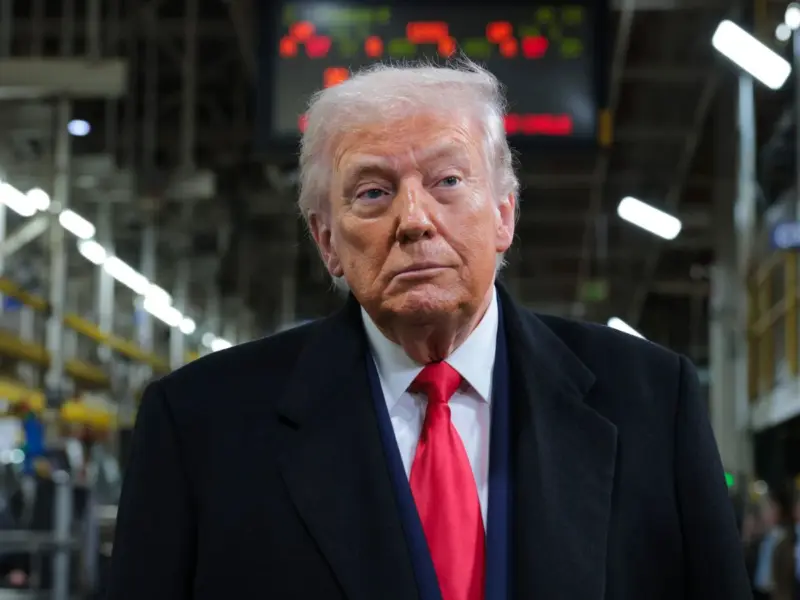

A new nationwide survey has revealed a significant shift in public opinion toward President Donald Trump, with more than half of Americans saying they support impeachment proceedings against him.
The findings highlight growing political tension during Trump's second term and suggest that frustration is spreading beyond traditional party lines. Analysts say the results could influence the political landscape ahead of the 2026 midterm elections, especially if public dissatisfaction continues to rise.
What Does the New National Poll Reveal About Impeachment Support?
The survey, conducted by Strength in Numbers in partnership with Verasight between April 10 and April 14, 2026, questioned more than 1,500 adults across the United States about whether they support impeachment proceedings against President Trump.
The results showed a clear majority in support. About 55 per cent of respondents said they would support an impeachment vote in the House of Representatives. Meanwhile, 37 per cent opposed impeachment, and 8 per cent remained undecided.
Polling expert G. Elliott Morris described the findings as unusual in modern political history. He noted that the difference between supporters and opponents, an 18-point margin, reflects a level of public sentiment rarely seen against a sitting president.
Morris also compared the numbers to those recorded during the Watergate scandal in 1974, when public opinion turned sharply against President Richard Nixon shortly before his resignation.
"The net margin of +18 (support minus opposition) places Trump's impeachment numbers close to those seen by Richard Nixon at the height of the Watergate scandal in August 1974, just before Nixon's resignation."
Who Becomes President If Donald Trump Is Removed From Office?
If Donald Trump were impeached by the House of Representatives and later convicted by the Senate, the next person in line would immediately assume the presidency.
That person would be the current Vice President, JD Vance.
Under U.S. law, the vice president automatically becomes president if the sitting president is removed, resigns, or becomes unable to perform official duties. This transition happens instantly to ensure continuity of government and stability.
If this scenario occurred, JD Vance would not serve as acting president - he would become the full President of the United States for the remainder of the term.
Has a U.S. President Ever Been Removed Through Impeachment?
While several U.S. presidents have faced impeachment proceedings, no president has ever been removed from office through conviction in the Senate. Historically, Richard Nixon resigned in 1974 during the Watergate scandal before the Senate could vote on his removal.
Other presidents, including Bill Clinton and Donald Trump, were impeached by the House but later acquitted in the Senate. These examples show how difficult it is to remove a president from office, even when impeachment occurs.
How Do Voters From Different Parties View Impeachment?
The poll revealed strong political divisions, but it also showed unexpected cracks within Trump's support base. Democratic voters showed overwhelming support for impeachment. Nearly 88 per cent of Democratic respondents backed the idea of removing Trump from office.
Republican voters largely opposed impeachment. However, the survey found that 21 per cent of Republicans still supported impeachment, while 72 per cent opposed it.
One of the most surprising findings involved voters who supported Trump in the 2024 presidential election. Among this group, 21 per cent said they now support impeachment proceedings, while 73 per cent opposed the move.
This means roughly one out of every five voters who previously supported Trump now supports the possibility of removing him from office - a development analysts describe as politically significant.
What Issues Are Driving Growing Criticism of Trump's Second Term?
The poll results come during a period of mounting criticism directed at Trump's administration. Observers point to several issues that have shaped public opinion in recent months.
Economic concerns remain one of the biggest factors. Rising prices, inflation pressures, and shifting economic policies have contributed to declining approval ratings.
Foreign policy decisions have also drawn attention, particularly the United States' involvement in the war with Iran that began on February 28, 2026. Public debate over military actions and diplomatic strategy has intensified since the conflict began.
Political commentators have also raised questions about the president's public behaviour, including late-night social media activity and reports about limited sleep. Critics argue that these factors raise concerns about leadership stability, while supporters dismiss the criticism as politically motivated.
Recent polling data also suggests broader dissatisfaction among independent voters, who often play a decisive role in election outcomes.
Why Are Political Figures and Media Voices Turning More Critical?
Calls for accountability have increased among Democratic lawmakers in Congress. Some House Democrats have publicly supported impeachment, while others have discussed the possibility of invoking the 25th Amendment, which allows removal of a president under certain conditions.
At the same time, criticism has begun to appear within conservative circles as well. Some prominent media personalities who previously supported Trump have expressed regret about their earlier backing.
Former Fox News host Tucker Carlson recently released a video addressing his past support for Trump. In the recording, Carlson admitted feeling responsible for influencing voters.
"We're implicated in this for sure," he stated, linking his comments to current events, including the Iran conflict. Other conservative commentators have also voiced concerns, reflecting growing divisions among political allies.
What Could This Poll Mean for the 2026 Midterm Elections?
Political analysts believe the survey results could carry major implications for upcoming elections. If dissatisfaction continues to grow, Republicans may face increased pressure in competitive districts during the 2026 midterm races.
Supporters of the president argue that he continues to deliver on campaign promises and remains popular among core voters. However, critics believe policy decisions and political controversies may create challenges for the party.
Even with rising support for impeachment in polling, the actual removal of a president remains a difficult process under US law.
The House of Representatives must approve impeachment charges with a simple majority vote. After that, the Senate must secure a two-thirds majority vote to convict and remove the president from office.
This high threshold means that political numbers in Congress, not just public opinion, will determine the outcome.
Is This Poll a Long-Term Shift or a Temporary Reaction?
Experts caution against concluding from a single survey. Public opinion often changes quickly, especially during periods of political tension or international conflict.
Still, analysts say the numbers signal a growing level of frustration among voters. If additional surveys show similar results, the pressure on lawmakers could increase significantly.
For now, the poll offers a snapshot of public sentiment at a critical moment in Trump's presidency. With international conflicts, domestic policy debates, and election campaigns intensifying, the political environment remains highly unpredictable.