





There is a tendency in certain sections of intellectual and political discourse to blur the distinction between migration and illegal infiltration.
That distinction, however, matters fundamentally.
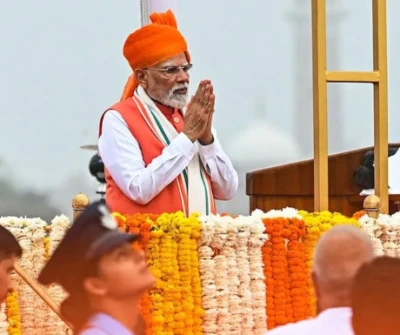
Prime Minister Narendra Modi has emphasized that infiltration is a "premeditated conspiracy" to change the country's demography, comparing the situation to a "home overrun by termites". In his 79th Independence Day address (August 2025), he announced a "high-powered demography mission" to tackle illegal infiltration, targeting those taking livelihoods and land. Illegal immigration in India cannot be treated merely as an emotional or partisan issue anymore. The concerns over illegal immigration are neither new nor unique to India, but what is new is the context in which rising threats, the pace of change in global politics, the fusion of AI with social media, and the merging of global with local phenomena. Illegal immigration has increasingly become a beast of its own, raising the question of national cohesion, demographic balance, border management, political stability, and national security. This is the case across several regions of the country, particularly in sensitive border states. The issue has moved beyond episodic concern and entered the realm of structural challenge. What was once discussed cautiously in bureaucratic language is now being acknowledged openly at the highest political levels. In his 2025 Independence Day speech, Prime Minister Narendra Modi warned of the dangers of demographic change and infiltration, reflecting a growing recognition within the Indian state that uncontrolled illegal migration carries consequences that extend far beyond economic considerations.
For decades, academics, policymakers, and security experts have warned that large-scale illegal immigration into vulnerable border regions could eventually alter social balances, intensify political contestation, strain resources, and complicate governance. Some of these warnings were dismissed as exaggeration or reduced to electoral rhetoric. However, the realities visible today across several districts in eastern and northeastern India suggest that the matter can no longer be avoided through intellectual hesitation or political convenience. But the debate must remain grounded and responsible. Democracies often struggle to discuss illegal immigration without slipping either into denial or excess, and India must avoid both.
Overall, there is a tendency in certain sections of intellectual and political discourse to blur the distinction between migration and illegal infiltration. That distinction, however, matters fundamentally. Migration through legal channels within the framework of law is one issue. Illegal immigration is another entirely. Once entry into a sovereign country occurs outside legal frameworks in whatever manner, be it forged documentation, political patronage, or organised infiltration networks, the issue ceases to be merely humanitarian. It becomes a question of legality, sovereignty, and governance. And in such cases, defending illegality in the name of political positioning or selective morality ultimately weakens the credibility of the state itself.
The demographic anxieties emerging in states such as Assam, West Bengal, and Tripura are not simply inventions of political imagination. Border districts increasingly reflect the cumulative effects of porous frontiers where infiltration, smuggling, false identity, and informal economic networks operate simultaneously. The consequences extend beyond population statistics. They affect land ownership patterns, public infrastructure, labour markets, social trust, and most importantly, sway local political electoral outcomes.
In West Bengal, such trends had been concerning for a variety of reasons. But what stood out for years was the vulnerability of national security to prolonged Centre-State confrontation. Differences between state governments and the Union government are neither new nor abnormal in Indian federalism. Disagreements over policy, ideology, and administrative jurisdiction are natural within a large democracy. However, there is a critical distinction between political disagreement and allowing those disputes to create vulnerabilities affecting national security and border management.
The prolonged friction between the previous state government in Bengal under the Mamata Banerjee government and the Centre over issues such as border fencing, BSF jurisdiction, CAA implementation, data sharing, and coordination with central agencies demonstrated how partisan rivalry can sometimes spill into areas where institutional cooperation is indispensable. Opposition to a political party at the Centre cannot translate into paralysis in matters involving border governance and internal security. When coordination breaks down in sensitive frontier regions, the consequences are not borne solely by one government or one party, but they affect the nation as a whole.
This is precisely why the issue should not be viewed through narrow electoral lenses alone. Border management cannot become hostage to political ego, personal hostility, or symbolic confrontation. The lesson from Bengal is larger than Bengal itself. India's federal structure requires both the Centre and states to recognise that national security remains a shared constitutional responsibility. Political competition may define democracy, but security coordination must transcend it.
With a new political dispensation now taking office in Bengal, there exists an opportunity to restore institutional coherence in areas where confrontation had previously replaced cooperation. The focus should be on repairing systems weakened by prolonged disputes and ensuring that border administration, intelligence coordination, and legal enforcement operate without partisan obstruction. Stable Centre-state relations are not merely matters of governance efficiency, but in cases like Bengal, they can become elements of national integrity and security.
Meanwhile, India must avoid the temptation of simplistic imitation while addressing these concerns. Border security cannot be reduced to rhetorical comparisons with any other country's model. India's geography, neighbourhood, demographics, and diplomatic environment are entirely distinct. The country neither needs to duplicate the American experience nor mechanically replicate any foreign template. What India requires is a border management strategy tailored to its security vulnerabilities and regional realities.
That strategy must integrate technology, infrastructure, surveillance, and diplomatic sensitivity in ways suited to Indian conditions. Riverine borders, densely populated settlements, difficult terrain, and longstanding socio-economic linkages require responses beyond conventional fencing alone. Smart-Fencing projects that include advanced surveillance systems, AI-assisted monitoring, better coordination among agencies, stronger digital identity verification, and improved border infrastructure should all be part of a broader national framework. But these measures must evolve within India's own strategic logic rather than be driven by imported political symbolism.
Equally important is the need to dismantle the domestic ecosystems that enable illegal immigration to become entrenched. Illegal entry persists because forged documentation networks, informal labour arrangements, local political patronage, and weak enforcement structures often allow infiltration to become permanent. Unless internal governance mechanisms are modernised, border control alone will remain insufficient.
India has always been a civilisation confident enough to absorb diversity, shelter persecuted communities, and allow different faiths and traditions to flourish together. That openness remains one of the country's greatest strengths. But a mature democracy must also recognise the distinction between legal migration and illegal immigration. Many countries in our neighbourhood that are built around religious majoritarian ideologies have historically struggled to accommodate diversity, dissent, and plural coexistence in the way India has attempted to do. Minorities have reduced there drastically in an attempt to bring in through violence uniformity.
Indian anxieties in such a case are neither new nor unfounded. In the aftermath of Partition, Sardar Vallabhbhai Patel repeatedly warned that demographic upheaval, refugee crises, and unstable borders would carry long-term implications for India's internal security and national cohesion. In the same spirit, Syama Prasad Mookerjee resigned from the Jawaharlal Nehru Cabinet in 1950 over what he believed was the government's inadequate response to the persecution and displacement of Hindu Bengali refugees fleeing East Pakistan.
Intellectuals, activists, and political parties are fully entitled to debate policy approaches, but no democracy can afford to normalise illegality simply because it appears electorally useful or morally fashionable. Experiences across the world, including the border breakdown witnessed in the Biden-era US, showed how quickly public confidence collapses when citizens believe borders are no longer secure. Much like Biden, the Mamta government failed to grasp that ordinary people ultimately prioritise safety, security, and institutional control over political rhetoric. Thus, regardless of political or ideological loyalty, all stakeholders must uphold this non-negotiable principle: India can remain humane and inclusive without compromising its sovereignty, border integrity, or the security of its own citizens.
Prof Santishree Dhulipudi Pandit is the Vice Chancellor of JNU.