
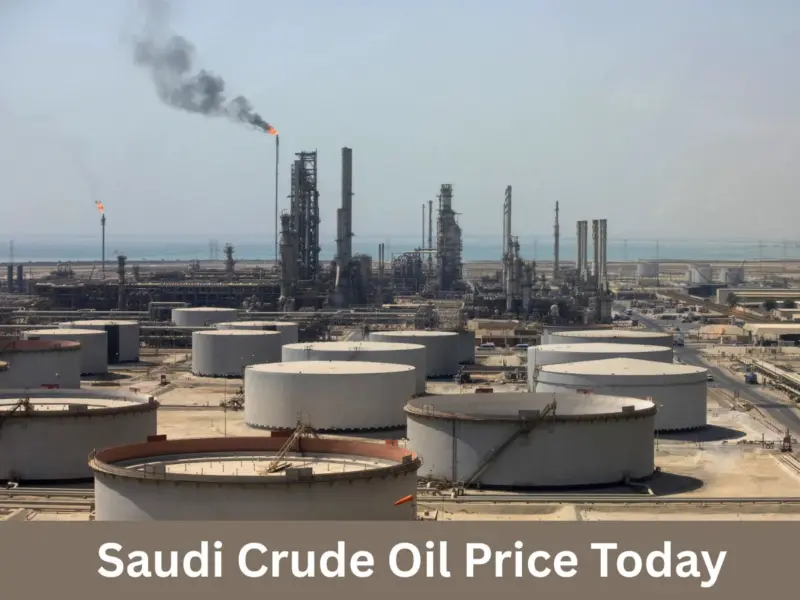

Saudi Arabia has increased the price of its flagship crude oil to record levels for Asian buyers, highlighting growing pressure on global energy markets.
The decision came as ongoing tensions in the Strait of Hormuz disrupted oil shipments and created uncertainty about future supplies.
Saudi Aramco, the state-owned energy giant, has set the price of its Arab Light crude for May shipments at a premium of $19.50 (₹1,814.27) per barrel above the regional benchmark. This marks the highest premium recorded so far, although it remained lower than the $40 level many traders had expected.
The price increase reflects rising demand from Asian refineries and reduced supply from the Gulf region due to disruptions in shipping routes. As conflict around the Strait of Hormuz continues, oil exporters have adjusted prices to reflect the growing risks involved in transporting crude.
Why is the Crude Oil Premium becoming Expensive in Saudi Arabia?
Saudi Arabia's crude oil premium has increased mainly because of reduced supply and higher transportation risks. The Strait of Hormuz, one of the world's most important oil shipping routes, has seen severe disruptions in recent weeks.
Nearly one-fifth of the world's oil supply usually passes through this narrow waterway. However, conflict in the region has slowed tanker movement and restricted exports from several Gulf producers. As a result, buyers have had to pay higher prices to secure stable shipments.
Rising insurance costs for tankers and increased security expenses have also contributed to higher premiums. Oil companies must factor in these risks while setting prices, especially when shipping routes face potential threats.
Another reason for higher premiums is strong demand from Asian countries that rely heavily on Gulf oil. When supply tightens, and demand remains steady, prices naturally move upward.
Where Does Saudi Arabia Export Most of Its Crude Oil?
Saudi Arabia exports most of its crude oil to Asian countries, making the region its largest market. Major importers include China, India, Japan, and South Korea, which depend heavily on Middle Eastern oil to meet their energy needs.
These countries operate large refining industries and require a consistent oil supply to support manufacturing, transportation, and electricity production. Any disruption in Gulf exports directly affects these economies, making them sensitive to price changes.
Saudi Arabia also exports oil to Europe and the United States, but Asian markets account for the largest share of shipments. This explains why pricing decisions for Asian buyers often influence global oil market trends.
Diesel Price in Saudi Arabia
As of April 2026, the retail price for diesel in Saudi Arabia is approximately 1.79 SAR (₹44.36) per litre.
Petrol Price in Saudi Arabia
In early April 2026, fuel prices in Saudi Arabia continued to stay stable even as global crude prices climbed, with 91 Octane available at approximately 2.18 SAR ($0.58) per litre and 95 Octane at around 2.33 SAR (₹57.74) ($0.62) per litre.
OPEC+ Output Increase Offers Limited Relief
Oil-producing nations under the OPEC+ alliance recently agreed to increase output for the second consecutive month. The group plans to raise production by about 206,000 barrels per day starting in May.
Despite the increase, officials warned that damaged infrastructure and disrupted shipping routes could continue affecting supply levels. Repairs to energy facilities hit during conflicts often take significant time and financial resources.
Experts believe that even with increased production, restricted exports through the Strait of Hormuz could keep markets unstable in the near term.
Industry Leaders Warn of Major Economic Consequences
Energy sector leaders have raised concerns about the long-term effects of continued disruptions. Saudi Aramco chief executive Amin H. Nasser warned that the situation could have severe consequences if disruptions continue.
"There would be catastrophic consequences for the world's oil markets the longer the disruption goes on, and the more drastic the consequences for the global economy. There has been a 180-million-barrel of disruption so far," Nasser said.
He added, "While we have faced disruptions in the past, this one by far is the biggest crisis the region’s oil and gas industry has faced."
Nasser also highlighted safety risks affecting workers and supply routes, saying, "I am concerned about the elevated risks that people are facing in the region."
Global Energy Markets Remain Under Pressure
The surge in Saudi crude oil premiums reflects the broader uncertainty affecting global energy markets. As tensions persist around critical shipping routes, countries dependent on imported oil continue to monitor supply closely.
Analysts warn that prolonged disruptions could impact not only fuel prices but also industries that depend on stable energy supplies. With global demand remaining strong, even small supply interruptions can create ripple effects across the world economy.