
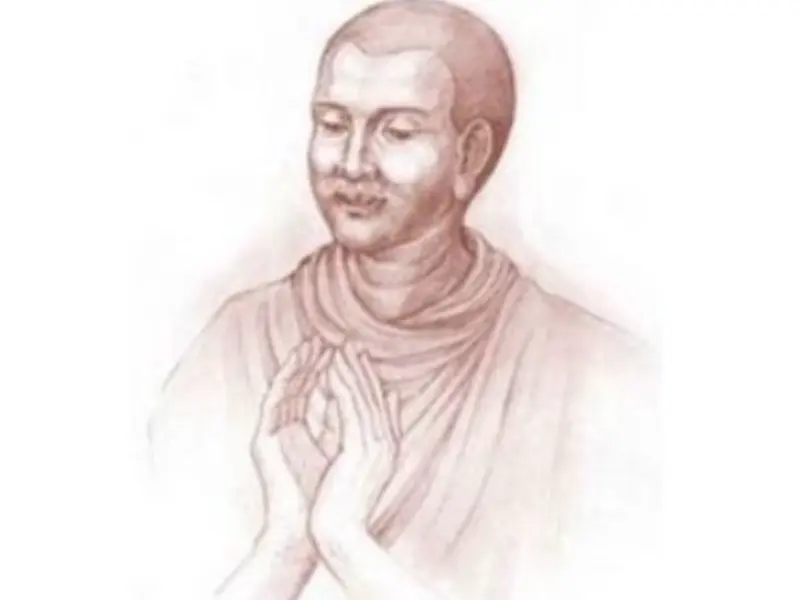

Ashvaghosha, generally placed around the first-second century CE during the reign of the Kushan ruler Kanishka, is among the earliest known classical Sanskrit poets and dramatists.
India has long been a cradle of cultural and philosophical diversity, where multiple intellectual traditions have emerged, interacted, and evolved rather than remaining confined within rigid boundaries. This plurality was not accidental. Instead, it was sustained through debate, movement, and synthesis. Across centuries, thinkers did not merely inherit ideas; they tested, refined, and rearticulated them. The result was a civilisational ecosystem defined less by uniformity and more by intellectual vitality. Within this tradition, figures such as Ashvaghosha stand out not simply for their scholarship but for their ability to bridge philosophical depth with communicative clarity. He represents a moment in Indian intellectual history where ideas were not only debated but also deliberately translated into forms accessible to wider audiences.
Ashvaghosha, generally placed around the first-second century CE during the reign of the Kushan ruler Kanishka, is among the earliest known classical Sanskrit poets and dramatists. While historical details about his life remain limited, as is often the case with ancient authors, the internal evidence from his works offers a clearer picture. Colophons identify him as the son of Suvarnakshi and a resident of Saketa (ancient Ayodhya), while also describing him as a monk, teacher, poet, and accomplished debater. These titles may appear incidental, but they indicate a rare synthesis of literary creativity and philosophical rigour.
There is also a reasonable scholarly consensus that he was born into a Hindu family before embracing Buddhism, which, among other things, reflected a broader pattern of mobility and inclusivity within the subcontinent. His transition was not superficial. It involved a deep engagement with competing traditions, as evident in his writings, which display familiarity with multiple philosophical systems while advancing Buddhist thought with clarity and conviction.
Many have suggested that Ashvaghosha played a central role in shaping Mahayana Buddhism. This claim, however, needs to be treated with nuance. His works largely reflect the discipline and self-reliance associated with early Buddhist traditions, even as they display an emerging concern for broader outreach and accessibility. Rather than placing him neatly within a single doctrinal category, it is more accurate to see him as a transitional figure, rooted in earlier frameworks but responsive to changing intellectual and social contexts.
What distinguishes Ashvaghosha most clearly is his method. He did not treat literature and philosophy as separate domains. Instead, he used literary form as a deliberate vehicle for philosophical communication. His choice of Sanskrit, rather than restricting himself to existing vernacular traditions, was strategic. It allowed him to reach audiences beyond monastic circles and engage with elite intellectual culture. His works were not composed as isolated artistic exercises but as instruments for explaining and popularising complex ideas.
This approach is evident in his major works, Buddhacharita, Saundarananda, and Sariputra-Prakarana. Buddhacharita, originally composed in twenty-eight cantos (though only partially preserved in Sanskrit), is far more than a biographical narrative. It systematically engages with the central problem of human existence, suffering caused by age, disease, and death, and builds a sustained philosophical argument around impermanence and the limitations of worldly pursuits. In fact, the structure of the text itself is instructive. The encounters with old age, illness, and death are not presented as isolated episodes but as triggers for philosophical inquiry. The narrative moves from observation to reflection, and from reflection to renunciation. This progression demonstrates a disciplined attempt to convert lived experience into structured understanding.
Similarly, Saundarananda operates at the level of psychological analysis. The story of Nanda, who is deeply attached to worldly pleasures, becomes a vehicle for examining desire and attachment. It does not simply condemn desire but exposes its instability. Even the pursuit of heavenly rewards is shown to be temporary and therefore inadequate as a final goal. This is a significant intervention in a broader religious environment where ritual action and reward often dominate. The third work, Sariputra-Prakarana, extends this approach into dramatic form, narrating the transformation of two prominent disciples of the Buddha. Taken together, these works demonstrate that Ashvaghosha's vision and views were not confined to a single genre or audience. He consistently adapted form to purpose.
A key element of his thought is the articulation of a balanced path that avoids both excessive indulgence and extreme asceticism. This middle path is not presented as an abstract doctrine but as a practical response to the failures of both extremes. His treatment of this idea reflects a broader intellectual tendency to ground philosophy in experience rather than speculation. Equally important is his ability to combine what appear to be opposing qualities. He can be characterised as a harmonist, capable of integrating analytical thought with emotional depth and literary expression. This synthesis is central to his effectiveness. He does not dilute philosophical content to make it accessible. Instead, we see layers of refinements in presentation.
This has direct relevance for the present. Contemporary discourse is often marked by two extremes: rigid ideological positions that resist engagement and superficial narratives that lack intellectual depth. Ashvaghosha offers a different model. He demonstrates that it is possible to maintain conceptual rigour while also ensuring communicative clarity. His work also challenges the assumption that accessibility requires simplification. By using sophisticated literary techniques to convey complex ideas, he shows that clarity and depth are not mutually exclusive. His literary impact was that he pioneered the kavya style of Sanskrit poetry and is credited with initiating Sanskrit theatre. He was a major figure in the Mahayana Buddhist tradition and, according to tradition, attended or played a significant role in the Fourth Buddhist Council organized by Kanishka. His legacy was that he was instrumental in popularizing Buddhist doctrines by shifting from Pali/Prakrit to classical Sanskrit, making Mahayana philosophy more accessible to scholars.
This is particularly important in contemporary context where public debate increasingly rewards speed over substance. For such reasons, Ashvaghosha's significance lies not only in his contributions to literature and religious thought but also in his method of engagement. He represents an intellectual tradition that values inquiry over dogma, synthesis over exclusion, and communication over isolation. In that sense, Ashvaghosha is not merely a figure of historical interest. He offers a model for developing, articulating, and disseminating ideas in a way that is both rigorous and relevant. That is precisely why he continues to matter today.