




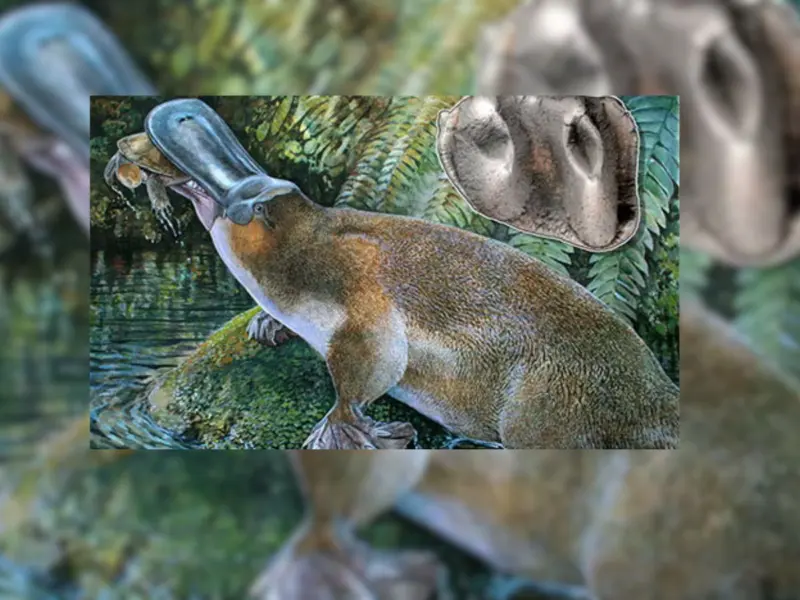

The platypus, is often considered to be shy and meek. However, scientists in the Australian outback recently discovered an 'extremely rare' fossil that could give some eye opening glimpses to their evolution.
Not Your Modern Day Platypus
The platypus is a semi aquatic and egg laying mammal that is endemic to Eastern Australia. The semi aquatic mammal is known for its unique anatomy which includes, a duck like beak, webbed feet,beaver like body, a broad tail and a reptilian skeleton.
And despite their carnivorous diets, most biologists regard them as meek, elusive and solitary. However, the fossil discovered in the Australian outback hints that the ancient platypus was very different from its modern day successors.
The Discovery: What Scientists Unearthed
The scientists discovered three new 25 million year old fossils of platypus teeth in the now arid outback of South Australia, which once had a thriving ecosystem of marine life. The fossil belonged to the ancient Obdurodon insignis species, which is extinct today.
The search effort was led by Trevor Worthy, Gen Conway and Aaron Camens, three paleontologists from Flinders University, Adelaide who wrote about their findings in the 'Australian Zoologist' publication.
“Platypuses are extremely rare in the fossil record and are often restricted to teeth, so it's exciting to find new material and learn more about these unique mammals," said Camens.
But the most significant finding is that the fossil features a part of the pectoral girdle and multiple teeth including a lower first molar, an upper second premolar. Modern day platypuses don't have any teeth. Instead, they rely on their grinding pads to eat.
What The Teeth Fossil Reveals
The new fossils reveal some eye opening insights about the platypus. Platypuses from the Obdurodon insignis species, had fully developed teeth, complete with molars and premolars. These robust teeth were also quite sharp.
The fossil also hints at glimpses of the diet and behaviour of Platypuses from the Obdurodon insignis species. Their prey would be hard shelled marine creatures like yabbies and crayfish. The scientists also believe that these platypuses were more active and aggressive in nature.
Then vs Now: How the Platypus Has Evolved
As the fossils reveal, the platypus has evolved significantly. It relies on grinding pads and now has to grind its prey instead of crush or slice. Most platypuses today prefer to spend their time in the water as the loss of teeth has made the hunting process more tough for them.
The Bigger Picture: Why This Discovery Matters
This discovery is quite significant because platypus fossils tend to be rare. It also gives the scientists some vital clues and insights into the evolutionary history of the platypus.
Disclaimer: The information taken in this article is from the public domain. The Sunday Guardian won't be responsible for any discrepancies.