




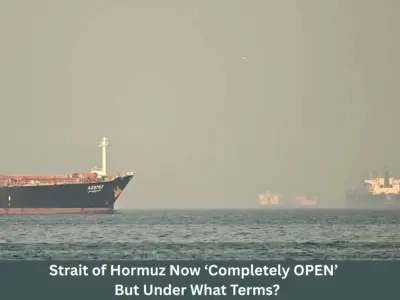

Strait of Hormuz Update: Iran has announced that commercial ships can now pass freely through the Strait of Hormuz during the ongoing Lebanon ceasefire, a move that signals easing tensions in one of the world's most critical maritime routes.
The decision is expected to support global trade and reduce fears of supply disruptions that had grown during recent regional tensions.
Iran's Foreign Minister Seyed Abbas Araghchi confirmed the development through a statement on social media, explaining that the reopening aligns with ceasefire efforts aimed at stabilising the region. The Strait of Hormuz remains one of the most important waterways for global oil and cargo shipments, making any change in access highly significant for international markets.
Strait of Hormuz Update: Strait of Hormuz is OPEN Now
In a post on X (formerly Twitter), Araghchi said, "In line with the ceasefire in Lebanon, the passage for all commercial vessels through the Strait of Hormuz is declared completely open for the remaining period of ceasefire, on the coordinated route as already announced by Ports and Maritime Organisation of the Islamic Republic of Iran.'
The statement clarified that vessels will continue to follow specific routes outlined by Iran's maritime authorities. Officials believe that this coordinated system will ensure safe navigation while maintaining maritime security in the region.
Shipping companies and international traders welcomed the announcement, as uncertainty in the Strait of Hormuz often leads to increased freight costs and delays in global supply chains.
Strait of Hormuz Update: Ceasefire Between Israel and Lebanon Influences Maritime Decisions
The reopening of the Strait of Hormuz comes shortly after US President Donald Trump announced a temporary ceasefire agreement between Israel and Lebanon. According to Trump, the ceasefire will last for 10 days and aims to reduce tensions following weeks of cross-border exchanges of fire.
The announcement did not specifically mention Hezbollah, the Iran-backed militant group involved in recent clashes with Israel. However, Trump later addressed the group in a separate message, urging cooperation during the truce period.
In a later post on Truth Social, Trump stated, "I hope Hezbollah acts nicely and well during this important period of time.'
Diplomatic observers believe the ceasefire could play a critical role in preventing further escalation and encouraging negotiations among the involved parties.
Strait of Hormuz Update: Strategic Importance of the Strait of Hormuz
The Strait of Hormuz holds immense global importance as it connects the Persian Gulf to international waters. A significant share of the world's oil exports moves through this narrow passage, making it a vital artery for global energy markets.
Any disruption in this waterway can affect fuel prices, shipping costs, and supply chains worldwide. Recent tensions had raised concerns about possible restrictions, leading many international observers to closely monitor developments in the region.
The latest reopening announcement signals a temporary easing of risks and offers relief to shipping companies and energy markets that depend on stable maritime routes.
Strait of Hormuz Update: US Pushes for Further Diplomatic Engagement
Following the ceasefire announcement, President Trump extended invitations to key regional leaders for further dialogue aimed at maintaining peace. Israeli Prime Minister Benjamin Netanyahu and Lebanese President Joseph Aoun have been invited to Washington for discussions at the White House.
Officials expect these talks to focus on preventing renewed violence and strengthening diplomatic channels. The United States continues to encourage cooperation among regional players to sustain stability during the ceasefire period.
Observers believe the reopening of the Strait of Hormuz, combined with diplomatic outreach, could help reduce tensions in the short term, though long-term peace will depend on continued negotiations and compliance with ceasefire agreements.