
AI visuals are no longer just "nice to have"-they're central to content strategy. In 2026, the best AI image generator tools are defined by speed, realism, text accuracy, and workflow integration, not just image quality.
Below are eight standout tools shaping content trends this year, each evaluated with equal depth so you can choose based on your actual needs.
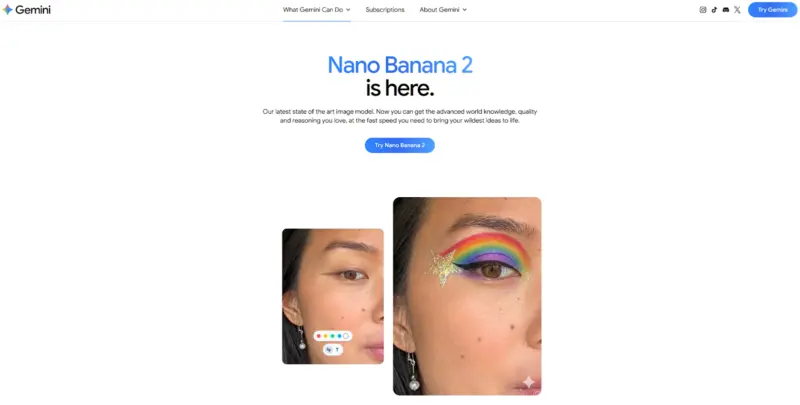
1. NanoBanana 2 - Best Overall for Modern Content Creation
NanoBanana 2 is one of the most advanced AI image generator tools for 2026, especially for creators who need production-ready visuals fast.
It excels in prompt accuracy, spatial understanding, and text rendering-areas where many tools still struggle. This makes it ideal for ads, thumbnails, and branded content. It also supports high-resolution outputs (up to 4K), reducing the need for post-processing.
Another advantage is speed. NanoBanana 2 can generate high-quality images in seconds, making it suitable for high-volume content workflows. Combined with strong consistency across outputs, it's a reliable choice for marketers and creators scaling content production.
2. Pollo AI - Best Multi-Model AI Image Generator
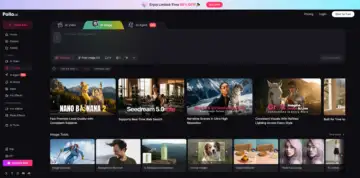
Pollo AI stands out by offering access to multiple AI models within one platform, giving users flexibility across styles and formats.
Instead of relying on a single engine, you can switch between models for photorealistic images, artistic visuals, or social media graphics. This makes it particularly useful for content creators managing diverse campaigns.
Pollo AI also integrates image and video generation, allowing you to extend static visuals into motion content. This aligns with 2026 trends where hybrid content (image + video) is becoming the norm.
For creators who value versatility and efficiency, Pollo AI is one of the most adaptable AI image generator tools available.
3. Kaze AI - Real-Time Image Generation
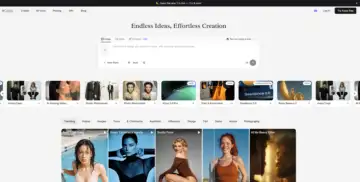
Kaze AI is gaining traction in 2026 for its real-time generation capabilities, which dramatically speed up creative workflows.
Unlike traditional tools that require multiple iterations, Kaze lets you adjust prompts and see results instantly. This makes it ideal for rapid prototyping, design exploration, and live creative work.
It also includes built-in upscaling and enhancement tools, allowing users to refine images without switching platforms. This reduces friction and improves efficiency for designers and marketers.
If speed and iteration are your priorities, Kaze AI is one of the most forward-thinking AI image generator options this year.
4. Midjourney - Best for Artistic Visual Quality
Midjourney continues to dominate when it comes to artistic output and visual storytelling.
It's widely recognized for producing images with strong composition, cinematic lighting, and unique aesthetics. Many creative professionals rely on it for concept art, branding visuals, and social media content that stands out.
However, it requires a bit of a learning curve and is not always the fastest for structured workflows. Still, for high-impact visuals, Midjourney remains one of the top AI image generator tools in 2026.
5. Adobe Firefly - Best for Commercial-Safe Content
Adobe Firefly is built for professional use, especially where licensing and brand safety matter.
It's trained on licensed and public-domain data, making it a safer choice for commercial projects. It also integrates directly with Adobe tools like Photoshop, enabling seamless editing and refinement.
Firefly's generative editing features, such as fill and expand, allow users to modify images with precision-something many standalone generators lack.
For businesses and agencies, Firefly offers a reliable and compliant AI image generator solution.
6. Ideogram - Best for Text in Images
Ideogram has become the go-to tool for generating images with accurate text.
While most AI image generator tools struggle with typography, Ideogram consistently produces clean, readable text in logos, posters, and ads.
It also offers a simple interface and fast iteration, making it accessible to beginners while still powerful enough for professional use.
If your content relies heavily on text-such as marketing creatives or social media graphics-Ideogram is one of the strongest options available.
7. Leonardo AI - Best for Asset Creation and Design Control
Leonardo AI is a versatile platform designed for creators who need more control over their outputs.
It offers features like custom model training, style presets, and consistent asset generation, making it especially useful for game design, branding, and structured content creation.
The platform balances ease of use with advanced capabilities, allowing both beginners and experienced users to create high-quality visuals.
For projects that require consistency and customization, Leonardo AI is a powerful AI image generator choice.
8. Stable Diffusion - Best Open-Source Flexibility
Stable Diffusion remains the leading open-source AI image generator in 2026.
Its biggest advantage is flexibility. Users can run it locally, customize models, and fine-tune outputs for specific use cases. This level of control is unmatched by most closed platforms.
However, it requires more technical knowledge compared to other tools. Setup, optimization, and model selection can be complex for beginners.
For developers and advanced users, Stable Diffusion offers the most customizable AI image generator experience.
The best AI image generator for you depends on how you create-but in 2026, the real advantage comes from choosing a tool that fits seamlessly into your content workflow, not just one that produces красив images.