

The United States is rapidly strengthening its military presence across the Middle East as tensions with Iran deepen and regional instability spreads to new areas.
Washington has moved thousands of Marines and advanced naval assets into strategic waters, signalling readiness for prolonged military operations while still weighing whether to send ground forces into Iran.
US-Iran War Latest News: Is the US Preparing for Ground Invasion in Iran?
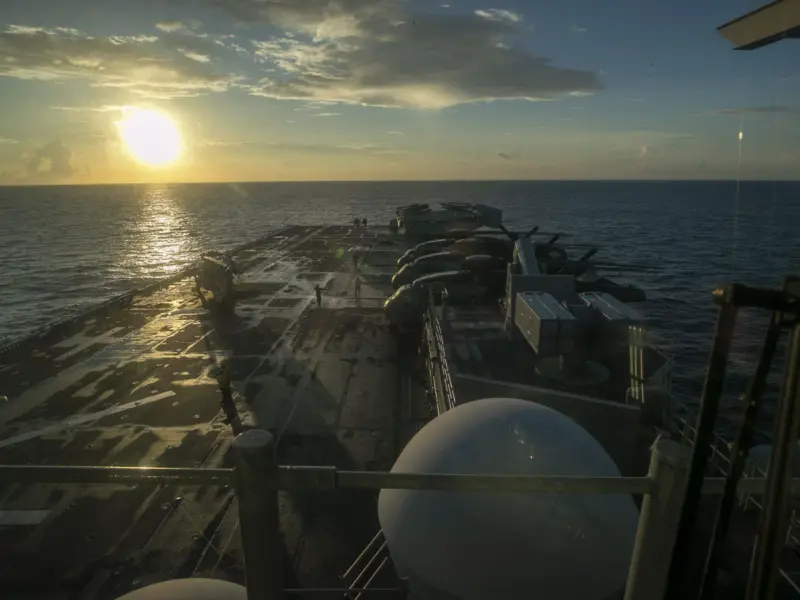
Officials confirmed that the amphibious assault ship USS Tripoli has entered its designated operational zone carrying nearly 2,500 Marines. Additional reinforcements, including the USS Boxer and other naval units, are also heading toward the region to expand the U.S. military footprint. These deployments add to the already large number of American troops stationed across the Middle East.
Reports suggest that the Pentagon is preparing for the possibility of extended ground missions, though no final order has been issued. U.S. officials indicated that President Donald Trump has yet to decide whether American forces will conduct direct ground operations inside Iranian territory.
US-Iran War Latest News: Iranian Strikes and Regional Tensions Intensify the Crisis
The conflict escalated sharply after Iran targeted military installations used by U.S. forces in Saudi Arabia. Missile and drone strikes injured multiple American personnel and highlighted Iran's ability to strike critical defence positions across the region.
The Strait of Hormuz, a crucial passage through which a significant portion of the world's oil supply moves, has become a central point of tension. Iran's influence over the waterway has slowed shipping traffic and pushed global fuel markets into uncertainty. Analysts warn that continued disruptions could lead to sustained increases in oil prices worldwide.
According to Central Command, over 11,000 targets have been struck since the launch of Operation Epic Fury on February 28, underscoring the scale of ongoing military operations.
U.S. Secretary of State Marco Rubio stated that Washington aims to achieve its objectives without deploying ground troops, while emphasising that President Donald Trump must remain prepared for evolving scenarios.
US-Iran War Latest News: Houthis Enter Conflict, Raising Threat to Global Shipping
The involvement of Yemen's Iran-aligned Houthis has added a dangerous new dimension to the war. The group launched missile attacks toward Israel, marking its first direct involvement in the broader Iran conflict.
Military experts believe this development significantly increases the risk to international shipping lanes, particularly near the Bab el-Mandeb Strait, which connects the Red Sea to the Suez Canal. Any disruption in this route could affect global trade and delay shipments of fuel, food, and industrial goods.
Security officials warn that further Houthi attacks on commercial vessels could create major challenges for maritime operations, forcing countries to reroute ships and increase transport costs.
US-Iran War Latest News: Diplomatic Efforts Stall Despite Global Concern
Efforts to negotiate a ceasefire have so far failed to produce meaningful progress. Washington proposed a framework aimed at limiting Iran's nuclear activities and reopening key maritime routes. However, Tehran rejected the proposal and presented counter-demands, including financial reparations and recognition of its national sovereignty.
International mediators from several countries continue to push for dialogue, but the situation remains highly volatile. Military deployments on both sides suggest that neither side is ready to step back from confrontation in the immediate future.
US-Iran War Latest News: Global Markets and Energy Supplies Face Growing Risk
The expanding conflict has already caused disruptions to shipping and aviation networks, forcing governments and companies to search for alternative trade routes. Oil markets have reacted sharply, with analysts warning that prolonged fighting could create long-term instability in global energy supplies.
With additional forces entering the battlefield and diplomatic talks at a standstill, experts believe the risk of wider regional conflict remains high. The coming weeks may prove critical in determining whether the crisis escalates into a larger military confrontation or moves toward negotiation.