
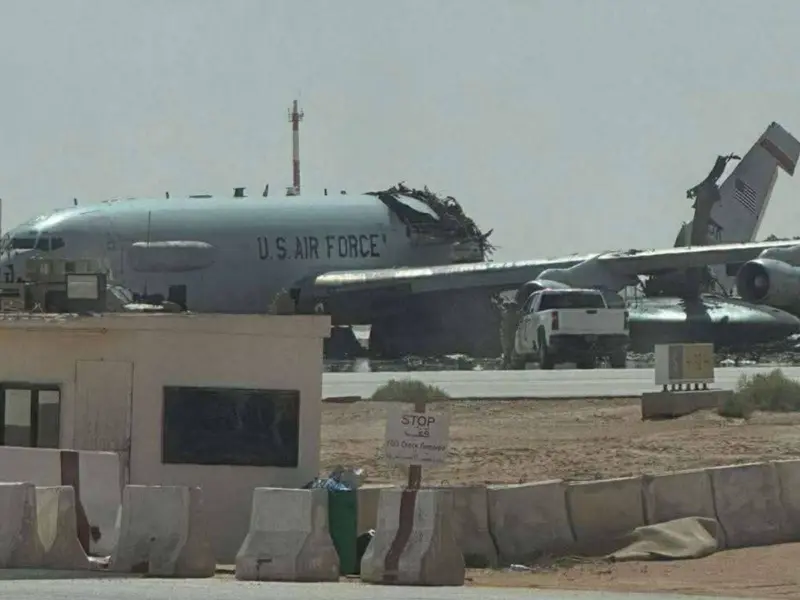

US-Iran War Latest Update: A fresh Iranian missile and drone attack has intensified the ongoing US-Iran-Israel war, raising serious concerns about the safety of American military assets in the Middle East.
The strike targeted the Prince Sultan Air Base in Saudi Arabia on March 27, damaging several high-value aircraft and injuring US service members.
Reports confirmed that at least 10 American personnel suffered injuries during the attack, while two were reported to be in serious condition. The attack marked one of the most significant Iranian strikes on US-operated facilities since the conflict began.
Military officials said the strike damaged multiple US aircraft stationed at the base, including KC-135 refuelling aircraft that support long-distance air missions. The damage could temporarily affect the US military's ability to maintain aerial operations in the region.
US-Iran War Latest Update: Did Iranian Attack Damage US Flying Radar Aircraft?
One of the most critical losses reported from the strike involved the E-3 Sentry airborne warning and control system (AWACS), often described as a "flying radar." This aircraft plays a crucial role in modern warfare by detecting incoming missiles, drones, and enemy aircraft from long distances.
The E-3 Sentry provides advanced radar surveillance, allowing commanders to track threats hundreds of miles away. Damage to such an aircraft could weaken early-warning capabilities and affect battlefield coordination.
Military experts believe that targeting this type of aircraft shows Iran's attempt to disrupt US monitoring systems and reduce the effectiveness of American operations across the region.
US-Iran War Latest Update: Is the US Preparing for a Ground Invasion in Iran?
As tensions rise, the United States has deployed approximately 3,500 Marines to the US Central Command area. The troops arrived aboard the USS Tripoli, one of America's largest amphibious assault ships, capable of launching aircraft and supporting ground operations.
This deployment signals growing preparation for possible ground operations in Iran. US officials have discussed plans that may involve sending "boots on the ground," especially in sensitive locations such as Kharg Island, a major hub for Iranian oil exports.
Military planners believe securing key oil routes remains a top priority as disruptions in the Strait of Hormuz continue to threaten global energy supplies.
US-Iran War Latest Update: Israel Signals Stronger Military Action Against Iran
The conflict shows no signs of slowing down as Israel announced plans to intensify its strikes on Iranian targets. Israeli officials warned that additional attacks could follow if Iran continues launching missiles across the region.
Meanwhile, US President Donald Trump delayed his earlier threat to destroy Iran's energy facilities. Instead, he granted Iran a 10-day extension to reopen the Strait of Hormuz, pushing the deadline to April 6.
Trump acknowledged Iran's request for more time and described ongoing diplomatic discussions as "very well," even though Iranian authorities publicly denied engaging in negotiations over a proposed US peace plan.
US-Iran War Latest Update: Houthis Enter Conflict and Threaten Global Shipping Routes
The situation has grown more dangerous after Iranian-backed Houthi rebels joined the conflict. The group launched two missiles targeting Israel, expanding the war into new territory.
Houthi Brig. Gen. Yahya Saree confirmed the attacks during a televised statement, saying they fired missiles at "sensitive Israeli military sites" in southern Israel.
Security analysts warn that renewed Houthi attacks on commercial ships could disrupt maritime trade. The Bab el-Mandeb Strait remains a vital shipping route connecting the Red Sea to the Suez Canal.
This narrow waterway handles nearly 12% of global trade, making it one of the world's most important chokepoints. Any escalation in attacks there could cause shipping delays, increase oil prices, and create supply shortages worldwide.
US-Iran War Latest Update: Global Energy and Trade Face Growing Risks
The ongoing closure of the Strait of Hormuz has already disrupted oil shipments, forcing countries to explore alternative supply routes. Saudi Arabia, which exports millions of barrels of crude oil daily, heavily depends on safe maritime passages to maintain energy supplies.
Experts warn that continued attacks on military bases and shipping routes could push oil markets into deeper instability. Rising fuel costs and supply chain disruptions remain major concerns for global economies.
With new attacks damaging advanced aircraft and drawing more forces into the conflict, the war continues to expand across the region. Analysts believe the coming weeks could determine whether the crisis stabilises through diplomacy or escalates into a wider military confrontation.