




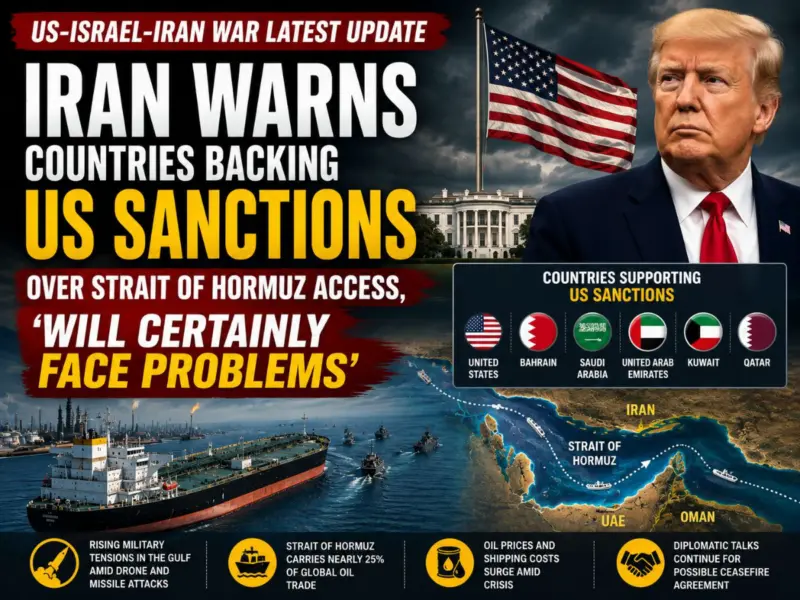

US-Israel-Iran War Latest Update: Iran has issued a fresh warning to countries supporting US sanctions, saying they could face difficulties passing through the strategically important Strait of Hormuz.
The warning comes as tensions in the Gulf continue to rise over a proposed United Nations Security Council (UNSC) resolution backed by the United States and several Gulf nations.
Tehran rejected the draft resolution, calling it "deeply flawed" and "one-sided", while accusing Washington of using the UN to increase pressure on Iran during the ongoing regional crisis. The latest developments have once again placed the Strait of Hormuz at the centre of global attention because the waterway handles a major share of the world's oil shipments.
US-Israel-Iran War Latest Update: Iran Warns Countries Supporting US Sanctions
A senior Iranian military official directly warned countries supporting US sanctions against Tehran.
"From now on, countries that follow the United States in enforcing sanctions against the Islamic Republic of Iran will certainly face problems passing through the Strait of Hormuz," Army spokesperson Amir Akraminia said.
Iranian state media reported that Tehran considers the proposed sanctions and maritime restrictions part of a wider effort to isolate the country economically and militarily.
Which Countries are Supporting US Sanctions?
The United States introduced the proposed United Nations Security Council (UNSC) resolution with support from several Gulf allies amid the growing Strait of Hormuz crisis. According to reports, the countries backing the US-led proposal include:
- United States
- Bahrain
- Saudi Arabia
- United Arab Emirates
- Kuwait
- Qatar
These countries supported the draft resolution aimed at protecting commercial shipping and ensuring freedom of navigation through the Strait of Hormuz. Iran, however, accused these nations of backing Washington's pressure campaign and warned that countries enforcing US sanctions could face difficulties passing through the strategic waterway.
Iran Rejects US-Backed UNSC Resolution
The United States, along with Bahrain, Saudi Arabia, the UAE, Kuwait and Qatar, introduced a draft UNSC resolution focused on protecting commercial shipping and freedom of navigation in the Strait of Hormuz.
The proposal calls on Iran to stop attacks on ships, remove maritime mines and allow uninterrupted trade movement through the strategic corridor.
However, Iran strongly opposed the proposal. Iran's UN Ambassador Amir Saeid Iravani described the draft as "deeply flawed and one-sided". Tehran argued that the resolution ignored what it called unlawful US and Israeli actions in the region and failed to address the root causes of the conflict.
Strait of Hormuz Crisis Raises Global Concerns
The Strait of Hormuz remains one of the world's most critical oil transit routes, carrying nearly a quarter of global seaborne oil trade. Rising military tensions in the region have already disrupted shipping activity and increased fears of a wider regional conflict.
Recent reports of missile strikes, drone attacks and threats against commercial vessels have further intensified concerns among global markets and shipping companies. Iran's Revolutionary Guard also warned of a possible "heavy assault" if Iranian tankers or ships come under attack again.
US-Israel-Iran War Latest Update: Diplomatic Talks Continue Amid Rising Tensions
Despite the escalating rhetoric, diplomatic negotiations between Iran, the United States and regional mediators continue behind the scenes. Reports suggest countries, including Qatar and Pakistan, are trying to push both sides towards a ceasefire agreement.
Global oil prices and shipping insurance costs have already reacted to the growing uncertainty in the Gulf region. Analysts believe any major disruption in the Strait of Hormuz could significantly impact international energy markets and global trade.