





US-Israel-Iran War Latest Update: A high-risk rescue mission that brought back a stranded US Air Force navigator from Iranian territory has drawn attention not only for its bravery but also for the advanced technology behind the operation.
Military experts say a small satellite-based device carried by the navigator played a crucial role in helping rescue teams locate him while he hid for nearly two days in hostile territory.
The dramatic mission showed how modern rescue tools allow pilots to survive deep inside enemy areas until help arrives.
US-Israel-Iran War Latest Update: How did the US locate the Stranded Pilot in Iran?
The rescue mission began after an F-15E fighter jet was shot down over southwestern Iran. One crew member was rescued quickly, but the navigator remained trapped inside hostile territory.
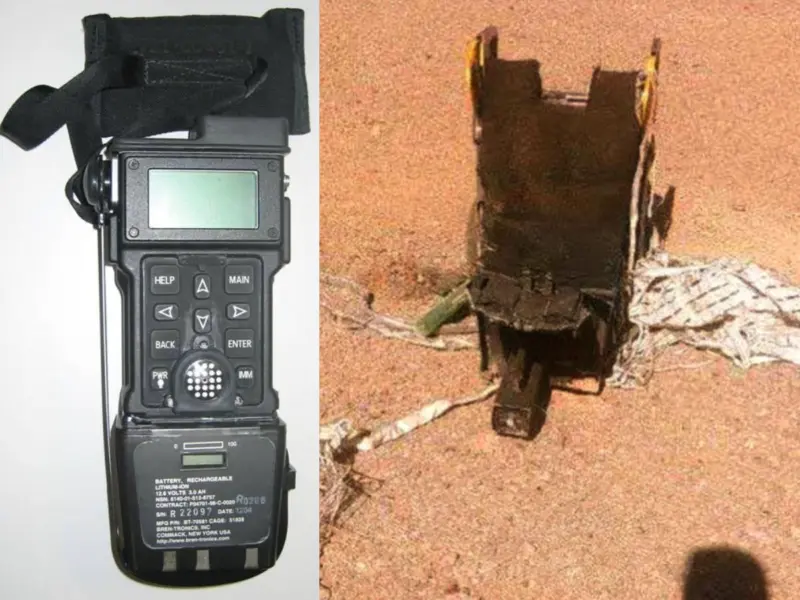
US rescue teams relied on a specialised communication system known as CSEL, short for Combat Survivor Evader Locator. The device allowed the stranded navigator to send secure signals without revealing his position to enemy forces.
Reports indicate that the navigator stayed hidden for nearly 48 hours while sending encrypted location updates. These updates allowed rescue teams to track his position and plan extraction routes carefully.
The operation involved multiple aircraft, including helicopters and support planes, working together to extract the crew member safely. Senior military officials later described the mission as one of the most complex rescue efforts conducted in recent years.
US-Israel-Iran War Latest Update: What is the CSEL Device and How Does It Work?
The CSEL device is a compact satellite communication tool built for survival situations. It weighs about 800 grams and is attached to a pilot's survival vest. Manufactured by Boeing, the device combines features of a radio and a handheld computer. It remains attached to the pilot even after emergency ejection.
Once activated, the system begins sending encrypted signals that include precise location coordinates. These signals travel through military satellites to command centres, allowing rescue teams to track the pilot's movement.
The device uses advanced signal techniques such as rapid frequency hopping. This method makes signals difficult to detect by enemy radar or electronic surveillance systems.
Experts say this feature helped the navigator remain hidden despite the presence of hostile forces in the region.
US-Israel-Iran War Latest Update: CSEL Device to be Built to Survive in Harsh Conditions
Military engineers designed the CSEL system to function under extreme conditions. The device can survive water submersion up to 10 meters deep and operate in harsh weather. Its battery can last up to 21 days in standby mode, allowing stranded personnel to survive for extended periods without losing contact.
The device also features a simple interface that allows operation in darkness or while wearing gloves. This design ensures that pilots can send signals even under stressful combat conditions.
In addition to sending location data, the system allows users to transmit preset messages such as injury status or requests for extraction. These messages help rescue teams understand the situation without requiring voice communication.
US-Israel-Iran War Latest Update: How Secure Messaging Helped Avoid Detection with CSEL Device
One of the most important advantages of the CSEL system is its ability to send silent, encrypted messages. Instead of speaking over a radio, which could reveal location, the navigator transmitted short-coded messages at intervals.
Reports indicate that the navigator relied on preloaded safe zones stored inside the device. These locations helped him move carefully while avoiding enemy patrols.
When rescue helicopters reached the area, the device switched to a tracking mode that allowed aircraft crews to lock onto his exact position. This final step enabled the rescue team to complete the extraction successfully.
US-Israel-Iran War Latest Update: What was the Role of Special Forces in the Rescue?
The rescue operation relied on elite US Pararescue units, commonly known as PJs. These teams specialise in extracting personnel from dangerous locations. The mission required coordination between air units, intelligence systems, and ground forces.
Military experts believe the success of the operation highlights the importance of modern rescue technology combined with specialised training. Similar rescue systems are also used by allied forces, including Israel, which maintains its own specialised rescue units and survival devices.
US-Israel-Iran War Latest Update: Technology Becoming Key in Modern Warfare
The rescue mission has highlighted how advanced survival technology is changing battlefield operations. Small communication tools like CSEL now allow pilots to survive longer in hostile territory and guide rescue teams directly to their location.
Experts say such systems reduce response time and increase survival chances during combat emergencies. As conflicts grow more complex, military forces continue to rely heavily on secure communication and satellite technology to protect their personnel.